

Otrovert Meaning: What Is an Otrovert Personality?

Last Updated: May 27, 2026
Otrovert Meaning
Table of Contents

An otrovert is a person who can socialise normally but does not feel emotionally attached to group belonging, collective identity, or constant social validation.

Unlike introverts, otroverts are not necessarily shy or socially anxious. And unlike extroverts, they do not gain emotional fulfilment from being part of large groups, trends, or social circles.

The term otrovert is an emerging personality concept used online to describe people who feel emotionally independent, selective about relationships, and disconnected from “group culture.”

In simple words: An otrovert can connect deeply with people but rarely feels the need to belong to the crowd.
Are you an otrovert or dealing with hidden social anxiety?
Take our quick free Social Anxiety Test to understand how you relate to people, groups, and emotional connections.

Otrovert Meaning in Psychology

While otrovert is not an officially recognised psychological diagnosis or clinical personality type, the concept resonates strongly with modern emotional experiences.

Many people today feel:

This is why the otrovert personality concept is gaining attention.

The concept describes individuals who:

  • Value authenticity over popularity
  • Prefer emotional depth over social quantity
  • Avoid herd mentality
  • Feel comfortable standing emotionally alone
😇SoulFact: Some people also relate the otrovert personality to terms like “grey personality” or “ambivert,” though otroverts are usually more emotionally detached from group belonging and social identity.

Signs You Are an Otrovert

If you’ve been searching for signs you are an otrovert, these traits may feel familiar.

1. You Can Socialise, But Don’t Need To

You’re capable of talking to people, attending events, or functioning socially. But internally, you rarely need social interaction to feel complete.

Socialising feels optional, not emotionally necessary.

2. You Prefer Deep Connections Over Large Groups

Otroverts usually dislike superficial networking or group dynamics.

Instead, they prefer:

  • one-on-one conversations
  • emotionally intelligent people
  • meaningful relationships
  • calm environments

You may have very few close connections, but they matter deeply.

3. You Don’t Feel Strong Loyalty to Social Labels

Otroverts often struggle with identity-based belonging.

They may feel detached from:

  • Trends
  • Social groups
  • Online fandoms
  • Group mentality
  • Performative communities

Not because they hate people, but because forced belonging feels emotionally unnatural.

4. You Enjoy Solitude Without Feeling Lonely

One major otrovert personality trait is emotional comfort in solitude. Being alone feels peaceful rather than empty. You don’t constantly seek distractions, validation, or company to escape yourself.

5. You Observe More Than You Participate

Otroverts are often highly observant.

They notice:

  • Emotional energy
  • Social masks
  • Fake behavior
  • Hidden tension in groups

This awareness can make crowds emotionally draining.

6. You Feel Like an Outsider Even in Groups

This is one of the strongest signs of an otrovert.

Even when surrounded by people, you may feel psychologically separate.

Not rejected. Not lonely.
Just emotionally independent from collective identity.

If the idea of emotional independence and selective belonging resonates with you, The Courage to Be Disliked is one of the most insightful books on authenticity, self-worth, and freedom from social approval.

Otrovert vs Introvert: What’s the Difference?

Many people confuse the otrovert personality with introversion.

But they are not the same.

IntrovertOtrovert
Gains energy from solitudeFeels emotionally detached from group belonging
May avoid socializingCan socialize normally
Often socially drainedSelectively engaged
Focuses on energy managementFocuses on emotional authenticity
Quiet personality styleIndependent relational mindset

An introvert avoids overstimulation and an otrovert avoids emotional conformity.
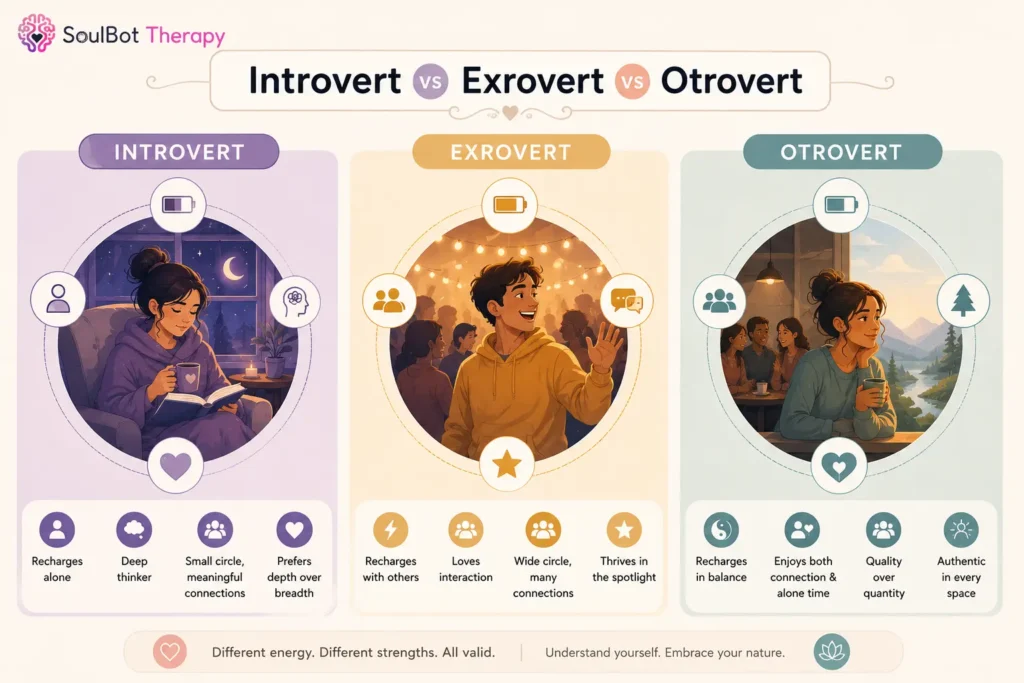
Otrovert Meaning

Why the Otrovert Personality Is Becoming More Common?

The rise of the otrovert personality may reflect modern emotional exhaustion.

Today’s world constantly pressures people to:

  • Belong everywhere
  • Perform online
  • Build personal brands
  • Join communities
  • Seek validation
  • Maintain endless social presence

Many emotionally aware individuals are rejecting this pressure.

Instead, they are choosing:

  • Intentional relationships
  • Solitude
  • Emotional freedom
  • Authenticity
  • Psychological independence

The otrovert identity gives language to that experience.

How Otroverts Build Relationships?

Otroverts usually connect differently from most people.

They prefer:

  • Slow trust
  • Emotional depth
  • Intellectual conversations
  • Emotionally safe people
  • Low-maintenance friendships

They often dislike:

  • Forced social rituals
  • Fake networking
  • Attention-seeking environments
  • Emotionally shallow interactions

For an otrovert, quality always matters more than quantity.

Is Being an Otrovert a Real Personality Type?

Scientifically, otrovert is currently more of a cultural or internet psychology term than a formal personality classification.

However, that does not make the experience any less real.

Many modern emotional concepts begin as social language before psychology formally studies them. The popularity of the term suggests that many people deeply relate to the emotional patterns behind it.

Final Thoughts: The Quiet Rise of the Otrovert

The world often celebrates people who are loud, visible, socially active, and constantly connected.

But not everyone wants to belong in that way. That may be the true meaning of being an otrovert. And perhaps that’s why the term is resonating with so many people today.


FAQ

Frequently Asked Questions

An otrovert is someone who can socialise normally but does not feel emotionally attached to group identity, social validation, or collective belonging.
Otrovert is not an officially recognised clinical personality type. It is an emerging concept in internet psychology that describes emotional independence and selective socialising.
Common signs include:* preferring deep one-on-one connections * emotional independence * comfort in solitude * dislike of group mentality * selective socializing * feeling emotionally separate from crowds
Introverts recharge through solitude due to energy sensitivity, while otroverts are emotionally detached from social conformity and group identity.
The term reflects modern emotional experiences such as social burnout, online exhaustion, emotional independence, and the rejection of performative social culture.

About the Author:

Picture of Sonali Shastri

Sonali Shastri

Sonali Shastri is the Co-founder of SoulBot Therapy and a passionate writer dedicated to helping individuals navigate their emotional and spiritual journey. With a background in psychology-based writing and storytelling, she specializes in creating content that blends empathy with impact. Her work focuses on mental wellness, self-discovery, and breaking the stigma around emotional health through honest, relatable narratives.

More Blog Posts

Your emotional compass wants love, but stays cautious.

Ready to explore your full SoulMap?

Avoidant Attachment
Independent, With Boundaries

Your emotional compass values space and self-reliance.

Ready to explore your full SoulMap?

Anxious Attachment
Deep, But Seeking Reassurance

Your emotional world is intense and connection-driven.

Ready to explore your full SoulMap?

Secure Attachment – Calm & Connected

Your emotional compass feels steady and safe.


Ready to explore your full SoulMap?

The Storm Mind (Severe Anxiety)

Intense, overwhelming, and hard to control at times.

Ready to explore your full SoulMap?

The Overthinker (Moderate Anxiety)

Your mind is active, often running ahead of you.

Ready to explore your full SoulMap?

The Gentle Worrier (Mild Anxiety)

Occasional overthinking, but still in control.
You feel stress at times, but it doesn’t take over your day.

Ready to explore your full SoulMap?

The Grounded Mind (Minimal Anxiety)

Your mind feels mostly at ease, and you handle stress without losing control.

Ready to explore your full SoulMap?

Moderately Emotionally Available- Opening, With Caution

Your emotional compass shows growth, with a few guarded zones.

Ready to explore your full SoulMap?

Your emotional compass points toward openness and connection.

Ready to explore your full SoulMap?

Your emotional compass leans toward self-protection right now.

Ready to explore your full SoulMap?

Submissive Personality

Gentle and supportive. You bring calm energy and emotional depth to every space.

Ready to explore your full SoulMap?

Balanced Personality

Grounded and fair-minded. You value harmony, empathy, and shared understanding.

Ready to explore your full SoulMap?

Dominant Personality

Driven and decisive. You lead naturally, think fast, and act with purpose.

Ready to explore your full SoulMap?

Homosexual —
True North, Same-Gender

Your love compass points to people of the same gender.

Ready to explore your full SoulMap?

Restless and always in motion. May talk fast, act quickly, or jump between ideas. 

Ready to explore your full SoulMap?

High Likelihood
ADHD Combined Type (ADHD-C)

Shows both inattentive and hyperactive traits where focus shifts, energy spikes, and motivation come in waves.

Ready to explore your full SoulMap?

Low Likelihood
ADHD Inattentive Type (ADHD-I)

Often loses focus and misses details, with drifting thoughts that leave tasks unfinished.

Ready to explore your full SoulMap?

🔧 The Virtuoso - ISTP

Hands-On Expert

Ready to explore your full SoulMap?

📋 The Logistician - ISTJ

Steady Rock

Ready to explore your full SoulMap?

🌻 The Adventurer - ISFP

Gentle Spirit

Ready to explore your full SoulMap?

🛡️ The Defender - ISFJ

Caring Guardian

Ready to explore your full SoulMap?

🤔 The Logician - INTP

Curious Explorer

Ready to explore your full SoulMap?

🏛️ The Architect - INTJ

Strategic Mastermind

Ready to explore your full SoulMap?

🦄 The Mediator - INFP

Gentle Idealist

Ready to explore your full SoulMap?

🔮 The Advocate - INFJ

Quiet Visionary

Ready to explore your full SoulMap?

🚀 The Entrepreneur - ESTP

Action Hero

Ready to explore your full SoulMap?

📊 The Executive - ESTJ

Results Driven

Ready to explore your full SoulMap?

🎭 The Entertainer - ESFP

Life of the Party

Ready to explore your full SoulMap?

🤗 The Consul - ESFJ

Heart of Gold

Ready to explore your full SoulMap?

🧠 The Debater - ENTP

Mental Gymnast

Ready to explore your full SoulMap?

👑 The Commander - ENTJ

Strategic Powerhouse

Ready to explore your full SoulMap?

🎨 The Campaigner - ENFP

Creative Visionary

Ready to explore your full SoulMap?

🌟 The Protagonist - ENFJ

Natural Born Leader

Ready to explore your full SoulMap?

🤗 Physical Touch

Hugs Over Hype

Ready to explore your full SoulMap?

🕰 Quality Time

Presence Over Presents

Ready to explore your full SoulMap?

🎁 Receiving Gifts

Thoughtful Tokens, Big Feelings

Ready to explore your full SoulMap?

🤝 Acts of Service

Love in Action

Ready to explore your full SoulMap?

Words of Affirmation

You Speak from the Heart

Ready to explore your full SoulMap?

Gay, Lesbian, or
Queer and Proud

Your love compass points to the same gender

Ready to explore your full SoulMap?

Bisexual -
Go with the Flowy

Your love compass swings in the middle

Ready to explore your full SoulMap?

Heteroflexible —
Some Wiggle in the Compass

You’ve got a touch of bi-curiosity

Ready to explore your full SoulMap?

Hetero -
Straight Up Honest

Your love compass points to the opposite sex.

Ready to explore your full SoulMap?