Have you ever replayed a conversation in your head for hours after it ended?
Do you worry about saying the wrong thing, being judged, or embarrassing yourself in front of others?
If yes, you’re not alone.
Social anxiety affects millions of people worldwide and often goes unnoticed because many people mistake it for shyness. But social anxiety is much more than feeling nervous before speaking or meeting new people.
In this guide, you’ll learn:
- What social anxiety is
- Common signs of social anxiety
- What social anxiety feels like
- Causes of social anxiety
- How to cope with social anxiety
- When to seek support
👉 Not sure whether it's social anxiety or just shyness? Take SoulBot's Social Anxiety Test to understand your anxiety level and social patterns.
What Is Social Anxiety?
Social anxiety is a mental health condition characterized by an intense fear of being judged, embarrassed, criticized, or negatively evaluated by others.
People with social anxiety often worry about:
- Saying something embarrassing
- Looking awkward
- Being watched by others
- Making mistakes in public
- Being rejected or criticized
Unlike normal nervousness, social anxiety can interfere with work, school, relationships, and everyday activities.
According to the Anxiety and Depression Association of America (ADAA), social anxiety disorder is one of the most common anxiety conditions worldwide.
Quick Answer: What Are the Signs of Social Anxiety?
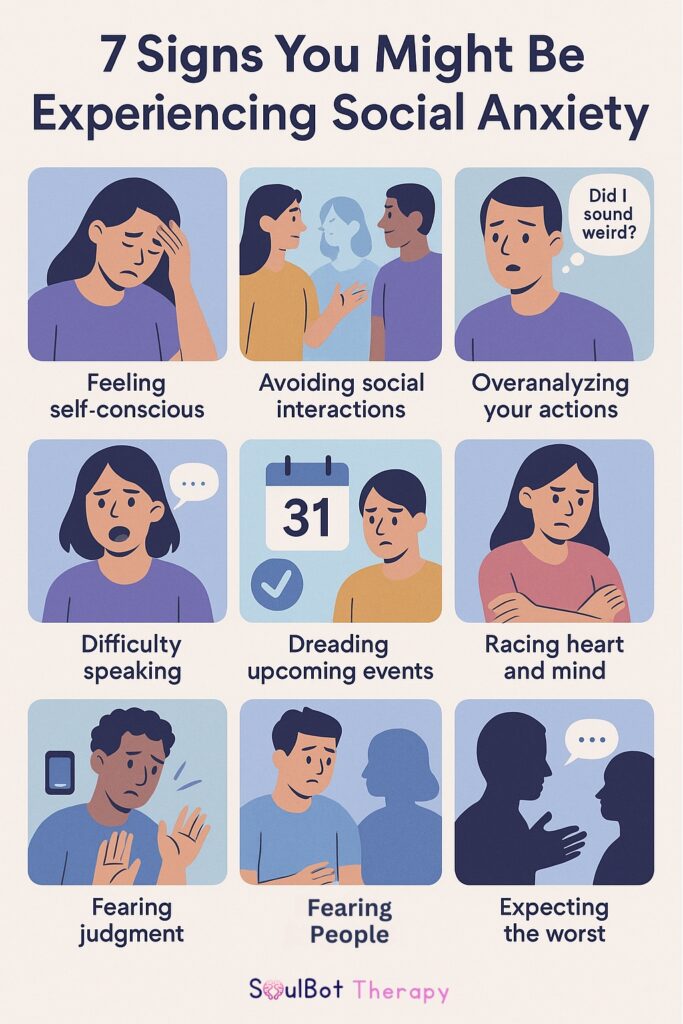
Common signs of social anxiety include:
- Fear of being judged
- Avoiding social situations
- Overthinking conversations
- Sweating or shaking in public
- Difficulty speaking in groups
- Fear of meeting new people
- Avoiding eye contact
- Constant self-consciousness
If these symptoms occur regularly and affect daily life, social anxiety may be the cause.
What Does Social Anxiety Feel Like?
One of the most searched questions online is:
“What does social anxiety actually feel like?”
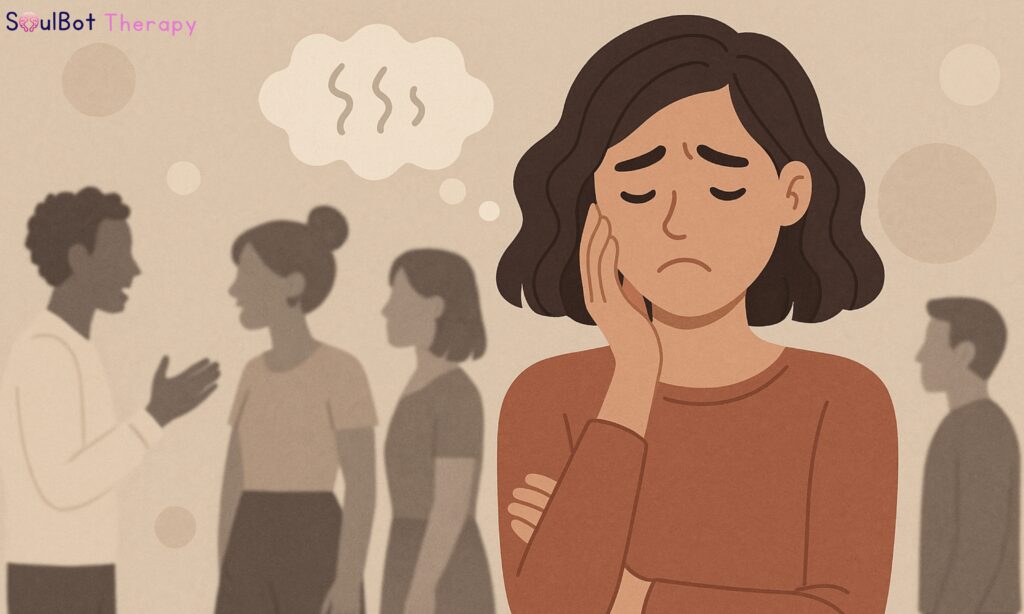
Many people describe social anxiety as:
- Feeling like everyone is watching you
- Constantly worrying about what others think
- Freezing during conversations
- Feeling physically uncomfortable in social situations
- Replaying interactions repeatedly afterward
- Wanting connection but fearing judgment
Social anxiety can make even simple activities feel overwhelming.
For some people, answering a phone call feels more stressful than taking an exam.
Emotional Signs of Social Anxiety
Social anxiety doesn’t always look obvious from the outside. Common emotional symptoms include:
Fear of Embarrassment
You constantly worry about making mistakes.
Extreme Self-Consciousness
You feel overly aware of how others might perceive you.
Fear of Rejection
You assume others will judge or dislike you.
Anticipatory Anxiety
You start worrying days or weeks before social events.
Overthinking
You repeatedly analyze conversations long after they’ve ended.
Physical Symptoms of Social Anxiety
Social anxiety affects both the mind and body.
Common physical symptoms include:
- Sweating
- Blushing
- Trembling
- Rapid heartbeat
- Nausea
- Dizziness
- Muscle tension
- Dry mouth
These reactions happen because your nervous system interprets social situations as threats.
Behavioral Signs of Social Anxiety
Many people recognize social anxiety through their behavior.
Common signs include:
Avoiding Social Situations
Skipping parties, meetings, classes, or events.
Avoiding Eye Contact
Looking away to reduce discomfort.
Staying Silent
Wanting to speak but feeling unable to.
Leaving Early
Exiting situations to relieve anxiety.
Rehearsing Conversations
Practicing what you’ll say repeatedly before speaking.
If you frequently do these things, social anxiety may be contributing to your stress.
What Causes Social Anxiety?
There isn’t one single cause of social anxiety.
Instead, several factors often work together.
Genetics
Research suggests social anxiety can run in families.
People with close relatives who have anxiety disorders may be more likely to develop social anxiety themselves.
Childhood Experiences
Bullying, criticism, rejection, or public embarrassment can increase vulnerability to social anxiety.
👉 Related Read:
Childhood Trauma and Relationships: How the Past Affects the Present
Low Self-Esteem
Negative beliefs about yourself can make social situations feel threatening.
Brain Chemistry: Studies suggest that people with social anxiety may have a more sensitive threat-detection system, making social situations feel more dangerous than they actually are.
Social Anxiety vs Shyness: What’s the Difference?
Many people confuse social anxiety with shyness.
| Shyness | Social Anxiety |
|---|---|
| Mild discomfort | Intense fear |
| Temporary nervousness | Persistent anxiety |
| Doesn’t affect daily life significantly | Can impact work, relationships, and daily functioning |
| Easier to overcome | Often requires support and coping strategies |
Think of it this way: Shyness is a personality trait. Social anxiety is a mental health condition.
How to Cope With Social Anxiety?
The good news?
Social anxiety is highly manageable.
Many people learn to reduce symptoms and build confidence over time.
1. Name the Anxiety
Instead of saying:
“I’m awkward.”
Try saying:
“This is social anxiety.”
Labeling the experience helps reduce its power.
2. Challenge Anxious Thoughts
Ask yourself:
- What’s the evidence for this fear?
- What’s the evidence against it?
- Am I predicting the worst-case scenario?
Often, anxiety exaggerates threats that aren’t actually present.
3. Practice Small Social Wins
Start with manageable steps:
- Say hello to a cashier
- Ask a coworker a question
- Join a short conversation
- Attend a small gathering
Small wins build confidence over time.
4. Stop Avoiding Everything
Avoidance provides temporary relief but strengthens anxiety in the long run.
Gradual exposure helps teach your brain that social situations are safe.
5. Learn Emotional Awareness
Understanding your emotions can significantly reduce anxiety.
👉 Related Read:
What Is Emotional Intelligence? How to Know If You Have It
6. Use Grounding Techniques
When anxiety spikes, try:
Box Breathing
- Inhale for 4 seconds
- Hold for 4 seconds
- Exhale for 4 seconds
- Hold for 4 seconds
Repeat several times.
5-4-3-2-1 Grounding
Notice:
- 5 things you see
- 4 things you touch
- 3 things you hear
- 2 things you smell
- 1 thing you taste
This helps bring your attention back to the present moment.
When Should You Seek Help?
Consider seeking professional support if you experience social anxiety:
- Interferes with work or studies
- Affects relationships
- Causes frequent avoidance
- Creates significant emotional distress
- Stops you from living the life you want
Cognitive Behavioral Therapy (CBT) is one of the most effective treatments for social anxiety.
Take the Social Anxiety Test
Not Sure Whether It’s Social Anxiety or Just Shyness?
Take SoulBot’s free Social Anxiety Test to discover:
- ✅ Your anxiety level
- ✅ Your strongest social anxiety pattern
- ✅ Personalized insights and recommendations
Need a Safe Space to Practice Social Confidence?
Soululu, SoulBot’s AI mental health companion, can help you:
- Reflect on social situations
- Challenge anxious thoughts
- Practice conversations
- Build emotional confidence
- Understand your anxiety triggers
💬 Chat with Soululu anytime, judgment-free.
Final Thoughts
Social anxiety can feel isolating, but it doesn’t define who you are.
You don’t have to become the loudest person in the room. With self-awareness, support, and consistent practice, social situations can become easier, more comfortable, and less overwhelming.
Your anxiety is not your identity.
Your courage to face it is what matters most.
Related SoulBot Reads
- What Is Emotional Intelligence? How to Know If You Have It
- Childhood Trauma and Relationships: How the Past Affects the Present
- Feeling Emotionally Numb: Causes and Recovery
- What Does Anxiety Feel Like?
- The Psychology of Overthinking