Often loses focus and misses details, with drifting thoughts that leave tasks unfinished.

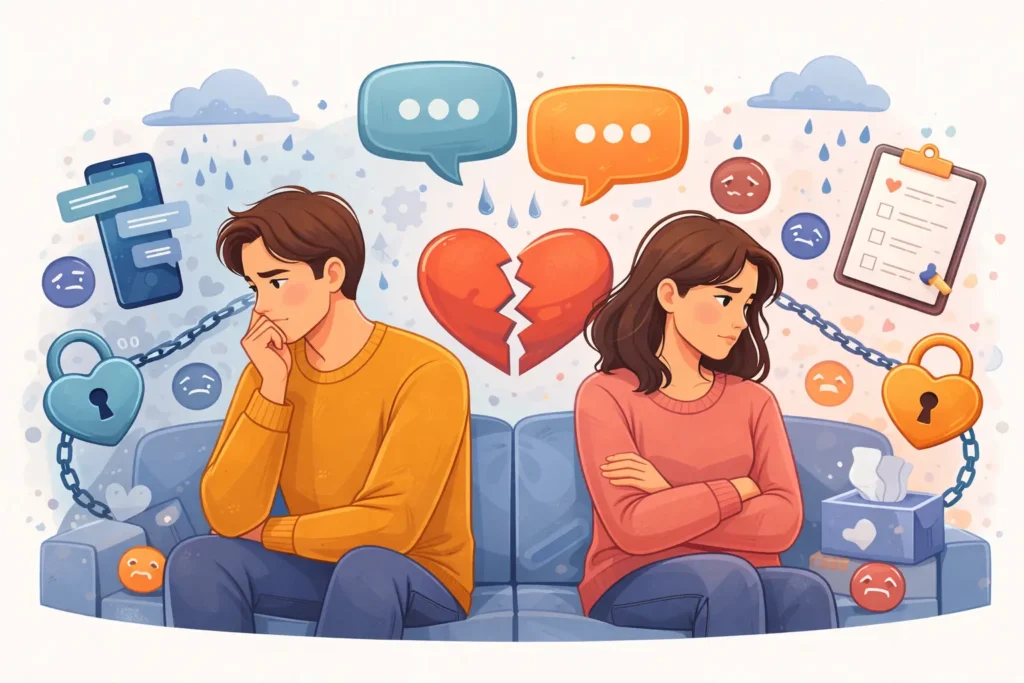
Being emotionally unavailable doesn’t mean you don’t care.
It means closeness feels risky, and distance has become a way to stay safe.
Your results suggest that you’ve learned to rely on emotional walls, self-control, or independence to protect yourself. Often, this pattern forms after disappointment, unmet emotional needs, or long periods of having to manage things on your own.
This isn’t who you are, it’s how you’ve adapted.
And adaptation can change.
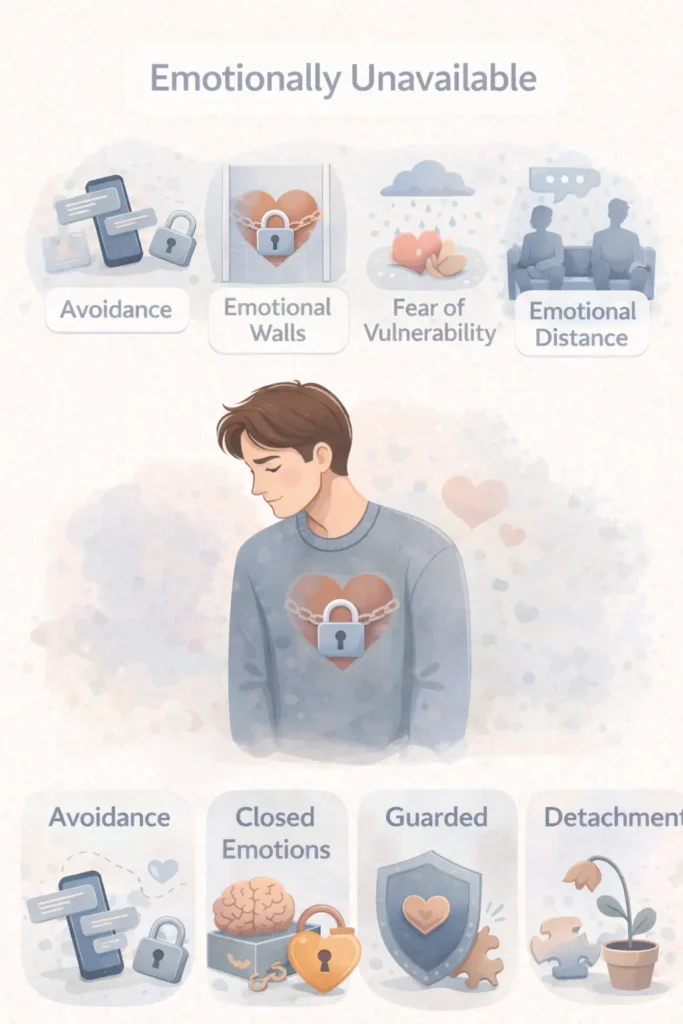
You may recognise signs of emotional unavailability through behaviours such as:
These signs point to emotional guardedness, not a lack of capacity for connection.
People who fall into this range often notice patterns like:
what makes us different
When you’re emotionally unavailable, opening up may feel uncomfortable or even overwhelming.
You might struggle to express feelings, avoid vulnerable conversations, or disconnect when emotions become intense.
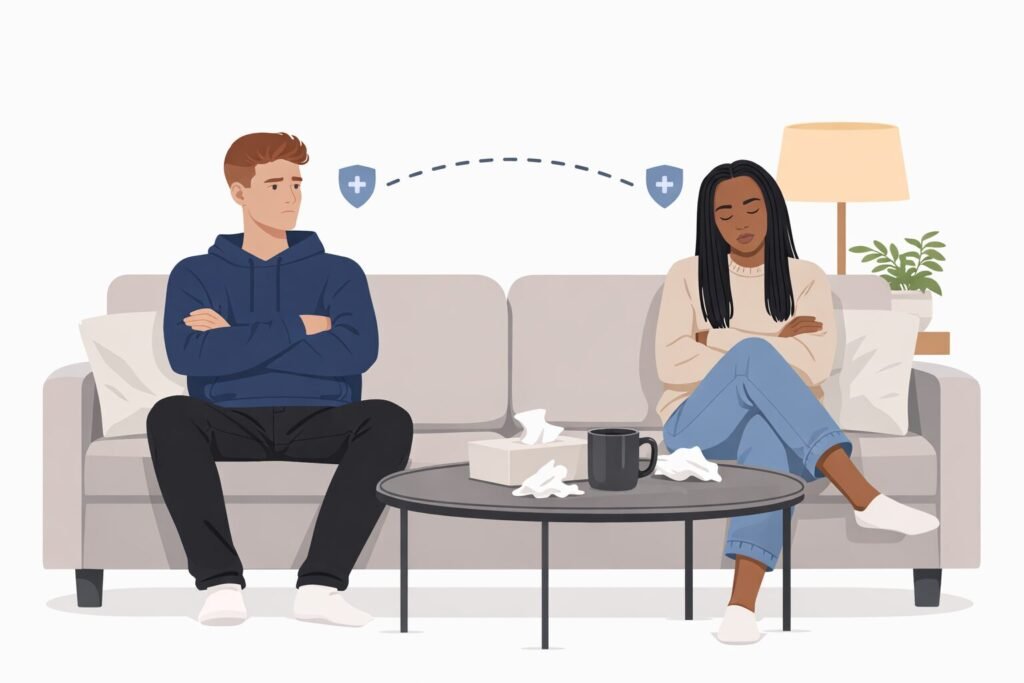
Emotional closeness can feel unfamiliar or unsafe, so staying within your comfort zone feels easier.
Even when you want connection, your instinct may be to create distance rather than lean in.
This doesn’t mean you lack depth or emotion. It means you’ve learned to keep it contained.
Being emotionally unavailable doesn’t mean you don’t feel or don’t want a connection.
It means staying emotionally open has felt unsafe, overwhelming, or exhausting in the past. You may notice your emotions, but choosing closeness or staying emotionally present can feel uncomfortable, so distance becomes the safer option.
💬What This Looks Like in Real Life?
You might keep conversations light, rely on logic over feelings, or pull back when emotions intensify.
🤍 As an Emotionally Unavailable Partner
You may care deeply, but struggle to express it openly. Vulnerability can feel risky, and you might need more space, time, or independence.
Understanding your emotional patterns is the first step toward change. Awareness creates room to slowly build emotional presence, trust, and connection.

You don’t need to force openness. Small, intentional steps can help soften emotional distance over time:
Awareness is the first step. Recognising when you pull away matters.
Start small. You don’t need to share everything at once.
Knowing what makes you shut down helps reduce its power.
Journaling, therapy, or simply naming feelings can help reconnect you with your inner world.
When emotions rise, pause and breathe instead of disconnecting.
Each step lowers emotional barriers gradually without overwhelming you.
If emotional distance affects your ability to connect or maintain relationships, talk to Soulbot, your emotional coach can help you develop safer ways to open up.
It means emotional openness and vulnerability feel difficult or unsafe. You may stay guarded or emotionally distant, especially in close relationships.
Yes. With awareness and support, emotional habits can change. Many people build meaningful, secure relationships once they understand their patterns.
It often develops from past experiences, attachment patterns, fear of vulnerability, or long-standing emotional self-protection.
Start by naming emotions, sharing small feelings, and staying present in emotional conversations. Growth happens gradually, not all at once.
Emotional unavailability is not a failure.
It’s a response that once kept you safe, and with time, it can soften.
Your emotions, energy, and patterns can change over time. Take the test and see how far you’ve come.
You May Look Fine, But It Feels Heavy Inside
Ready to explore your full SoulMap?
Social Moments Feel Mostly Manageable
Ready to explore your full SoulMap?
You Show Up, But Your Mind Replays It
Ready to explore your full SoulMap?
Connection Matters, But It Can Feel Hard
Ready to explore your full SoulMap?
Your emotional compass wants love, but stays cautious.
Ready to explore your full SoulMap?
Your emotional compass values space and self-reliance.
Ready to explore your full SoulMap?
Your emotional world is intense and connection-driven.
Ready to explore your full SoulMap?
Your emotional compass feels steady and safe.
Ready to explore your full SoulMap?
Intense, overwhelming, and hard to control at times.
Ready to explore your full SoulMap?
Your mind is active, often running ahead of you.
Ready to explore your full SoulMap?
Occasional overthinking, but still in control.
You feel stress at times, but it doesn’t take over your day.
Ready to explore your full SoulMap?
Your emotional compass shows growth, with a few guarded zones.
Ready to explore your full SoulMap?
Your emotional compass points toward openness and connection.
Ready to explore your full SoulMap?
Your emotional compass leans toward self-protection right now.
Ready to explore your full SoulMap?
Gentle and supportive. You bring calm energy and emotional depth to every space.
Ready to explore your full SoulMap?
Grounded and fair-minded. You value harmony, empathy, and shared understanding.
Ready to explore your full SoulMap?
Driven and decisive. You lead naturally, think fast, and act with purpose.
Ready to explore your full SoulMap?
Your love compass points to people of the same gender.
Ready to explore your full SoulMap?
Restless and always in motion. May talk fast, act quickly, or jump between ideas.
Ready to explore your full SoulMap?
Shows both inattentive and hyperactive traits where focus shifts, energy spikes, and motivation come in waves.
Ready to explore your full SoulMap?
Often loses focus and misses details, with drifting thoughts that leave tasks unfinished.
Ready to explore your full SoulMap?
Hands-On Expert
Ready to explore your full SoulMap?
Steady Rock
Ready to explore your full SoulMap?
Gentle Spirit
Ready to explore your full SoulMap?
Caring Guardian
Ready to explore your full SoulMap?
Curious Explorer
Ready to explore your full SoulMap?
Strategic Mastermind
Ready to explore your full SoulMap?
Gentle Idealist
Ready to explore your full SoulMap?
Quiet Visionary
Ready to explore your full SoulMap?
Action Hero
Ready to explore your full SoulMap?
Results Driven
Ready to explore your full SoulMap?
Life of the Party
Ready to explore your full SoulMap?
Heart of Gold
Ready to explore your full SoulMap?
Mental Gymnast
Ready to explore your full SoulMap?
Strategic Powerhouse
Ready to explore your full SoulMap?
Creative Visionary
Ready to explore your full SoulMap?
Natural Born Leader
Ready to explore your full SoulMap?
Hugs Over Hype
Ready to explore your full SoulMap?
Presence Over Presents
Ready to explore your full SoulMap?
Thoughtful Tokens, Big Feelings
Ready to explore your full SoulMap?
Love in Action
Ready to explore your full SoulMap?
You Speak from the Heart
Ready to explore your full SoulMap?
Your love compass points to the same gender
Ready to explore your full SoulMap?
Your love compass swings in the middle
Ready to explore your full SoulMap?
You’ve got a touch of bi-curiosity
Ready to explore your full SoulMap?
Your love compass points to the opposite sex.
Ready to explore your full SoulMap?