

Depression can make even simple things feel heavy.
Getting out of bed. Replying to a message. Eating properly. Taking a shower. Doing work. Acting “normal.”
And then comes the guilt:
“Why can’t I just get it together?”
If you are searching for how to deal with depression, please know this first: depression is not laziness, weakness, or lack of willpower. It can affect your mood, energy, sleep, appetite, focus, motivation, and the way you see yourself.
This guide will walk you through practical, daily strategies to help you manage depression gently, one step at a time.
How to Deal With Depression: Quick Answer
If you want to know how to deal with depression, start with small, realistic steps instead of trying to fix everything at once.
Helpful daily strategies include:
| What Helps | Why It Helps |
| A basic routine | Reduces decision fatigue |
| Small movement | Supports mood and energy |
| Regular meals | Helps stabilize energy |
| Sleep consistency | Supports emotional regulation |
| Talking to someone | Reduces isolation |
| Journaling | Helps process thoughts |
| Therapy or professional support | Offers structured treatment |
Depression often improves with the right mix of daily support, therapy, lifestyle changes, and sometimes medication when recommended by a professional.
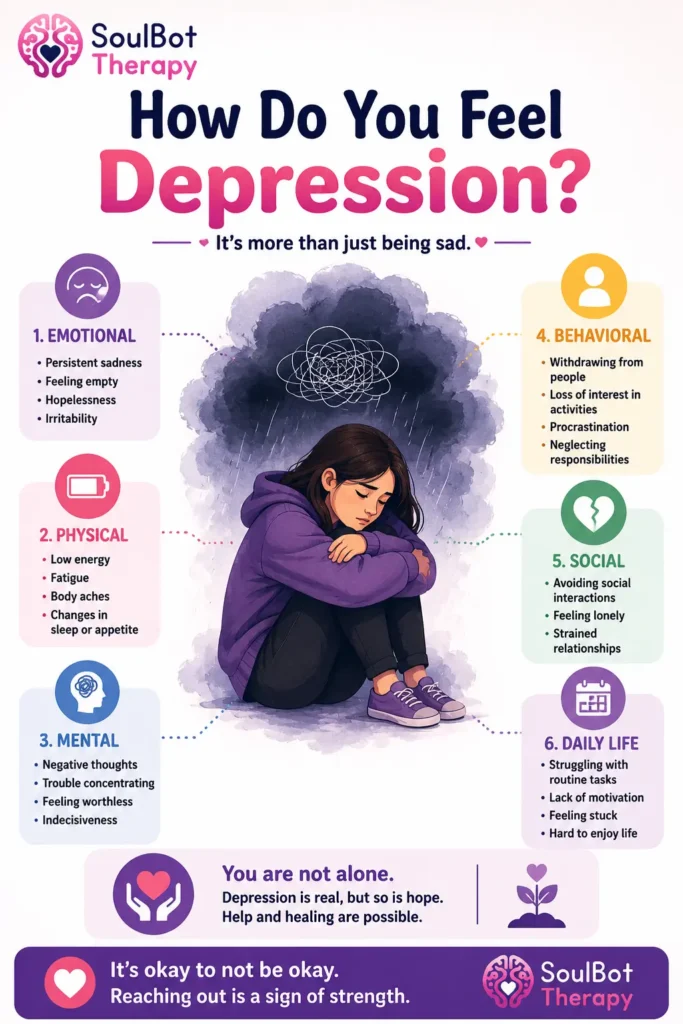
What Depression Can Feel Like in Daily Life
Depression does not always look like crying all day.
Sometimes it looks like:
- Feeling emotionally numb
- Losing interest in things you once enjoyed
- Sleeping too much or barely sleeping
- Feeling tired even after rest
- Struggling to focus
- Avoiding people
- Feeling guilty for no clear reason
- Moving through the day on autopilot
According to the National Institute of Mental Health, depression can affect how a person feels, thinks, sleeps, eats, and handles daily activities. It is more than temporary sadness and can require proper support.
Why Depression Is Hard to “Just Get Over”
People often say things like:
“Just think positive.”
“Go outside.”
“Be grateful.”
And honestly? That can feel annoying when your brain feels like it is moving through mud.
Depression affects motivation. So the things that could help may feel impossible to start.
That is why dealing with depression is not about forcing yourself into a perfect routine. It is about creating tiny points of support that make the day slightly easier.
Practical Daily Strategies for Depression
1. Start With One Small Anchor
When everything feels chaotic, create one daily anchor.
It could be:
- Brushing your teeth
- Opening the curtains
- Drinking water
- Sitting outside for 5 minutes
- Eating something simple
Do not underestimate small actions. Depression makes the basics hard, so doing one basic thing still counts.
2. Use the “Minimum Version” of Tasks
- If a full shower feels impossible, wash your face.
- Cleaning your room feels like too much, clear one corner.
- Cooking feels hard, so eat something easy.
This is one of the most realistic depression coping strategies because it works with low energy instead of shaming you for it.
3. Move Your Body Gently
Exercise does not have to mean the gym, sweat, and discipline mode.
It can be:
- A 5-minute walk
- Stretching in bed
- Standing in sunlight
- Gentle yoga
- Walking while listening to music
Research on mild depression has found that physical activity can support mental health, especially when it is realistic and consistent. It should support professional care, not replace it.
4. Eat Something Even If It Is Not Perfect
Depression can affect appetite in both directions. Some people barely eat. Others eat more than usual.
Start simple:
- Toast
- Fruit
- Rice
- Soup
- Eggs
- Curd
- Nuts
- Anything gentle and easy
You do not need a perfect diet to start feeling supported. You need your body to know it is being cared for.
5. Make Sleep Less Chaotic
Depression and sleep are deeply connected.
Try:
- Waking up around the same time
- Getting sunlight in the morning
- Avoiding long daytime naps if possible
- Keeping the bed for rest, not endless scrolling
- Reducing screens before sleep
This does not need to be perfect. Even one small sleep habit can help.
6. Talk to One Safe Person
Depression grows heavier in isolation.
You do not have to explain everything perfectly. You can simply say:
“I have not been feeling like myself lately.”
Or:
“I do not need advice. I just need someone to listen.”
Social support is not a cure, but it can reduce the loneliness that makes depression feel worse.
😇If talking to someone feels hard right now, talk to Soululu. Soululu gives you a private, judgment-free space to say what's on your mind without having to explain yourself perfectly.You can start small:
“I feel low, and I do not know why.”
That is enough.
How to Manage Depression When You Are Alone
If you are dealing with depression alone, the goal is not to become emotionally independent overnight.
The goal is to create small systems that support you.
Try this:
| If You Feel | Try This |
| Numb | Name one thing you can see, hear, and touch |
| Exhausted | Do the smallest version of one task |
| Lonely | Send one low-pressure message |
| Guilty | Write down what you did manage today |
| Overwhelmed | Choose only one next step |
These small actions are not magic. But they can stop the day from becoming completely unmanageable.
What Not to Do When You Feel Depressed
Try not to:
- Shame on you for being low
- Compare your healing timeline to others
- Wait until things are “serious enough” to seek help
- Use scrolling as your only escape
- Isolate from everyone for too long
- Make big life decisions in a very low moment
Depression lies. It tells you nothing will change.But feelings are not always facts.
😇SoulTip: On hard days, “better” may simply mean eating something, getting water, or replying to one message.
When to Seek Professional Help
You should consider professional support if:
- Depression lasts more than two weeks
- You lose interest in almost everything
- Sleep or appetite changes strongly
- Work, studies, or relationships are affected
- You feel hopeless most days
- You have thoughts of self-harm or do not want to live
If you feel unsafe or may harm yourself, please contact local emergency services, a crisis helpline, or a trusted person immediately.
Professional help may include therapy, medication, or both. Depression treatment often involves psychotherapy, medication, or a combination, depending on symptoms and individual needs.
Recommended Tools and Books for Depression Support
These tools can support reflection and daily coping. They are not a replacement for therapy or medical care.
- The Depression Cure by Stephen Ilardi
Helpful for understanding lifestyle-based support for depression. - The Mindful Way Through Depression
Useful for people who struggle with negative thought loops and emotional heaviness. - A guided self-care journal
Good for tracking mood, sleep, triggers, and small wins.
😇SoulTip: You do not need to feel motivated before taking care of yourself. Sometimes care comes first. Motivation follows later.
In a Nutshell
If you are trying to understand how to deal with depression, remember this:
Depression does not improve because you shame yourself into functioning. It improves when you create small, repeatable support systems around your mind and body.
Start with one small anchor. Move gently. Eat something. Sleep a little more consistently. Reach out to a trusted person, seek professional support when needed, or chat with Soululu, your private, supportive space to vent and process your emotions anytime.
You do not have to fix your whole life today.
Related SoulBot Reads
- Depression Symptoms You Should Never Ignore
- Anxiety Symptoms: Physical, Emotional & Hidden Signs
- Why Do I Feel Overwhelmed All the Time?
- How to Calm Yourself Down Quickly When Anxiety Hits
Use Soululu When the Day Feels Too Heavy
If your thoughts feel loud, heavy, or impossible to explain, talk to Soululu.
You can use it to process your mood, write out what you are feeling, or simply feel less alone for a few minutes.