
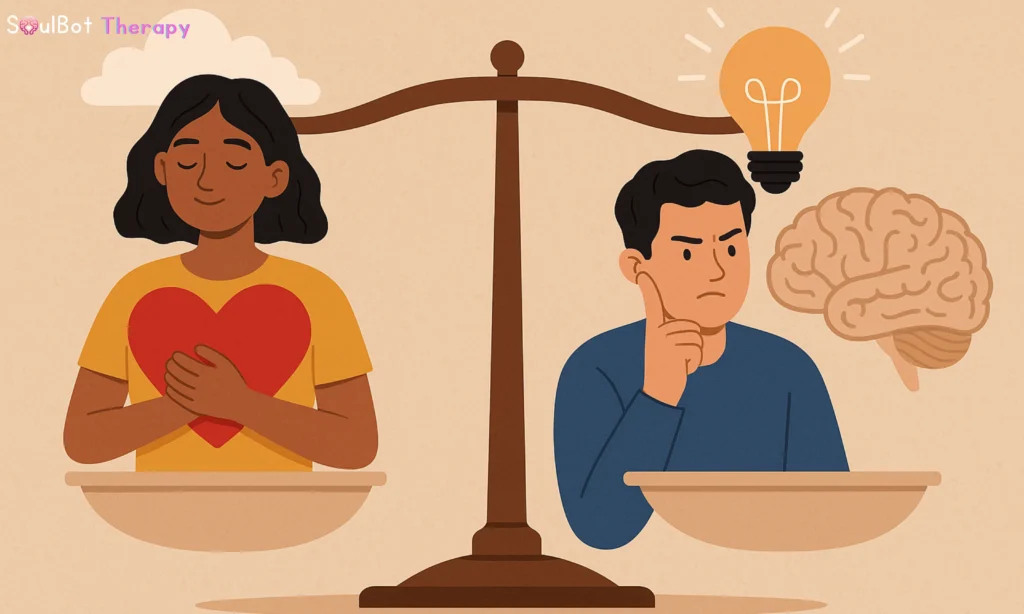
Quick Answer: Is EQ More Important Than IQ?
Neither EQ nor IQ is more important in every situation.
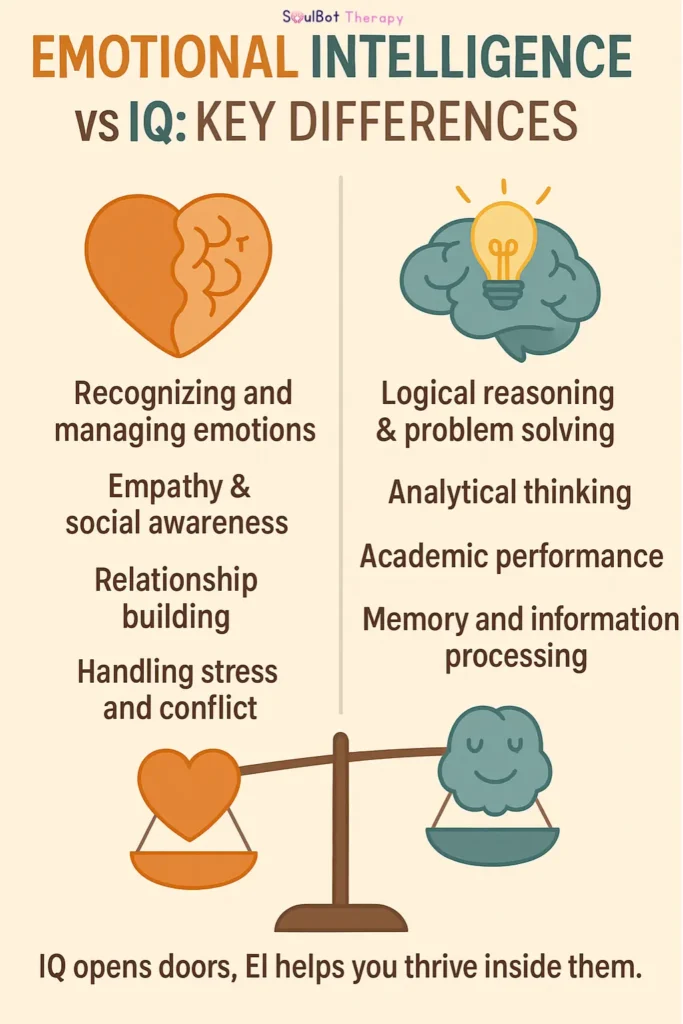
IQ helps with reasoning, learning, memory and complex problem-solving. Emotional intelligence helps you understand emotions, regulate your reactions, communicate clearly, and manage relationships effectively.
In simple terms:
- IQ helps you solve the problem.
- Emotional intelligence helps you handle the people and pressure around the problem.
School, technical work and analytical tasks may rely more heavily on cognitive ability. Relationships, teamwork, leadership and conflict often require stronger emotional skills.
Most real-life success depends on both.
👉 Take the SoulBot social Anxiety test to reflect on how you recognise, understand and manage emotions.What Is the Difference Between Emotional Intelligence and IQ?
| IQ | Emotional intelligence |
|---|---|
| Focuses on cognitive ability | Focuses on emotional information |
| Includes reasoning, learning and problem-solving | Includes recognising and managing emotions |
| Often measured through standardised cognitive tests | Measured through ability tests or self-report questionnaires |
| Important for academic and technical tasks | Important for communication and relationships |
| Helps answer “How do I solve this?” | Helps answer “How should I respond?” |
The American Psychological Association describes intelligence as the ability to learn from experience, use reasoning and adapt to the environment.
In the ability model of emotional intelligence, EI includes recognising emotions, using them to support thinking, understanding emotional changes and managing emotions effectively.
Is Emotional Regulation the Same as Emotional Intelligence?
No. Emotional regulation is a key component of emotional intelligence.
Emotional regulation means managing how you respond to emotions. For example, you may feel angry but choose to pause before replying.
Emotional intelligence is broader. It includes:
- Noticing what you feel
- Recognising emotions in others
- Understanding why an emotion appeared
- Using emotional information when making decisions
- Regulating your response
Someone may be good at staying calm but struggle to recognise how another person feels. That would show emotional regulation without equally strong skills across every part of emotional intelligence.
Which Matters More at Work: EQ or IQ?
It depends on the job.
IQ and cognitive ability are especially useful when work requires:
- technical knowledge
- analysing data
- learning complex systems
- logical reasoning
- solving unfamiliar problems
Emotional intelligence becomes especially useful when work involves:
- leading people
- giving feedback
- managing conflict
- dealing with customers
- working under pressure
- collaborating with a team
A meta-analysis found that emotional-intelligence measures were associated with job performance, including when cognitive ability and personality were considered. However, the strength of the relationship varied according to how emotional intelligence was defined and measured.
So, emotional intelligence can add value at work, but it does not replace knowledge, experience or cognitive ability.
Which Matters More for Academic Success?
IQ and cognitive ability remain important for learning and academic problem-solving.
However, emotional intelligence can also help students:
- Manage exam stress
- Ask for help
- Recover after poor results
- Stay motivated
- Work effectively with classmates
A large meta-analysis found that emotional intelligence was associated with academic performance and added information beyond cognitive intelligence and personality. The association does not mean EI matters more than IQ; it means emotional skills can support how students use their abilities.
Which Matters More in Relationships?
Emotional intelligence usually plays a more direct role in relationships.
A high IQ does not automatically help someone:
- Express feelings clearly
- Recognise emotional needs
- Apologise sincerely
- Listen without becoming defensive
- Manage jealousy or anger
- Resolve disagreements respectfully
For example, a person may understand exactly why an argument started but still struggle to calm down or listen properly.
Healthy relationships need reasoning, but they also need empathy, emotional awareness and communication.
Related: High vs Low Emotional Intelligence: Which One Are You?
Does Emotional Intelligence Improve Mental Health?
Emotional intelligence does not prevent every mental health difficulty.
However, skills such as recognising emotions, reframing thoughts and managing reactions can support healthier coping. Research has found associations between emotion-regulation strategies and mental health, although the type of strategy and the person’s circumstances matter.
High emotional intelligence does not mean:
- Staying calm all the time
- Never feeling anxious
- Hiding difficult emotions
- Understanding everyone perfectly
It means noticing emotions and responding to them more thoughtfully.
Can Emotional Intelligence Be Improved?
Yes. Emotional skills can be practised and strengthened.
Try these four steps:
1. Name the Emotion Precisely
Instead of saying, “I feel bad,” ask whether you feel disappointed, embarrassed, rejected, worried or overwhelmed.
2. Pause Before Reacting
Give yourself enough time to choose a response instead of acting on the first emotional impulse.
3. Check Your Assumptions
Ask:
“What do I know, and what am I assuming?”
This is especially useful during relationship conflict.
4. Listen Before Solving
When someone shares a problem, ask whether they want advice, practical help or simply to be heard.
Research reviews suggest emotional competencies can improve through structured training and repeated practice, although results depend on the programme and measurement method.
A Quick Soululu Check-In
Ask yourself:
- Can I name what I am feeling?
- Do I react before understanding the situation?
- Can I listen without immediately defending myself?
- Do I recognise how my behaviour affects others?
Talk to Soululu to reflect on emotional triggers, communication patterns and difficult conversations.Soululu supports self-reflection. It does not provide an official IQ or emotional-intelligence assessment.
Final Thought
Emotional intelligence vs IQ is not a battle.
IQ supports learning, reasoning and problem-solving. Emotional intelligence supports emotional regulation, communication and relationships.
You do not need to choose one. The useful goal is knowing which ability a situation requires and strengthening the skill you currently lack.