

Love does not look the same in every relationship. You can love a partner, friend, family member, and yourself in very different ways. Psychology does not have a single universal list of “types of love,” but several models describe love in terms of emotional closeness, attraction, care, and commitment.
Psychologist Robert Sternberg’s well-known triangular theory describes love in terms of three components: intimacy, passion, and commitment. Different combinations can create different relationship experiences.
1. Romantic Love
Romantic love usually combines emotional closeness with attraction.
It may involve:
- wanting to spend time together
- physical affection
- emotional vulnerability
- excitement and attraction
Romantic love can eventually develop into deeper commitment, but attraction alone does not guarantee a healthy relationship.
If you’re unsure whether intense affection is healthy, read Love Bombing vs Genuine Love.
2. Companionate Love
Companionate love is built more around closeness, trust, and commitment than intense passion.
It often develops in:
- long-term relationships
- close friendships
- family relationships
In Sternberg’s model, companionate love combines intimacy and commitment.
It can feel calm rather than dramatic, and that does not mean the connection is weaker.
3. Platonic Love
Platonic love is deep affection without a sexual or romantic relationship.
You may feel emotionally safe with someone, trust them deeply, and consider them an important part of your life without wanting romantic intimacy.
Strong friendships can provide meaningful emotional connection and support.
4. Familial Love
Familial love is the bond you may experience with parents, siblings, children, or chosen family.
It can involve:
- attachment
- loyalty
- protection
- familiarity
- long-term care
Family love can be powerful, but healthy family relationships still require boundaries and mutual respect.
5. Physical or Passionate Love
Some connections are driven strongly by physical attraction and desire.
Sternberg describes passion as the component associated with romance, physical attraction, and sexual desire.
Physical attraction can be part of romantic love, but it is not the same as emotional intimacy.
Read What Is Physical Intimacy? to understand the difference.
6. Self-Love
Self-love means treating yourself with care, respect, and compassion rather than basing your worth entirely on how other people see you.
It can look like:
- setting boundaries
- forgiving yourself for mistakes
- taking care of your needs
- speaking to yourself with compassion
- leaving situations that repeatedly harm you
Self-love does not mean believing you are perfect. It means believing your needs and well-being also deserve consideration.
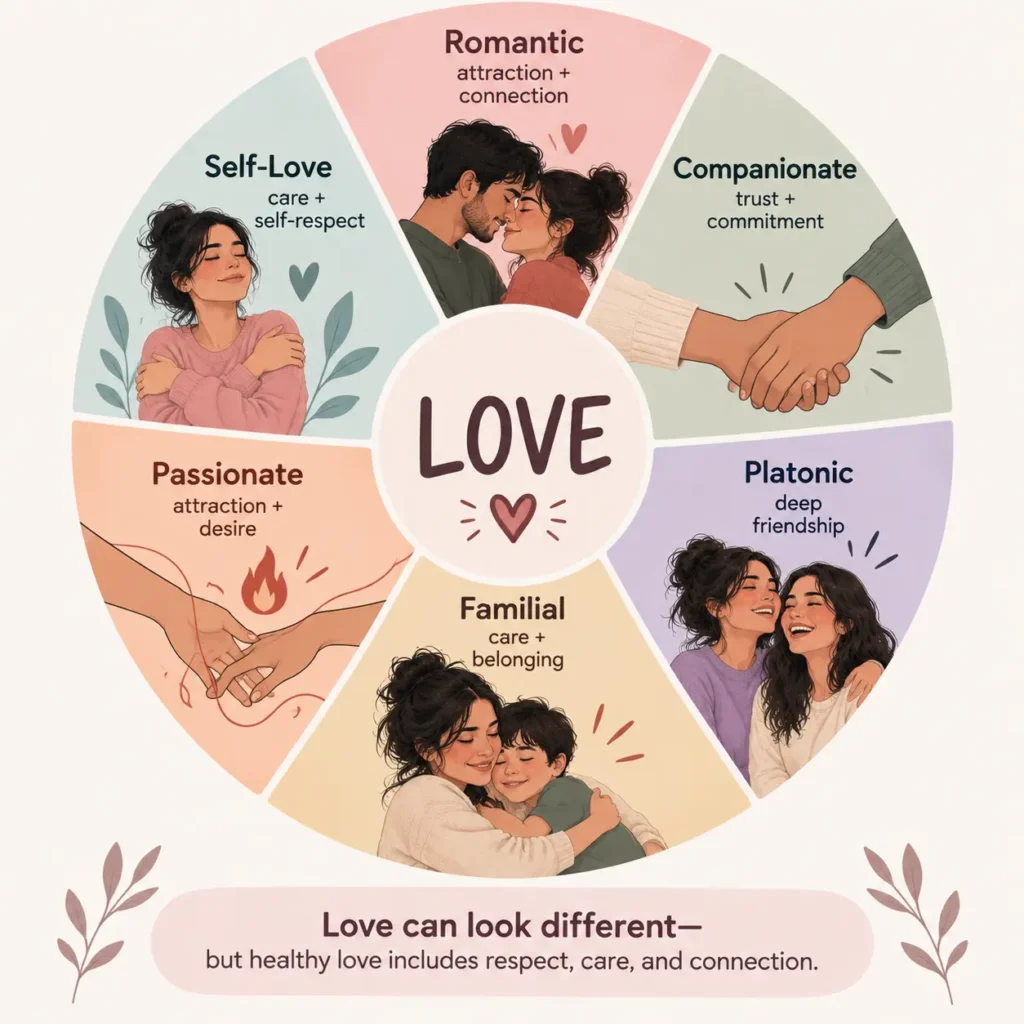
Can You Experience More Than One Type of Love?
Yes.
Love can change as relationships develop. A romantic relationship may include attraction, friendship, emotional intimacy, physical intimacy, and long-term commitment simultaneously.
Rather than asking “What type of love is this?”, it may be more useful to ask:
Do I feel safe, respected, connected, and able to be myself in this relationship?
How Do You Naturally Give and Receive Love?
Different people express affection differently.
Take SoulBot’s Love Language Test to explore how you tend to give and receive care in relationships.
You can also talk to Soululu if you’re trying to understand what a relationship means to you or why a particular connection feels confusing.