

Feeling guilty all the time does not necessarily mean you are doing something wrong. Constant guilt can develop when you take too much responsibility for other people, fear disappointing them, struggle with perfectionism, or repeatedly question whether you have done enough.
The important question is: Are you feeling guilty because you caused harm, or simply because someone might be unhappy with your choice?Why Do I Feel Guilty Even When I Did Nothing Wrong?
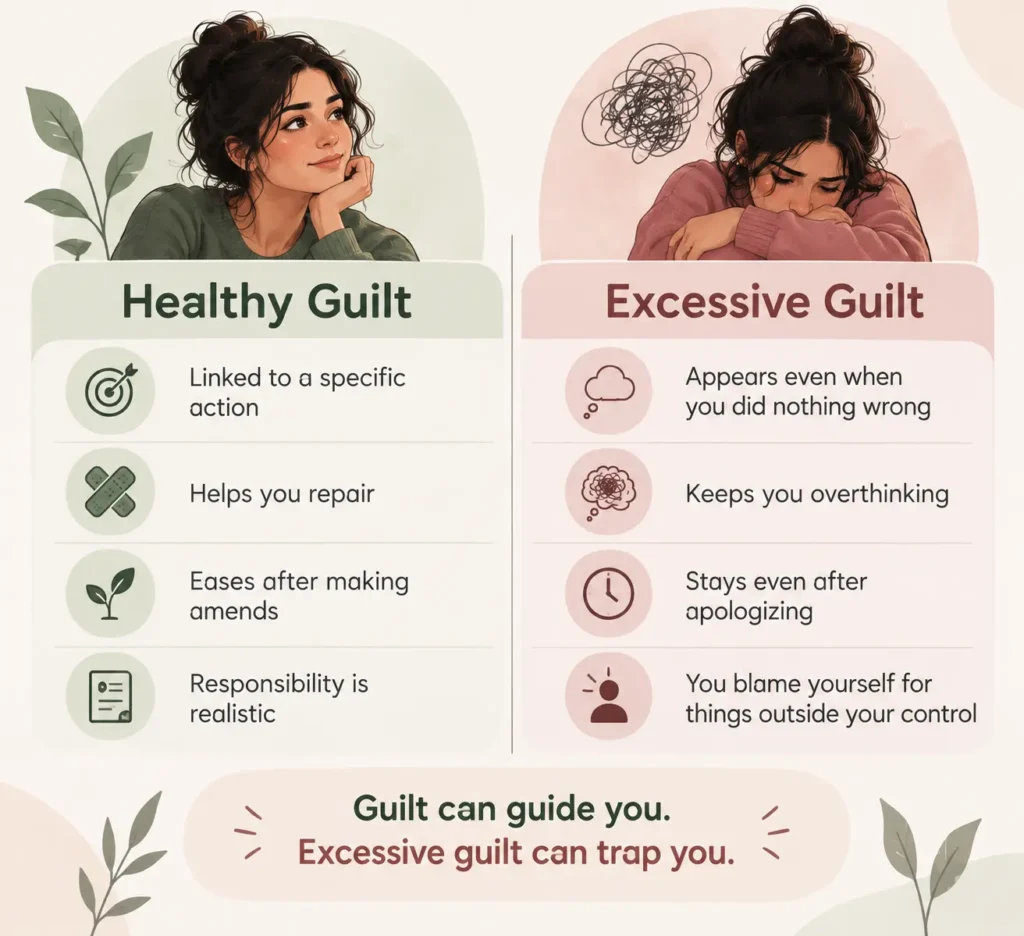
Healthy guilt is usually connected to something specific. You recognize that you hurt someone, take responsibility, repair what you can, and eventually move forward.
Excessive guilt can appear even when you have done nothing clearly wrong. You may feel guilty for resting, saying no, spending money on yourself, setting boundaries, or choosing your own needs.
7 Reasons You May Feel Guilty All the Time
1. You Feel Responsible for Other People’s Feelings
If someone is disappointed, upset, or unhappy with you, you immediately assume you caused it.
But caring about someone’s feelings is different from being responsible for them.
2. You’re Used to People-Pleasing
People-pleasing can make ordinary boundaries feel selfish.
You might say yes when you mean no, apologize unnecessarily, or feel guilty whenever you prioritize yourself.
If this feels familiar, read How to Protect Your Emotional Boundaries Without Guilt.
3. You Expect Yourself to Get Everything Right
Perfectionism can make normal mistakes feel much bigger than they are.
Instead of thinking:
“I made a mistake.”
You may think:
“I should have known better.”
4. You Learned to Keep Everyone Happy
Growing up around criticism, conflict, unpredictable reactions, or strong expectations can teach you to constantly monitor other people’s moods.
Eventually, keeping everyone comfortable may start feeling like your responsibility.
😇If guilt is affecting your daily life or relationships, talking with a therapist can help you understand where it comes from and how to work through it.
5. Anxiety Makes You Question Yourself
Anxiety can turn one interaction into hours of:
- “Did I say something wrong?”
- “Are they upset with me?”
- “Was that my fault?”
The guilt may come from uncertainty rather than actual wrongdoing.
6. Guilt Has Turned Into Shame
Guilt says:
“I did something wrong.”
Shame says:
“There is something wrong with me.”
That difference matters. Persistent self-criticism can affect your confidence and self-worth.
7. Something Else May Be Affecting Your Mood
Persistent or excessive guilt can sometimes appear alongside depression or other emotional difficulties.
If guilt is constant and comes with ongoing sadness, hopelessness, loss of interest, or difficulty functioning, consider talking with a mental health professional.
Do You Put Other People’s Feelings Before Your Own?
Constant guilt can sometimes show up when you struggle to express your needs, set boundaries, or tolerate disappointing someone.
Take SoulBot’s free Emotional Availability Test to reflect on how openly you understand, express, and respond to emotions in relationships.
Healthy Guilt vs Excessive Guilt
| Healthy guilt | Excessive guilt |
|---|---|
| Connected to a specific action | Appears without clear wrongdoing |
| Helps you repair something | Keeps you overthinking |
| Eases after making amends | Continues even after you’ve apologized |
| Responsibility is realistic | You blame yourself for things outside your control |
How Do I Stop Feeling Guilty About Everything?
Before automatically apologizing, ask yourself:
What exactly did I do wrong?
Then separate:
What was actually my responsibility?
from
What am I taking responsibility for because I don’t want someone to be disappointed?
Writing these situations down can make recurring patterns easier to notice.
Feeling Guilty but Not Sure Why?
Use the SoulBot Journal to track what triggered the guilt, what you believed you had done wrong, and what was actually within your control.
Or talk to Soululu when you need a private space to untangle guilt, self-blame, and difficult emotions.