Home > Blog > Signs of a Dysfunctional Family: 9 Patterns and How They Affect You
Signs of a Dysfunctional Family: 9 Patterns and How They Affect You
Mental Health
Last Updated: August 23, 2026
Table of Contents
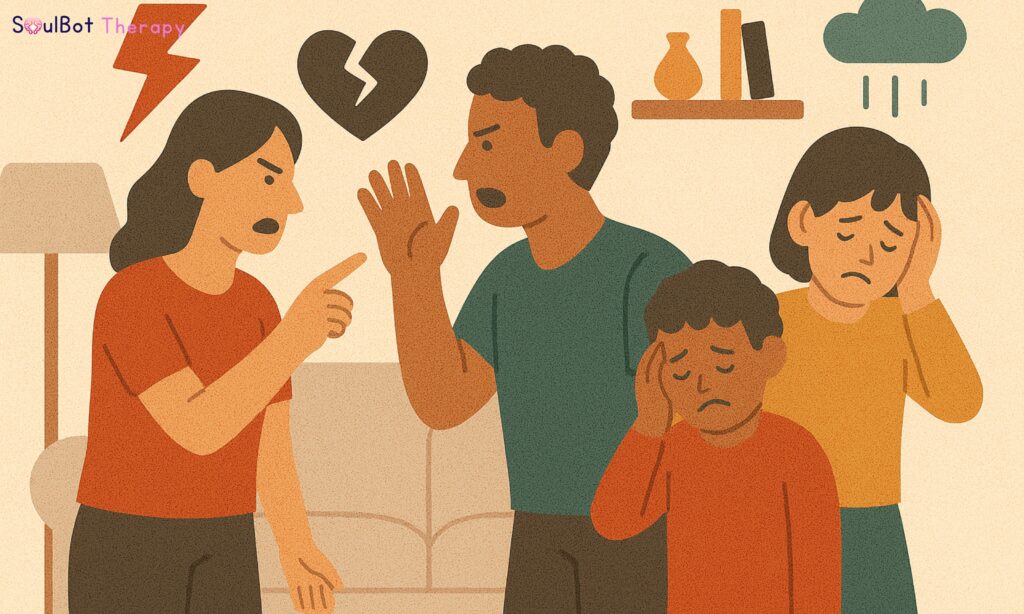
The signs of a dysfunctional family are not always obvious when you are growing up inside one. Frequent criticism, unpredictable conflict, weak boundaries, emotional neglect, or having to manage a parent’s emotions may simply feel like “normal family life.”
The difference between an imperfect family and a dysfunctional pattern is usually repetition and impact. Every family argues or makes mistakes. Problems become more concerning when children repeatedly feel unsafe, unheard, blamed, controlled, or responsible for keeping the family stable.
Growing up around these patterns does not determine your future. But understanding them can explain why certain behaviours, such as people-pleasing, difficulty trusting others, or guilt around boundaries, still appear in adulthood.
What Are the Signs of a Dysfunctional Family?
Common dysfunctional family traits can include:
chronic or unpredictable conflict
emotional invalidation
conditional affection or approval
poor personal boundaries
children taking on adult responsibilities
excessive control
one family member repeatedly being blamed
problems being denied instead of addressed
little accountability or repair after conflict
A dysfunctional family is not a clinical diagnosis. The term describes relationship patterns that repeatedly interfere with emotional safety, healthy development, or family functioning.
Normal Family Conflict vs a Dysfunctional Family Pattern
Conflict alone does not make a family dysfunctional.
Normal family difficulty
Dysfunctional family pattern
Arguments happen occasionally
Conflict is chronic, intense, or unpredictable
People can disagree
Disagreement may lead to punishment, threats, or withdrawal
Mistakes are acknowledged
Problems are denied or blamed on one person
Privacy is generally respected
Personal boundaries are repeatedly ignored
Children have age-appropriate responsibilities
Children may take on adult emotional or practical roles
Relationships can recover after conflict
Problems remain unresolved with little repair
The important question is:
After something goes wrong, is there safety, accountability, and repair?
1. You Had to Constantly Monitor Everyone’s Mood
Some children learn to walk into a room and immediately assess:
“Is Mum angry?”
“Is Dad in a good mood?”
“Is it safe to ask for something?”
The National Child Traumatic Stress Network explains that children exposed to unpredictable or unsafe environments can become highly sensitive to other people’s emotional states.
As an adult, this may show up as constantly checking whether someone is upset with you, reading too much into changes in tone, or struggling to relax during conflict.
2. Your Emotions Were Frequently Dismissed
Emotional invalidation may sound like:
“You’re too sensitive.”
Stop crying.”
“There’s nothing to be upset about.”
“Other people have it worse.”
Parents do not need to respond perfectly to every emotion. But repeated dismissal can teach a child that their feelings are inconvenient, exaggerated, or unsafe to express.
As an adult, you may struggle to identify what you need or question whether you are “allowed” to feel hurt.
3. You Became the Adult Too Early
Some children take on responsibilities that go beyond normal household participation.
You may have:
regularly cared for younger siblings
mediated arguments between adults
managed a parent’s emotions
heard detailed adult relationship or financial problems
felt responsible for keeping everyone calm
This pattern is often called parentification.
The problem is not helping at home. It is repeatedly being placed in a role where your own developmental needs come second to the adults around you.
4. Personal Boundaries Were Not Respected
Dysfunctional family dynamics may include:
entering your room without permission
reading private messages
demanding access to personal information
treating disagreement as disrespect
expecting immediate availability
involving children in adult disputes
If this was normal growing up, setting limits as an adult can feel strangely uncomfortable.
You may intellectually know you are allowed to say no while still feeling guilty afterward. Learning how to protect emotional boundaries without guilt can help separate a reasonable boundary from the fear that having needs makes you selfish.
5. Conflict Happened, but Repair Rarely Did
Healthy families still argue.
What often distinguishes healthier conflict is what happens afterward.
There may be:
acknowledgement
apology
explanation
changed behaviour
reassurance
compromise
In dysfunctional patterns, conflict may instead end with silent treatment, intimidation, denial, blame, or pretending nothing happened.
Children then learn that conflict means danger rather than something relationships can survive and repair.
This can later affect romantic relationships. Someone who grew up around unresolved conflict may avoid disagreements completely or become highly distressed when a partner is upset. These patterns can overlap with what we explore in relationship trauma and how past experiences shape the way you love.
6. Love or Approval Felt Conditional
Some children receive the most warmth when they:
achieve
obey
stay quiet
make the family look good
care for other people
avoid creating problems
That can create the belief:
“I am valuable when I am useful.”
Later, this may appear as perfectionism, overworking, people-pleasing, or feeling uncomfortable receiving care without earning it first.
If your sense of worth still depends heavily on achievement or approval, the strategies in how to build self-esteem without toxic positivity can help you start separating performance from personal worth.
7. One Person Was Always Blamed
Some dysfunctional families repeatedly assign one person the role of:
“the difficult child”
“the dramatic one”
“the reason everyone fights”
Family problems are rarely explained by one person alone.
Repeatedly being blamed can leave a child carrying shame for problems they did not create and could not control.
As an adult, this may show up as automatically assuming conflict is your fault or apologising before you have even decided whether you did something wrong.
8. Serious Problems Were Hidden or Normalised
Some family environments include more serious adversity such as:
However, ACE research should not be interpreted as destiny.
The Harvard Center on the Developing Child emphasises that supportive relationships can buffer the effects of significant childhood adversity and strengthen resilience.
9. Your Needs Consistently Came Last
You may now notice that you:
say yes automatically
feel guilty resting
over-explain decisions
avoid asking for help
worry constantly about disappointing people
take responsibility for everyone else’s feelings
ignore your own discomfort until resentment builds
These behaviours can be coping strategies learned in environments where keeping others happy felt safer than expressing your own needs.
The goal is not to judge the strategy.
Ask:
“Did this help me then, and does it still help me now?”
Which Childhood Family Pattern Are You Still Carrying?
Instead of stopping at “my family was dysfunctional,” connect the childhood pattern to what is happening today.
Childhood pattern
Possible adult echo
Unpredictable anger
Constantly monitoring people’s moods
Conditional approval
Perfectionism or approval-seeking
Weak boundaries
Guilt when saying no
Emotional invalidation
Doubting your own feelings
Parentification
Feeling responsible for everyone
Chronic criticism
Harsh inner self-talk
Unresolved conflict
Avoiding disagreement or fearing rejection
These are possible patterns, not diagnoses.
If old coping strategies still affect everyday relationships, practical healthy coping mechanisms can help you respond differently without expecting yourself to change everything at once.
Try the SoulBot Safety–Voice–Role–Repair Check
If you are trying to understand your childhood, ask four questions.
Safety
Did home generally feel physically and emotionally safe?
Voice
Could I express sadness, anger, disagreement, or personal needs without being humiliated or punished?
Role
Was I allowed to be the child, or did I frequently carry adult emotional responsibilities?
Repair
When someone hurt someone else, was there acknowledgement, accountability, and an attempt to repair the relationship?
You do not need every answer to be negative before an experience matters.
This framework is for reflection, not diagnosis.
How Can Growing Up in a Dysfunctional Family Affect Adults?
Long-term effects vary widely.
Some people may struggle with:
low self-esteem
difficulty trusting others
fear of abandonment
people-pleasing
excessive independence
boundary guilt
conflict avoidance
self-criticism
difficulty recognising personal needs
The CDC notes that adverse childhood experiences can affect health and well-being across the lifespan, but individual outcomes depend on many factors, including supportive relationships and later environments.
That is why recognising a family pattern should lead to curiosity rather than:
“This explains everything wrong with me.”
How Do You Heal From Dysfunctional Family Patterns?
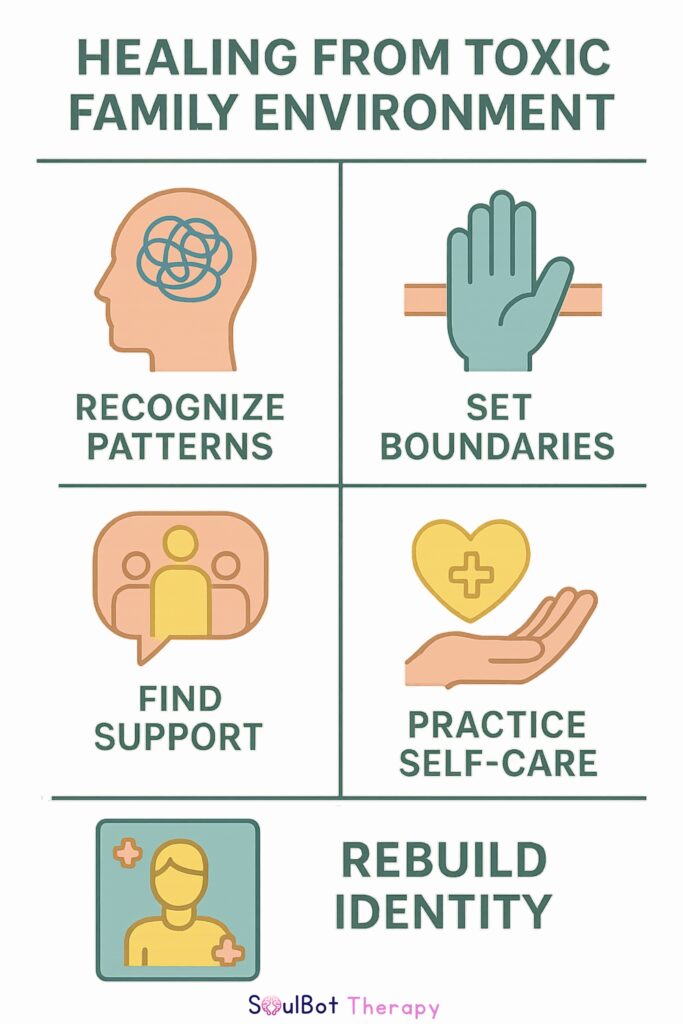
Start with what is affecting you now.
You may need to:
Notice which behaviour you learned to stay safe.
Identify situations that still trigger that behaviour.
Separate other people’s emotions from your responsibility.
Practise small boundaries.
Challenge excessive guilt and self-blame.
Build relationships where disagreement does not threaten connection.
Seek professional support when childhood experiences continue to cause significant distress.
For example, if your childhood taught you that saying no leads to rejection, practising healthy relationship boundaries may be more useful than repeatedly analysing why your family behaved the way they did.
Healing is not about deciding whether every person in your family was good or bad.
It is about recognising:
“This affected me, and I can choose what I carry forward.”
When Should You Consider Professional Support?
Consider speaking with a mental-health professional if childhood family experiences continue to interfere with:
relationships
emotional regulation
self-esteem
work or study
boundaries
sleep
everyday functioning
A therapist can help you understand patterns without forcing you into a particular interpretation of your childhood.
Talk to Soululu About a Family Pattern You’re Trying to Understand
If something from childhood keeps showing up in your present relationships, use Soululu to reflect on:
What happened repeatedly?
What did I learn to do to stay safe?
When does that behaviour appear now?
What am I afraid will happen if I respond differently?
Soululu can support reflection and pattern tracking. It cannot determine whether a family was clinically dysfunctional or replace professional mental-health care.
Final Thought
Understanding the signs of a dysfunctional family is not about collecting evidence against your parents.
It is about recognising the difference between:
what you had to learn to survive then
and
what you want to keep doing now.
Some childhood behaviours protected you in the environment you grew up in.
Adulthood gives you the opportunity to decide whether you still need them.
Common signs include chronic conflict, emotional invalidation, weak boundaries, conditional approval, role reversal, controlling behaviour, repeated blame, denial of problems, and little repair after conflict.
Look at repeated patterns rather than isolated incidents. Ask whether you generally felt safe, could express emotions, had age-appropriate responsibilities, had privacy, and experienced accountability after conflict.
Normal families still experience disagreements and mistakes. Dysfunction becomes more concerning when harmful patterns are chronic, boundaries are repeatedly violated, emotional safety is poor, and problems are rarely acknowledged or repaired.
Possible effects include people-pleasing, trust difficulties, boundary guilt, perfectionism, self-criticism, conflict avoidance, hypervigilance, and difficulty recognising your own needs.
Yes. Childhood experiences can influence adult patterns without permanently determining them. Supportive relationships, healthier boundaries, new coping strategies, and professional therapy when needed can help change patterns over time.
Sonali Shastri is a Content Expert at SoulBot Therapy, where she creates mental health and self-discovery content that feels clear, relatable, and emotionally grounded. She specializes in translating psychology-informed ideas into simple, relatable blogs, test pages, and reflection-based resources. Her work helps readers understand themselves better while reducing stigma around mental health conversations.