

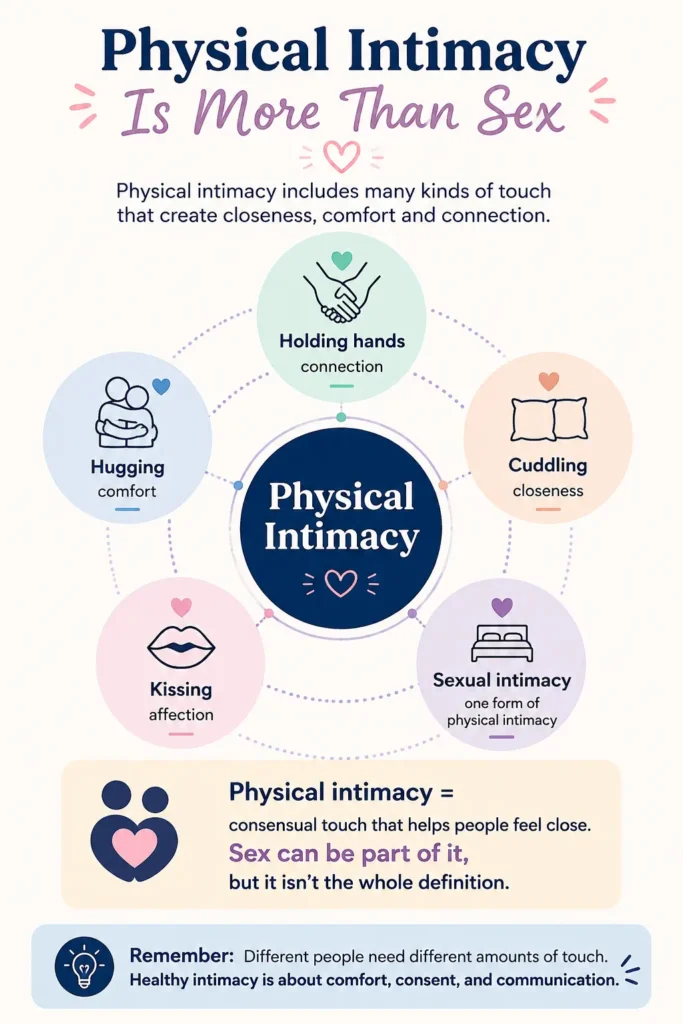
Physical intimacy is closeness expressed through touch, such as holding hands, hugging, cuddling, kissing, or sexual activity. It does not always mean sex. In healthy relationships, physical intimacy is consensual and can communicate affection, comfort, attraction, and emotional connection.
What Does Physical Intimacy Mean?
Physical intimacy is any form of touch that creates a sense of closeness between people.
In romantic relationships, this can include both non-sexual affection and sexual intimacy. What feels intimate can vary from person to person, which is why physical closeness should always be mutual and comfortable for everyone involved.
Examples of Physical Intimacy
Physical intimacy can look different depending on the relationship.
Non-sexual physical intimacy can include:
- Holding hands
- Hugging
- Cuddling
- Sitting close together
- Forehead kisses
- Resting your head on your partner
- Touching their arm or back affectionately
Sexual or sensual intimacy can include:
- Kissing
- Caressing
- Sexual touch
- Mutually desired sexual activity
The important distinction is that physical intimacy includes sex but is not limited to sex.
Physical Intimacy vs Sexual Intimacy
| Physical intimacy | Sexual intimacy |
|---|---|
| Includes many forms of touch | Specifically involves sexual closeness |
| Can be non-sexual | Has a sexual element |
| Includes hugs, cuddling and hand-holding | Includes sexual touching or sex |
| Can exist without sexual attraction | Usually involves sexual desire |
So, someone may want more cuddling or affectionate touch without necessarily wanting more sex.
Why Is Physical Intimacy Important in a Relationship?
Physical affection can help partners feel connected and cared for.
Research has linked affectionate touch with greater relationship satisfaction and feelings of closeness. A large cross-cultural study also found that affectionate touch was positively associated with reported love toward romantic partners.
Physical intimacy may help communicate:
- Affection
- Comfort
- Reassurance
- Attraction
- Emotional connection
However, there is no ideal amount of physical intimacy that every healthy couple should have.
What matters is whether both partners feel respected and able to communicate their needs.
What If You and Your Partner Want Different Levels of Physical Intimacy?
Differences in physical affection are common.
One partner may enjoy frequent touch while the other needs more personal space. That does not automatically mean there is less love in the relationship.
It may help to talk about:
- What types of touch feel good to each of you?
- What feels uncomfortable?
- When do you prefer more space?
- Are you missing affection, sexual intimacy, or emotional closeness?
- Do you feel comfortable saying no?
Physical intimacy should never involve pressure. Consent and boundaries still matter in long-term relationships.
You may also find it helpful to read How to Build Emotional Intimacy in a Relationship and How to Set Healthy Relationship Boundaries.
Can You Have Physical Intimacy Without Emotional Intimacy?
Yes. People can share physical closeness without having a deep emotional bond. The opposite can also be true: two people may feel deeply emotionally connected while expressing relatively little physical affection.
Healthy relationships usually come down to whether both people understand and respect each other’s needs, rather than adhering to a fixed definition of what intimacy should look like.
Do You and Your Partner Show Affection Differently?
You may care deeply about each other while expressing love in completely different ways.
Take SoulBot’s Free Love Language Test → to explore how you prefer to give and receive affection.
If physical or emotional closeness has become difficult to discuss, you can also talk privately with Soululu and reflect on what you need in your relationship.