
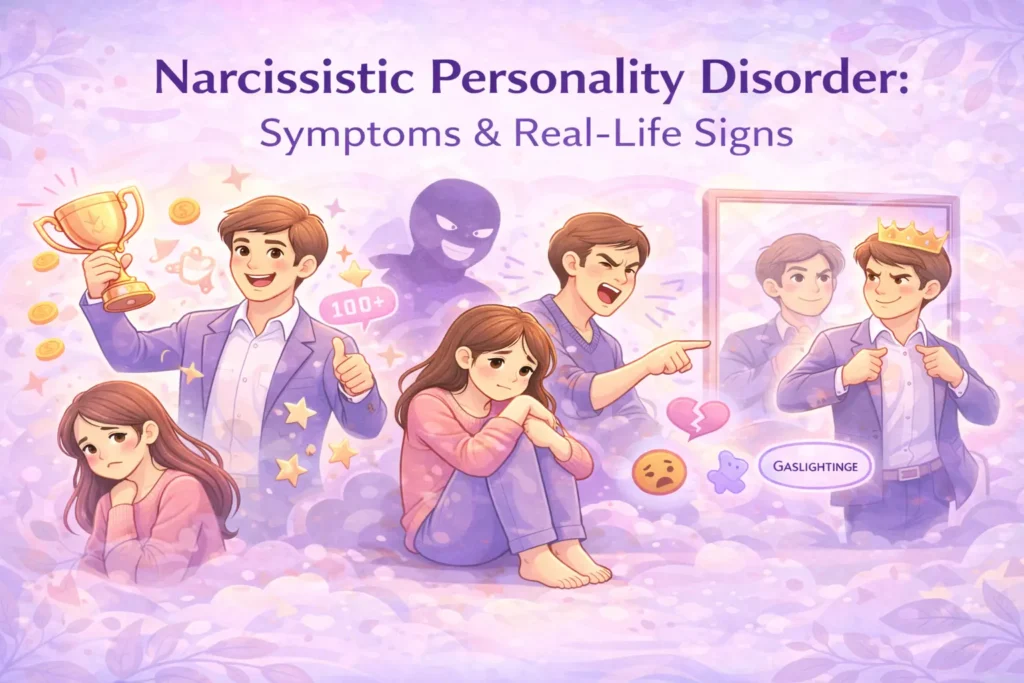
They seem confident. Charming. Even impressive at first.
But over time, something feels off. Conversations feel one-sided. Your emotions feel dismissed. And you start questioning yourself more than them.
If you’ve been searching for narcissistic personality disorder symptoms, you’re probably trying to make sense of a pattern, not just a person.
This guide will help you understand:
- What narcissistic personality disorder actually means
- The most common narcissistic personality disorder symptoms
- Real-life signs you might recognise
- And how to respond without losing yourself
What Is Narcissistic Personality Disorder?
According to the National Institute of Mental Health, narcissistic personality disorder is a mental health condition characterized by patterns of grandiosity, need for admiration, and lack of empathy.
- A strong need for admiration
- A sense of superiority
- Difficulty empathising with others
But here’s something important:
👉 This blog is not meant to diagnose anyone.
👉 It’s here to help you recognise patterns and protect your emotional well-being.
Many people may show narcissistic traits in relationships without having a clinical disorder.
Narcissistic Personality Disorder Symptoms
Let’s break down the most common narcissistic personality disorder symptoms in a simple, real-world way:
1. Constant Need for Validation
They seek praise, attention, and admiration—and may feel uncomfortable without it.
2. Lack of Empathy
They struggle to genuinely understand or care about how others feel.
3. Grandiose Self-Image
They often see themselves as more important, successful, or special than others.
4. Entitlement
They expect special treatment even when it’s not justified.
5. Manipulative Behaviour
They may use guilt, blame, or charm to get what they want.
6. Sensitivity to Criticism
Even small feedback can trigger strong reactions, such as defensiveness, anger, or withdrawal.
These symptoms of narcissistic personality disorder don’t always appear loudly.
Sometimes, they show up subtly but consistently.
Real-Life Signs of Narcissistic Behaviour
Understanding real life narcissistic behaviour makes things clearer than just reading symptoms.
Here’s what it often looks like:
- Conversations always shift back to them
- Your feelings are dismissed or minimized
- Apologies feel forced or incomplete
- You feel confused after arguments
- They alternate between affection and distance
These narcissistic personality disorder signs are not about one incident
👉 They’re about repeated patterns.
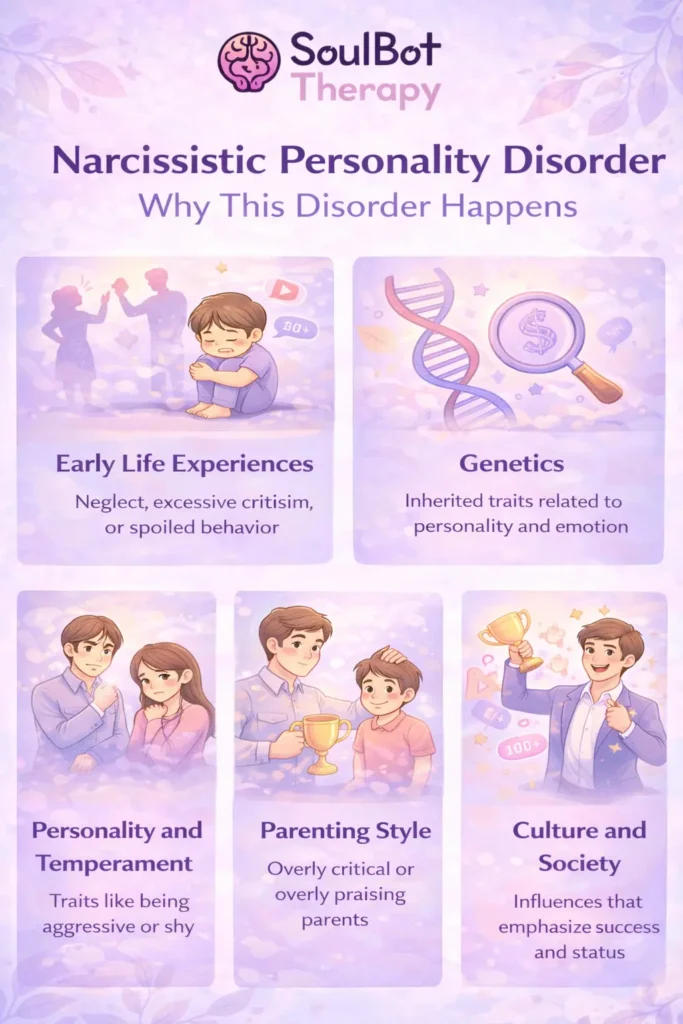
Narcissistic Traits in Relationships
In relationships, narcissistic traits in relationships often create emotional imbalance.
You might notice:
- Hot-and-cold behavior
- Control disguised as “care”
- Emotional invalidation
- One-sided effort
Over time, this can lead to:
👉 Self-doubt
👉 Emotional exhaustion
👉 Loss of identity
👉 You may also relate to:
What Is Narcissistic Abuse? Signs, Effects & Recovery
Narcissistic Personality Disorder Examples
Example 1:
You share something important.
They interrupt and talk about themselves.
Example 2:
You express hurt.
They respond with:
“You’re overreacting.”
Example 3:
They make mistakes.
But somehow you end up apologizing.
These narcissistic personality disorder examples show how patterns, not labels, matter most.
Why It’s So Hard to Recognise?
Many people search for narcissistic personality disorder symptoms because the behaviour is confusing.
That’s because:
- It doesn’t start negatively
- There are moments of charm and connection
- The behaviour is inconsistent
This creates:
👉 Emotional attachment
👉 Confusion
👉 Hope that things will change
💜 SoulTip: Focus less on labelling them and more on how you feel. Instead of asking: “Are they a narcissist?” Ask “Do I feel safe, respected, and heard here?”
Important Difference: Traits vs Disorder
This is crucial.
👉 Not everyone showing narcissistic traits has NPD
👉 And not every difficult person is a narcissist
The key difference is:
- Frequency
- Intensity
- Consistency
Focus on patterns, not labels.
What You Can Do If You Notice These Signs?
If you recognise these narcissistic personality disorder symptoms, here’s what helps:
1. Observe Patterns, Not Promises
Look at behaviour over time, not words.
2. Set Emotional Boundaries
Protect your energy, even in small ways.
3. Trust Your Experience
If something feels off consistently, it matters
4. Prioritize Emotional Safety
Choose spaces where you feel heard and respected.
Tools That Can Help You Reflect
During confusing situations, structure helps.
You can explore:
- Guided relationship journals
- Emotional boundary workbooks
These serve as practical tools for emotional regulation when your thoughts feel unclear.
(These tools support awareness, not a replacement for therapy.)
💜 SoulTip: Not every difficult person is a narcissist, but patterns matter One bad moment doesn’t define someone. But repeated emotional harm shouldn’t be ignored.
🛒 Supportive Tools That Can Help
These resources support reflection and clarity. They are not a substitute for therapy.
🧠 In a Nutshell
If you’re trying to understand narcissistic personality disorder symptoms, remember:
👉 It’s about patterns, not one-off behaviour
👉 Real-life signs show up in how you feel around them
👉 And your emotional experience is valid
You don’t need a diagnosis to recognize when something isn’t healthy.
🔗 Try This SoulBot Test
If this feels relatable:
👉 Take the Emotional Availability Test
It can help you understand:
- Your emotional patterns
- Relationship tendencies
- Where you may need boundaries