

Deep relationship questions can help you understand how your partner thinks, what they need, what they fear, and how they experience your relationship.
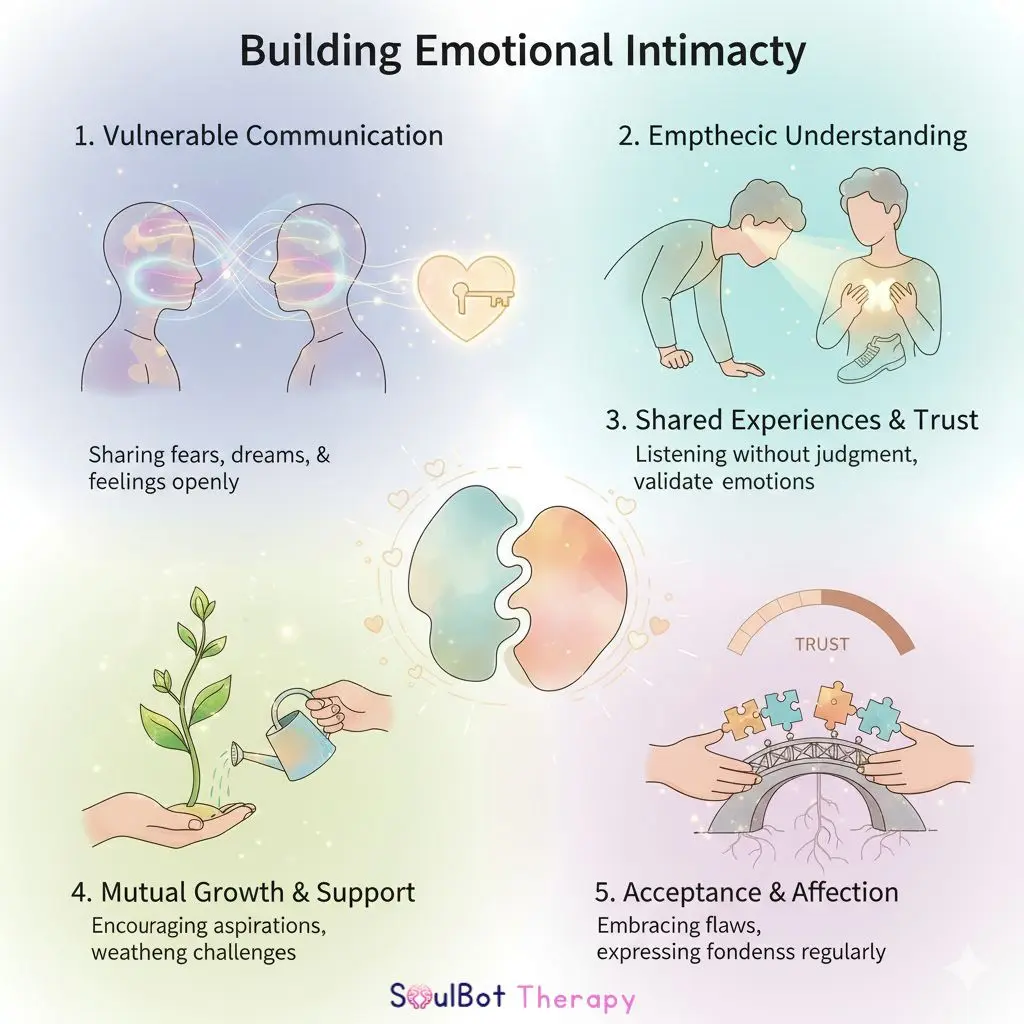
The questions themselves are not what create intimacy. What matters is whether both people feel safe enough to answer honestly and whether the other person listens without immediately correcting, defending, or fixing.
Research on self-disclosure has found that structured, gradually deeper conversations can increase feelings of closeness compared with small talk. Perceived partner responsiveness, feeling understood, accepted, and cared for, is also associated with greater relationship satisfaction.
35 Deep Questions to Ask Your Partner
You do not need to ask all of these at once. Pick two or three that fit the moment.
Questions About Emotional Connection
- When do you feel closest to me?
- What makes you feel emotionally safe with someone?
- Is there something you wish I understood better about you?
- When you’re having a difficult day, what kind of support actually helps?
- When do you feel most appreciated by me?
- Is there anything you find difficult to ask me for?
- What helps you feel loved when words aren’t enough?
These questions are useful because emotional intimacy depends on more than disclosure. How a partner responds to vulnerability also matters. Research has linked perceived responsiveness from a partner with higher couple satisfaction.
Questions About Your Relationship
- What do you think we do really well as a couple?
- What is one part of our relationship you would like us to work on?
- What is something I do that makes you feel supported?
- What makes you feel disconnected from me?
- When we disagree, what do you wish I did differently?
- What is one memory of us that you never want to forget?
- What do you think has changed most about us since we got together?
The goal is not to get a perfect answer. Listen for what your partner is trying to communicate underneath it.
Questions About Needs and Love
- What makes you feel cared for in everyday life?
- Do you prefer comfort, advice, space, or practical help when you’re upset?
- What small gesture from me means more than I probably realise?
- When do you feel taken for granted?
- What does quality time mean to you?
- What makes affection feel natural to you?
- What is one thing we could do more often that would make you feel connected?
Want to Understand How You Both Give and Receive Affection?
Take the Free Love Language Test to reflect on the ways you may prefer to express and receive care in relationships.
Quick self-check · Instant result · For self-reflection
👉 Take the Free Love Language Test
A love-language result should be treated as a conversation starter, not a rulebook for how either partner must behave.
Questions About Conflict
- What usually makes you shut down during an argument?
- What helps you feel heard when we’re disagreeing?
- Is there something I do during conflict that makes things harder?
- Do you prefer resolving disagreements immediately or taking time first?
- What does a sincere apology look like to you?
- What helps you feel safe enough to repair things after an argument?
These questions are better asked outside an active argument.
If both of you are angry, the question: “What do you need during conflict?”
can quickly turn into:
“Here’s everything you do wrong.”
Choose a calmer moment.
Questions About the Future
- What kind of life would feel meaningful to you five years from now?
- What are you most excited about building together?
- What worries you when you think about our future?
- How important are career, family, travel, money, and stability to you?
- What does commitment mean to you?
- What is one dream you don’t want to give up for a relationship?
- What would you like our relationship to feel like as we grow older?
- How can we support each other’s individual goals while still growing together?
How to Ask Deep Relationship Questions Without Making It Awkward?
Do not turn the conversation into an interview.
Try:
“I came across an interesting question. Can I ask you?”
Then ask one question and let the conversation develop naturally.
A few simple rules help:
- Pick a relaxed time.
- Answer the question yourself too.
- Do not interrupt.
- Ask follow-up questions instead of assuming.
- Do not punish your partner for giving an honest answer.
- Avoid using their answer against them in a future argument.
Offline self-disclosure has been associated with greater intimacy and relationship satisfaction in relationship research, but disclosure works best when the context feels appropriate and responsive.
Try the SoulBot Ask–Listen–Learn Check
Use this after asking an important relationship question.
ASK
Ask one open question.
“When do you feel most connected to me?”
LISTEN
Before responding, make sure you understand.
“So you feel closest when we’re doing something together without our phones?”
LEARN
Ask what you can do with that information.
“Would you like us to have one phone-free evening each week?”
The goal is not simply to have a “deep conversation.”
It is to learn something about your partner and use it.

What If Your Partner Gives a Difficult Answer?
Do not immediately defend yourself.
If your partner says: “Sometimes I don’t feel listened to.”
instead of:
“That’s not true. I always listen.”
try:
“Can you tell me when you feel that way?”
You do not have to agree with every interpretation your partner has. But understanding their experience should come before proving your side.
If a conversation involves persistent disrespect, coercion, fear, or emotional or physical abuse, deeper questions alone will not solve the problem. Professional support or a couple therapy may be more appropriate.
Talk to Soululu Before a Difficult Conversation
If you know you want to talk to your partner but do not know how to start, use Soululu to explore:
- What am I actually trying to understand?
- What am I afraid they might say?
- Am I asking to understand or to get reassurance?
- How can I phrase the question without blaming them?
- What do I want to communicate too?
Soululu can help you organise your thoughts and prepare for conversations. It does not replace couples therapy or professional relationship support.
Final Thought
You do not need a three-hour heart-to-heart every night.
Try one good question:
“What is something you’ve been feeling lately that we haven’t really talked about?”
Then listen.
A meaningful relationship conversation is not about asking the smartest question. It is about making the answer feel safe enough to be honest.