
A breakup can leave you sad, distracted, angry, lonely, or unable to stop thinking about your ex. These reactions do not automatically mean you have depression.
But breakup and depression can overlap. If low mood becomes persistent, you lose interest in things you normally enjoy, or everyday life starts becoming difficult, it may be more than breakup grief.
The key is to look at your symptoms, how long they have lasted, and how much they are affecting your life.
Can a Breakup Cause Depression?
A breakup is a significant emotional stressor, and depressive symptoms can increase after a relationship ends.
In one study of young adults who experienced a breakup, depressive symptoms increased temporarily and, on average, returned to pre-breakup levels within about three months. However, recovery varied depending on factors such as how negatively the breakup was experienced and the person’s sense of control.
That does not mean everyone should recover within three months.
Some people recover quickly. Others experience prolonged distress or develop depression that deserves professional support.
Breakup Sadness vs Depression: What’s the Difference?
There is no universal timeline for how long breakup grief should last.
Instead, look at the overall pattern.
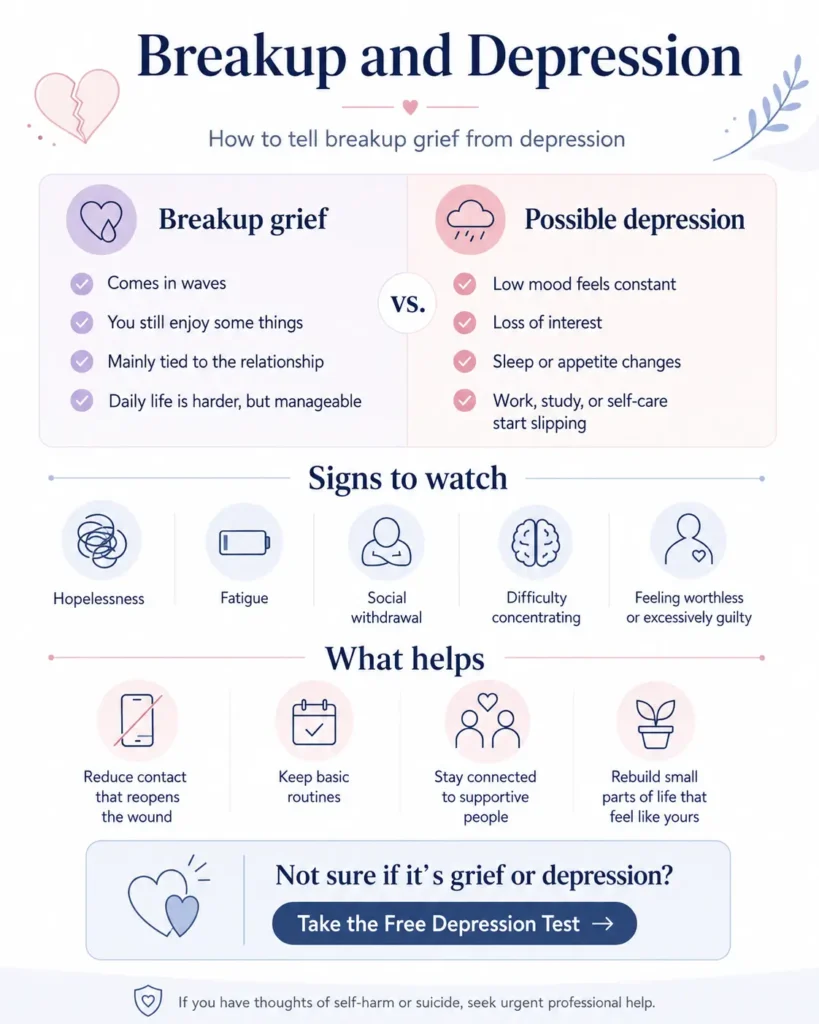
| Breakup grief | Possible depression |
|---|---|
| Emotions may come in waves | Low mood may feel persistent |
| You still have moments of enjoyment | Things you usually enjoy may stop feeling rewarding |
| Thoughts often centre on the relationship | Hopelessness or worthlessness may become broader |
| Functioning may be temporarily harder | Work, study, relationships or self-care may become significantly affected |
| Intensity may gradually change | Symptoms may persist or worsen |
NIMH describes major depression as involving depressed mood or loss of interest most of the time for at least two weeks, together with other symptoms that interfere with daily functioning.
Two weeks is not a deadline for getting over a breakup. Grief can last longer without necessarily being depression.
What Are the Signs of Depression After a Breakup?
Pay attention to symptoms that are persistent or significantly affecting everyday life.
Common depression symptoms can include:
- persistent sadness, emptiness or hopelessness
- loss of interest in activities you normally enjoy
- significant changes in sleep
- changes in appetite
- fatigue or very low energy
- difficulty concentrating or making decisions
- feeling worthless or excessively guilty
- withdrawing from friends and family
- struggling to complete normal responsibilities
- thoughts about death or suicide
Not everyone with depression experiences every symptom.
The important question is not simply:
“Am I still sad about my breakup?”
Ask:
“Is this sadness spreading into most areas of my life and making it difficult to function?”
Why Can a Breakup Affect Mental Health So Strongly?
You may be grieving more than one person.
A breakup can also involve losing:
- daily routines
- emotional support
- physical closeness
- mutual friendships
- future plans
- a shared home
- part of your identity as a couple
That is why thoughts such as:
“I just need to stop missing them.”
may not capture everything you are processing.
Breakup distress can also become harder when it turns into repeated self-blame. Research involving young adults after romantic breakups found that greater self-punishment was associated with higher later depressive and anxiety symptoms.
Try the SoulBot Breakup Check: Loss, Story, Life
When you’re unsure whether you’re grieving the relationship or becoming stuck in a depressive pattern, check three areas.
LOSS
What am I actually grieving?
The person?
The routine?
The future I imagined?
Feeling wanted?
Companionship?
STORY
What am I telling myself because the relationship ended?
“Nobody will love me again.”
“I wasted everything.”
“I wasn’t enough.”
A painful breakup is real.
The conclusions you make about your entire future may not be.
LIFE
How am I functioning?
Check:
- sleep
- eating
- work or study
- relationships
- hygiene and self-care
- interest in normal activities
This last part is especially important when distinguishing emotional pain from symptoms that may need additional support.
What Helps With Depression After a Breakup?
1. Reduce Constant Contact With Your Ex
Repeatedly checking their profile, rereading messages, or looking for signs that they miss you can keep your attention locked on the relationship.
You do not necessarily need one permanent rule.
Ask:
“Does this contact help me recover, or reset the pain every time?”
2. Keep Basic Structure in Your Day
After a breakup, routines can disappear quickly.
Protect a few basics:
- regular meals
- reasonably consistent sleep
- movement
- work or study structure
- contact with supportive people
NIMH recommends regular activity, sleep, social connection, and low-stress activities as useful self-care strategies when symptoms are milder.
3. Stop Making the Breakup a Verdict on Your Worth
There is a difference between:
“This relationship ended.”
and:
“I wasn’t worth staying for.”
Breakups happen because of compatibility, timing, communication, changing needs, circumstances, behaviour, values, or many factors at once.
Rejection hurts.
It is not an objective measurement of your value.
Read: How to Overcome Rejection in Love Without Losing Yourself
4. Stay Connected
Isolation can feel tempting when you are hurting.
You do not need to talk about the breakup constantly, but try not to disappear completely.
Spend time with someone you trust, work from somewhere less isolated, take a walk with a friend, or accept small invitations even when you do not feel especially social.
5. Give Yourself Something That Belongs to You
After a relationship ends, rebuild parts of life that are not connected with your ex.
That might mean:
- returning to an old hobby
- changing your routine
- starting a small fitness goal
- reconnecting with friends
- planning something independently
The goal is not to “win the breakup.”
It is to rebuild a life that feels like yours.

When Should You Seek Professional Help?
Consider speaking with a mental-health professional if symptoms:
- are severe or persistent
- have lasted two weeks or more without improving
- make it difficult to work, study or care for yourself
- involve strong hopelessness or worthlessness
- are causing significant isolation
- continue getting worse rather than gradually changing
NIMH recommends professional support when distressing symptoms persist or significantly interfere with everyday activities.
If you are thinking about suicide or harming yourself, seek immediate help from an emergency or crisis mental-health service in your area.
Talk to Soululu When the Breakup Is Stuck in Your Head
Use Soululu to explore:
- What am I actually missing?
- What am I blaming myself for?
- What keeps triggering me?
- What part of my old routine needs replacing?
- What can I do today that supports recovery?
Soululu can support emotional reflection after a breakup. It cannot diagnose or treat depression or replace professional mental-health care.
Final Thought
A breakup can hurt deeply without meaning you have depression.
The distinction becomes more important when sadness turns into persistent hopelessness, loss of interest, withdrawal, or difficulty functioning.
Do not ask only:
“Why am I still not over them?”
Ask:
“Am I gradually recovering, or is my mental health getting harder to manage?”
That question can tell you when self-care is helping and when it may be time to get more support.