

Adult ADHD symptoms can look less obvious than the childhood stereotype of being constantly “hyper.”
In adults, ADHD may show up as unfinished tasks, chronic disorganization, losing things, difficulty managing time, interrupting conversations, impulsive decisions, or feeling internally restless.
But occasional distraction does not automatically mean ADHD.
Quick Answer: What Are the Symptoms of Adult ADHD?
Adult ADHD symptoms fall into three main areas:
- Inattention — difficulty staying focused, organized, or completing tasks
- Hyperactivity — restlessness or difficulty staying still
- Impulsivity — acting or speaking before considering the consequences
ADHD is a neurodevelopmental condition, which means symptoms begin during childhood, even if someone is not diagnosed until adulthood.
For ADHD to be diagnosed, symptoms must be persistent, affect everyday functioning, and occur across more than one area of life.
12 Common Adult ADHD Symptoms
1. Difficulty Staying Focused
You may start reading, working, or listening and realize your attention has disappeared halfway through.
This can look like:
- Rereading the same paragraph
- Zoning out during meetings
- Switching between unfinished tasks
- Struggling with long or repetitive work
Adults with ADHD may find lengthy tasks especially difficult when they are not personally interesting.
2. Frequently Losing Things
Keys, phones, wallets, documents, and work items may repeatedly disappear.
Losing something occasionally is normal. It becomes more relevant when forgetfulness is frequent enough to interfere with everyday life.
3. Forgetting Everyday Responsibilities
You may forget:
- appointments
- bills
- messages
- deadlines
- errands
- tasks you intended to complete
You may genuinely intend to do something and still lose track of it.
4. Difficulty Organizing Tasks
Adult ADHD can make planning and organizing more difficult.
You might know exactly what needs to happen but struggle with:
- deciding where to begin
- breaking large tasks into steps
- prioritising
- keeping track of multiple responsibilities
NIMH lists poor organization and planning among the common ways ADHD can affect adults.
5. Starting Tasks but Not Finishing Them
Starting may feel easier than continuing once a task becomes repetitive or less interesting.
Your day may contain:
10% of this task
40% of another
three new tabs
one completely new project
The important issue is not having unfinished tasks occasionally. It is whether the pattern repeatedly interferes with work or everyday responsibilities.
6. Difficulty Managing Time
You may:
- underestimate how long something will take
- begin preparing too late
- miss deadlines
- regularly arrive late
- lose track of time while doing something else
Time-management problems are frequently reported among adults with ADHD.
7. Feeling Internally Restless
Adult hyperactivity does not always look like running around a room.
CDC notes that hyperactivity may become less obvious with age and appear as extreme or internal restlessness.
You might:
- fidget constantly
- struggle to sit through long meetings
- feel the need to stay busy
- Find quiet inactivity uncomfortable
8. Interrupting Conversations
Impulsivity can appear socially.
You may:
- Finish someone’s sentence
- Answer before they finish asking
- interrupt because you’re worried you’ll forget your thought
- jump into conversations quickly
Occasional interruption is normal. ADHD involves a broader, persistent pattern.
9. Acting Before Thinking
Adult ADHD may involve impulsive decisions such as:
- Spending without planning
- Agreeing to something immediately
- Reacting quickly during conflict
- Making decisions before considering consequences
10. Difficulty Waiting
Waiting in a queue, sitting through a slow conversation, or waiting for your turn may create noticeable impatience or restlessness.
This relates to the impulsive side of ADHD.
11. Difficulty Following Multi-Step Instructions
You may understand instructions when you hear them but lose track halfway through.
For example:
“Open the document, update these three sections, attach the file, and send it.”
By step three, you may need to check what came next.
12. ADHD Symptoms Affect More Than One Part of Life
This is one of the most important signs.
ADHD is not simply:
“I struggle to concentrate at work.”
Symptoms usually create difficulties across areas such as:
- work or education
- home responsibilities
- relationships
- everyday organisation
NIMH explains that ADHD involves persistent symptoms that interfere with functioning in multiple areas of life.
What Makes Adult ADHD Different From Normal Distraction?
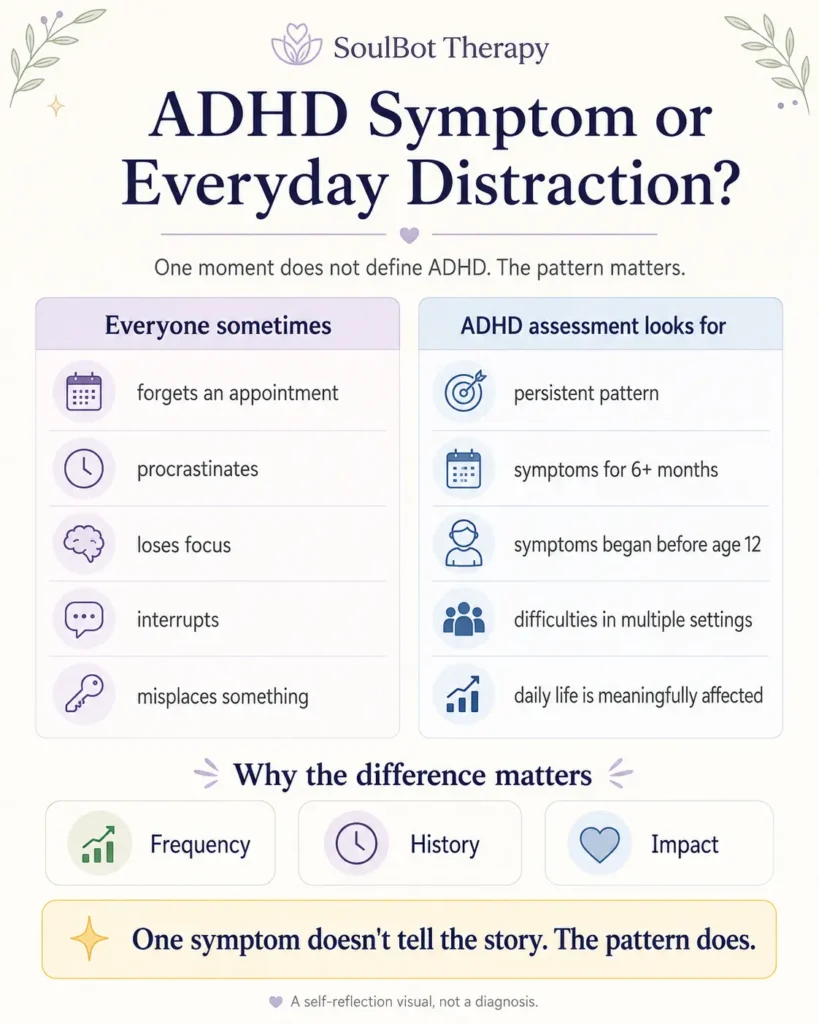
Almost everyone loses focus, procrastinates, forgets something, or makes an impulsive decision at some point.
Clinicians look at the pattern, not one symptom.
For adults, ADHD assessment considers whether symptoms:
| What matters | Why |
|---|---|
| Started in childhood | ADHD symptoms begin before age 12 |
| Persist over time | Symptoms are not just from one stressful week |
| Occur in multiple settings | For example, work and home |
| Affect daily functioning | Work, relationships, study, or responsibilities are disrupted |
| Meet symptom criteria | Adults generally need at least five symptoms within an ADHD symptom domain |
NIMH states that adults and adolescents over age 16 need at least five symptoms and that symptoms must have begun before age 12.
This is why an online symptom checklist cannot diagnose ADHD.

ADHD or Stress, Anxiety, or Poor Sleep?
Several experiences can look similar to ADHD.
| Experience | Can cause |
|---|---|
| ADHD | Persistent attention, organisation, restlessness, or impulsivity problems beginning in childhood |
| Anxiety | Distractibility because attention is consumed by worry |
| Poor sleep | Forgetfulness, low concentration, and slower thinking |
| Depression | Reduced motivation, energy, and concentration |
| High stress | Temporary disorganization and difficulty focusing |
CDC notes that ADHD assessment may need to rule out other explanations such as anxiety, depression, sleep problems, substance use, and learning difficulties.
The question is not only:
“Do I have these symptoms?”
Ask:
“How long have they been happening, where do they happen, and how much do they affect my life?”
What Does Inattentive ADHD Look Like in Adults?
Some adults have predominantly inattentive ADHD symptoms.
This can include:
- easily losing focus
- forgetting everyday tasks
- struggling to organize time
- losing belongings
- difficulty completing instructions or tasks
Because these symptoms may be less obvious than hyperactivity, they can be easier to overlook.
ADHD may be recognized less frequently in women partly because inattentive symptoms can be less obvious than hyperactive symptoms.
Is Hyperarousal an Adult ADHD Symptom?
Hyperarousal is not one of the three core ADHD symptom categories.
The recognized ADHD symptom areas are:
- inattention
- hyperactivity
- impulsivity
However, adults with ADHD may experience internal restlessness or a need for constant activity or stimulation.
Feeling constantly “on edge” can also occur with anxiety, stress, trauma-related conditions, sleep problems, or other causes.
Hyperarousal alone is therefore not enough to suggest ADHD.
Think These Patterns Sound Familiar?
Take the Free Adult ADHD Test to reflect on patterns involving:
- attention
- organisation
- restlessness
- impulsivity
- daily functioning
12 questions · About 3 minutes · Instant result
👉 Take the Free Adult ADHD Test
This is a SoulBot self-reflection test. It is not the official ASRS and cannot diagnose ADHD.
How Is Adult ADHD Diagnosed?
There is no single online test that can confirm ADHD.
An ADHD assessment may include:
- Your current symptoms
- Childhood history
- How symptoms affect different areas of life
- Questionnaires or symptom rating scales
- Information from someone who knows you well
- Consideration of other possible explanations
CDC notes that clinicians may also assess conditions such as anxiety, depression, sleep problems, learning difficulties, or substance use because they can cause similar symptoms or occur alongside ADHD.

When Should You Consider an ADHD Assessment?
Consider speaking with a healthcare professional if attention, organization, restlessness, or impulsivity:
- happen regularly
- have been present for a long time
- affect more than one area of your life
- repeatedly interfere with work or study
- create relationship problems
- make everyday responsibilities difficult
Receiving an assessment is about understanding what is causing the difficulty, not simply collecting a label.
Talk to Soululu About Your ADHD Patterns
If you recognize some of these experiences but are unsure how they affect your life, use Soululu to reflect on:
- Which symptoms show up most often
- Where they create problems
- What examples do you remember from childhood
- Whether stress or sleep changes the pattern
- What you may want to discuss during an ADHD assessment
👉 Talk to Soululu
Soululu supports self-reflection. It cannot diagnose ADHD or replace an assessment from a qualified healthcare professional.
Final Thought
One forgotten appointment does not mean ADHD.
Neither does procrastinating, daydreaming, or occasionally losing focus.
What matters is the pattern:
- Did it start early?
- Does it keep happening?
- Does it happen in different parts of life?
- Does it make everyday functioning harder?
That is much more useful than comparing yourself with a viral ADHD symptom list.