

Some days, you look up from your screen and realize you don’t remember half of what happened today.
You were there but not really there.
Modern life pulls your mind in every direction: notifications, overthinking, rushing, planning, replaying the past. No wonder being present feels almost impossible.
But presence isn’t about meditating on a mountain or becoming spiritually enlightened. It’s about learning to return to yourself gently, repeatedly, in the middle of your everyday life.
This guide will teach you how to be more present, using simple, nervous-system-friendly habits that actually work.
What Does It Mean to Be Present in Daily Life?
Being present doesn’t mean stopping thoughts or emotions.
👉 Being present means noticing what’s happening right now without being pulled away by past or future noise.
When you’re present, you experience:
- clearer thoughts
- calmer reactions
- deeper connection
- more grounded emotions
- a sense of time slowing down
Presence = attention + awareness + safety. It’s a relationship with the current moment.
Why Is It So Hard to Stay Present?
If you struggle with presence, it’s not a “you problem.” It’s your nervous system trying to protect you.
Common reasons presence feels difficult:
- chronic stress
- anxiety
- digital overstimulation
- emotional overwhelm
- old habits of rushing
- living in survival mode
- fear of stillness
Your brain isn’t designed for constant noise.
When your system feels unsafe or overloaded, it pulls you out of the moment to keep you alert. That’s why learning how to stay present starts with teaching your mind and body that it is safe to slow down.
🧠SoulFact: Harvard Health found that 5 minutes of daily mindfulness improves emotional regulation and focus.
How to Be More Present: Simple Daily Habits That Work?
Here are grounding techniques you can use anywhere, no meditation required.
1. Do a 10-second sensory check-in
Ask yourself:
- What do I hear?
- What do I see?
- What do I feel on my skin?
This anchors your brain in the present instantly.
2. Name one emotion you’re feeling
Presence is impossible if you’re avoiding how you feel.
Try:
- “I feel tense.”
- “I feel hopeful.”
- “I feel overwhelmed.”
Naming the emotion opens the door to regulation.
3. Slow your exhale
Breathe in for 4, out for 6. A longer exhale signals safety to your nervous system.
4. Do one thing at a slower pace
- Walk slower.
- Chew slower.
- Talk slower.
- Move slower.
Slowness interrupts autopilot.
5. Create micro-pauses between tasks
Look up. Stretch. Breathe.
Even 15 seconds resets the mind.
6. Touch something with texture
- Hold your mug.
- Touch your clothing.
- Place your hand on a wall.
Sensory grounding pulls you back into your body.
7. Redirect your thoughts gently
When your mind wanders, say:
“Back to the moment.”
No judgment. Just returning.
These grounding techniques for anxiety work because they bring your nervous system out of panic and into presence.
Micro-Mindfulness: Presence for People Who Don’t Meditate
You don’t need 20 minutes of meditation to be mindful.
You can practice mindfulness in daily life through tiny habits:
- Notice the temperature of your shower
- Feel your steps while walking
- Pay attention to the smell of your morning drink
- Listen intentionally during conversations
- Eat one bite mindfully
- Put your phone away for the first 10 minutes of your day
Mindfulness becomes easier when it blends with everyday moments.
🧠SoulFact: Regular presence practices improve memory and reduce stress within 8 weeks of consistency.
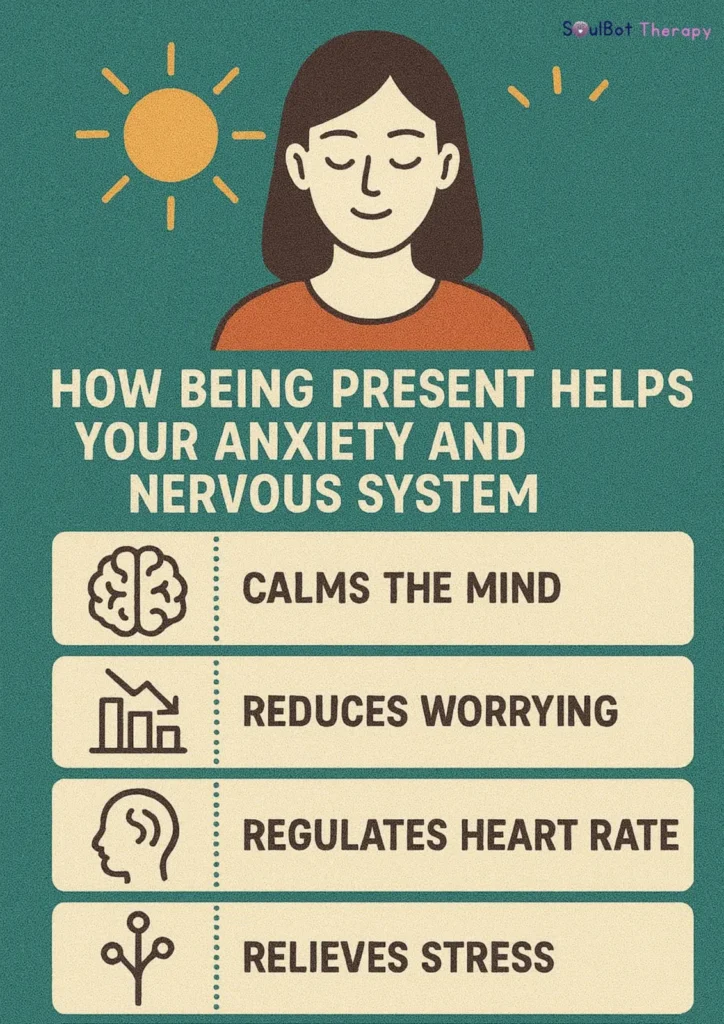
How Being Present Helps Your Anxiety and Nervous System?
Presence = safety.
Your nervous system relaxes when you:
- slow your breath
- drop your shoulders
- connect with your senses
- reduce mental noise
This is called nervous system regulation, and it:
- lowers cortisol
- reduces emotional reactivity
- increases clarity
- boosts emotional stability
When you’re present, you respond, not react.
How to Stop Overthinking and Return to the Moment?
Overthinking is your brain trying to control what feels uncertain. Presence teaches that not everything needs fixing.
Here are quick ways to return to the moment:
1. Ask, “Is this happening right now?”
Most overthinking is imaginary.
2. Use the 5-4-3-2-1 method
Name:
- 5 things you see
- 4 you can touch
- 3 you hear
- 2 you smell
- 1 you taste
3. Move your body for 30 seconds
Shake out your hands. Stretch. Walk. Movement breaks overthinking loops.
4. Write down the thought
Your mind stops looping when it knows the thought is stored somewhere. Presence isn’t the absence of thinking; it’s the ability to come back when your mind drifts. It rewires your brain for calmness, clarity, and emotional stability.
Presence in Relationships: How It Changes Connection
You can’t connect deeply if your mind is somewhere else.
Presence creates:
- better listening
- fewer misunderstandings
- emotional availability
- intimacy and safety
- more meaningful moments
People don’t need perfection from you, just your attention.
🧠SoulFact: Grounding techniques can reduce anxiety symptoms by up to 43%, according to Verywell Mind.
How SoulBot Helps You Build Presence Every Day?
SoulBot guides you toward presence through:
- grounding reminders
- daily emotional check-ins
- nervous system exercises
- micro-mindfulness prompts
- reflection and clarity tools
- support during anxiety
💬 Chat with SoulBot for daily grounding practices.🧠 Try the Anxiety Test to understand what pulls you out of the present.