
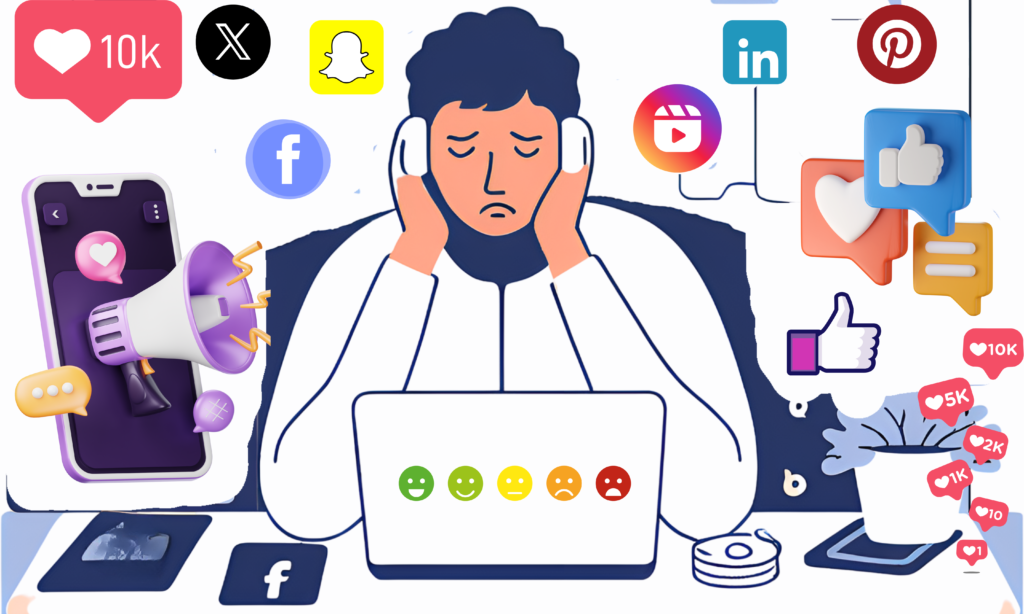
Social media does not automatically cause depression. However, excessive or unhealthy use can contribute to depressive symptoms, anxiety, poor sleep, loneliness, and low self-esteem, especially among teenagers and young adults.
The effect depends on more than screen time. What you view, how you use social media, whether it replaces sleep or real-life connection, and how you feel afterward all matter.
Research generally finds a small but meaningful association between social media use and depressive symptoms. This means social media can be one risk factor, but it is rarely the only cause.
How Can Social Media Affect Mental Health?
Social media can provide community, information, entertainment, and support. It becomes more harmful when it repeatedly triggers comparison, exclusion, harassment, compulsive checking, or sleep loss.
Here are the main ways social media may affect mental health.
1. Constant Social Comparison
Social media usually shows edited highlights rather than ordinary life.
When you compare your full reality with someone else’s best moments, you may start thinking:
- Everyone is happier than me.
- I am falling behind.
- My appearance or life is not good enough.
- I should be achieving more by now.
Research has linked social comparison and repeated feedback-seeking on social platforms with higher depressive symptoms in adolescents.
Real-life example: You open Instagram for five minutes, see promotions, holidays, relationships, and fitness transformations, then close the app feeling worse about your own life.
The problem is not simply seeing successful people. It is repeatedly use their edited lives as evidence that yours is inadequate.
2. Fear of Missing Out
Fear of missing out, or FOMO, happens when online updates make you feel excluded from experiences, friendships, or opportunities.
It can lead to:
- Compulsive checking
- Difficulty relaxing
- Dissatisfaction with your own plans
- Anxiety when you are offline
- Feeling socially rejected
FOMO becomes especially draining when you use social media to measure whether you belong.
3. Cyberbullying and Online Harassment
Cyberbullying can follow someone beyond school, work, or social settings because messages and posts remain accessible at any time.
It may involve:
- Humiliating comments
- Threats
- Rumours
- Unwanted sharing of private information
- Appearance-based criticism
- Exclusion from online groups
Systematic reviews have found strong negative associations between cyberbullying and young people’s mental health, including depressive symptoms, anxiety, loneliness, and emotional distress.
4. Sleep Disruption
Late-night scrolling can delay sleep, shorten total sleep time, and make it harder to mentally switch off.
The issue is not only the screen light. Notifications, emotional content, compulsive checking, and replacing sleep with scrolling can all contribute.
Poor sleep can then affect:
- mood
- concentration
- emotional regulation
- energy
- stress tolerance
This can create a loop: you feel low, scroll to escape, sleep poorly, and feel worse the next day.
5. Replacing Real Connection With Passive Scrolling
😇SoulFact: The U.S. Surgeon General has also stated that the available evidence is not sufficient to conclude that social media is safe for children and adolescents.
Messaging a close friend and participating in a supportive community are different from scrolling passively for hours.
Social media may become harmful when it replaces:
- Face-to-face interaction
- Exercise
- Hobbies
- Focused work
- Sleep
- Meaningful conversations
Someone can be digitally connected to hundreds of people and still feel emotionally alone.
Is All Social Media Use Bad for Mental Health?
No. Social media can be helpful when it provides:
- Supportive communities
- Access to mental health information
- Contact with distant friends or family
- Creative expression
- Identity-affirming spaces
- Practical help during isolation
The better question is not only, “How many hours do I spend online?”
Ask:
- What am I doing during that time?
- How do I feel before and after using the app?
- Is it helping me connect or making me compare?
- Is it replacing something important?
- Can I stop when I intend to?
Active and purposeful use may feel supportive. Compulsive, comparison-heavy, or hostile use is more likely to harm well-being.
😇SoulFact: A 2025 longitudinal study involving 11,876 children and adolescents found that increases in social media use during early adolescence were associated with greater depressive symptoms one year later. Because it was observational, the study strengthens evidence of a possible contribution but does not prove that social media was the only cause.
The balanced conclusion: social media can contribute to depression risk, particularly when use is excessive, compulsive, sleep-disrupting, comparison-driven, or connected to cyberbullying. Individual effects vary.
Signs Social Media May Be Affecting Your Mental Health
Consider changing your habits if you regularly:
- Feel anxious, inadequate, or low after scrolling
- Compare your appearance, career, or relationship with others
- Check apps without consciously deciding to
- Lose sleep because of social media
- Struggle to focus on work or conversations
- Feel lonely despite being online for hours
- Keep returning to content that upsets you
- Feel panicked when you cannot check notifications
- Neglect hobbies, exercise, or relationships
- Use scrolling mainly to avoid difficult feelings
One bad day does not mean social media is causing depression. Look for repeated patterns.
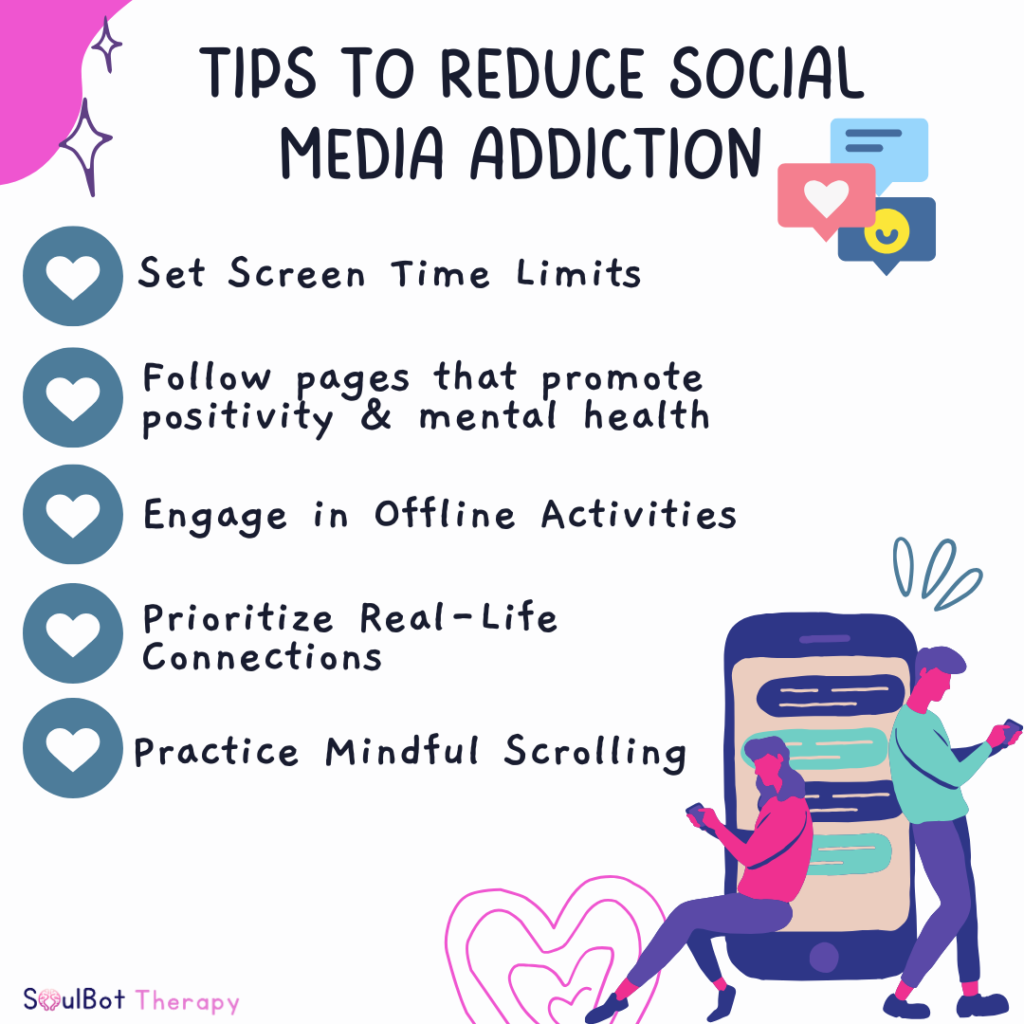
How Can You Protect Your Mental Health on Social Media?
1. Identify the Apps and Content That Affect You
Check your screen-time report and notice which platforms leave you feeling better or worse.
Do not focus only on total hours. Notice the emotional effect.
2. Curate Your Feed
Mute, unfollow, or block accounts that repeatedly trigger shame, comparison, anger, or distress.
Follow content that is useful, realistic, supportive, or genuinely enjoyable.
3. Remove Social Media From Your Sleep Routine
Try:
- Keeping your phone away from the bed
- Disabling non-essential notifications
- Setting a nightly app limit
- Stopping social media 30–60 minutes before sleep
- Using a separate alarm clock
4. Replace, Don’t Just Remove
Deleting an app without replacing the habit often leads to reinstalling it.
Replace scrolling with something specific:
- Call a friend
- Take a short walk
- Read ten pages
- Listen to music
- Journal for five minutes
- Complete one household task
5. Try a Short Social Media Reset
You do not need to disappear from every platform permanently.
A 2025 study of young adults found that a one-week social media detox was associated with reductions in reported anxiety, depression, and insomnia symptoms. The study does not prove that a detox works equally for everyone, but it suggests that a planned break may help some users notice how their habits affect them.
Try seven days with:
- No social media after 9 p.m.
- Notifications turned off
- A fixed daily checking window
- One or two apps temporarily removed
Record your sleep, mood, focus, and urge to check each day.
6. Use Social Media Intentionally
Before opening an app, ask:
What am I here to do?
When you have completed that purpose, close it. This small pause turns automatic scrolling into a conscious choice.
When Should You Seek Support?
Speak with a mental health professional if sadness, hopelessness, anxiety, isolation, sleep problems, or loss of interest persist for two weeks or interfere with daily life.
Reducing social media may help, but it should not replace professional care when symptoms are ongoing or severe.
If you feel unsafe or are thinking about harming yourself, contact emergency services or a crisis support service in your country immediately.
Want to Understand What Triggers Your Scrolling?
Social media habits are often connected to loneliness, stress, comparison, or avoidance.
Talk to Soululu to reflect on what you feel before and after scrolling, identify recurring triggers, and create a healthier digital routine without judgment.
Final Thoughts
So, does social media cause depression? Not by itself, and not for everyone.
But unhealthy social media use can contribute to low mood through comparison, FOMO, cyberbullying, disrupted sleep, compulsive checking, and reduced real-world connection.
You do not necessarily need to quit social media. Start by changing how, when, and why you use it.
A healthier relationship with social media should leave room for sleep, focus, offline relationships, and a life that does not need to be posted to feel meaningful.