You notice something.
Maybe it’s a feeling you can’t quite name. A crush that doesn’t fit the box you thought you were in. A pattern you keep noticing but haven’t said out loud yet.
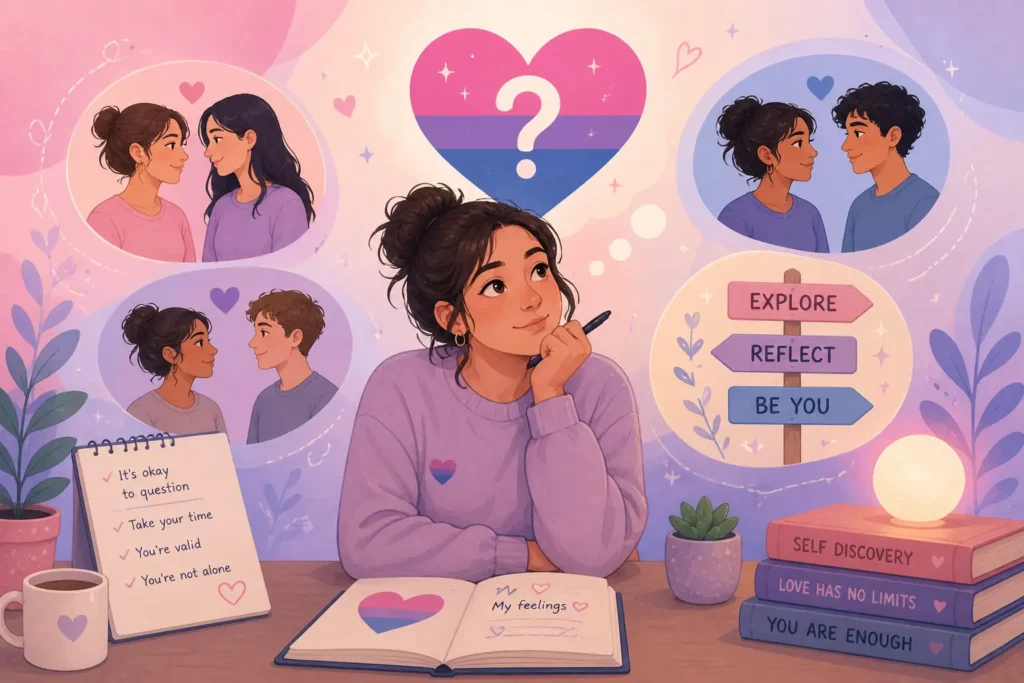
And somewhere in the back of your mind, the question forms: Am I bisexual?
First, it’s okay that you’re asking. More than okay. Questioning your sexuality is not a sign that something is wrong. It’s a sign that you’re honestly paying attention to yourself.
This blog won’t tell you whether you’re bisexual. Only you can know that. But it will help you understand what bisexuality actually means, what signs people often notice, and what to do with whatever comes up.
🧠 Not sure where you fall? Take the free Sexual Orientation Test, no labels, no pressure, completely private.What Does Bisexual Mean?
Bisexual means experiencing romantic, emotional, or sexual attraction to more than one gender.
That’s it. That’s the definition.
- It doesn’t mean you’re equally attracted to all genders.
- It doesn’t mean you have to have dated multiple genders.
- It doesn’t mean you’re confused, greedy, or going through a phase.
Bisexuality is a valid, stable sexual orientation. It looks different for every person who lives it.
Some people feel strongly attracted to two genders. Others notice an attraction that shifts depending on the person, not the gender. Some have known since they were teenagers. Others figure it out at 30, 40, or later.
There is no single way to be bisexual.
Am I Bisexual? Signs to Reflect On
These aren’t a checklist. They’re reflection prompts. You might relate to all of them, some of them, or none, and any of those answers is valid.
- You notice attraction to more than one gender. This is the most fundamental sign. The attraction can be physical, emotional, romantic, or all three. It doesn’t have to be equal across genders to count.
2. The word “bisexual” gives you a sense of recognition. Sometimes a label just clicks. When you read about bisexuality or hear someone describe their experience, something in you thinks: that sounds familiar. That feeling of recognition matters.
3. You’ve had crushes on people of different genders, not necessarily acted on them. Just noticed them. A pattern of crushes across genders, over time, is something many bisexual people describe when they look back.
4. “Straight” or “gay” never felt quite right. You might have used one of these labels before, but there was always something that didn’t fully fit. Like wearing shoes in the wrong size. You managed, but it was never quite comfortable.
5. You feel curious, not just confused. Confusion and curiosity are different feelings. Confusion is distressing. Curiosity is alive. Many bisexual people describe their questioning phase as more curious than frightening, even when it was also a little scary.
6. LGBTQ+ stories and characters feel personal to you, not in a distant way, but in a “this is close to home” way. Bi characters in films, books, or real life feel like they’re speaking about an experience you recognize.
🧠 SoulTip: You don't need to have acted on same-gender attraction to be bisexual. Orientation is about how you feel inside, not what you've done or who you've dated.
What Bisexuality Is Not?
Because there is a lot of noise out there about bisexuality:
- It’s not a phase. Many people discover their bisexuality later in life. That doesn’t make it a transition stage toward being gay or straight. It’s its own identity.
- It’s not about being equally attracted to all genders. Some bisexual people feel 70% attracted to one gender and 30% to another. Some feel it shifts over time. None of this makes the identity less real.
- It’s not the same as being confused. Questioning and confusion are part of many people’s journeys, but bisexuality itself is not a state of confusion. It’s clarity about a different kind of attraction.
- It’s not about cheating. Attraction to multiple genders has nothing to do with fidelity. That’s a harmful myth. Read more about common bisexuality myths and where they come from.
Am I Bisexual or Pansexual?
This comes up a lot, and the honest answer is that they overlap.
- Bisexual means attraction to more than one gender. Most modern bisexual people include non-binary and transgender people in that attraction.
- Pansexual means attraction regardless of gender; gender simply isn’t a factor.
The practical difference is subtle. Some people feel strongly drawn to one label. Others use both. Some start with one and shift to the other over time. Neither is more valid than the other. The label that feels most like you is the right one.
Read more: What Is Pansexuality? Understanding Attraction Beyond Gender
Am I Bisexual or Heteroflexible?
Another common question, especially for people who identify as mostly straight but notice occasional same-gender attraction.
- Heteroflexible means you primarily identify as straight, but with some openness to same-gender attraction on occasion.
- Bisexual means same-gender attraction is a more consistent or central part of your experience.
There is no clear line between these two. Some people feel heteroflexible better describes them. Others find that over time, bisexual feels more accurate.
If you’re not sure which fits: Read more: Heteroflexible Meaning: Am I Heteroflexible?
📖 Want to go deeper? Robyn Ochs and Sarah Rowley's Getting Bi: Voices of Bisexuals Around the World is the most honest, human collection of bisexual experiences out there. “I Think I Might Be Bisexual. What Do I Do?”
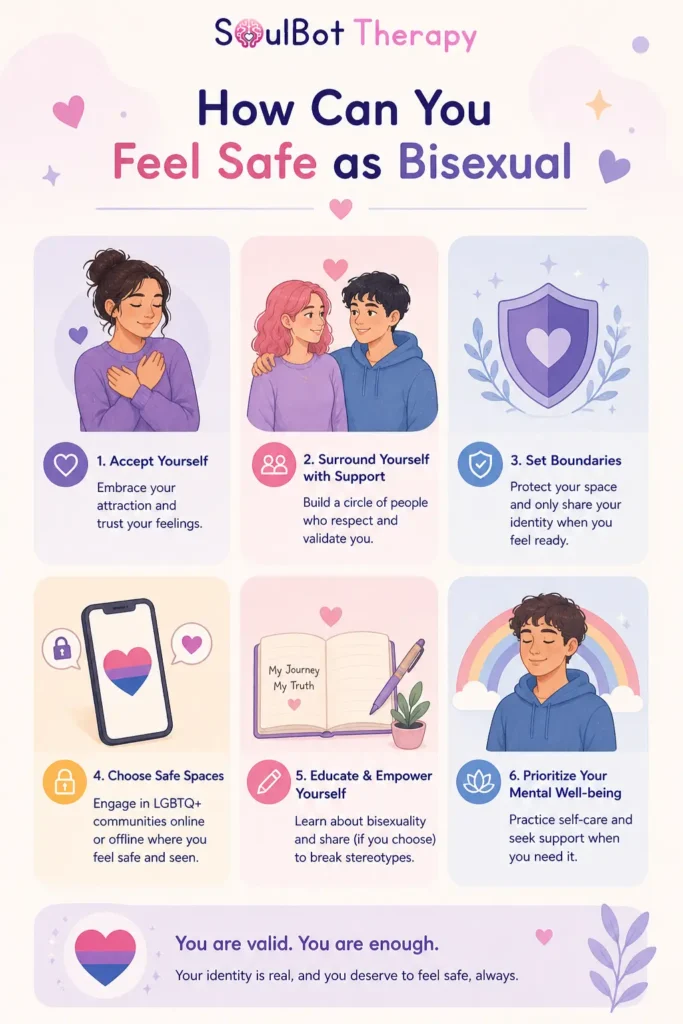
There’s no rulebook. But here are a few things that help:
- Give yourself time. You don’t have to figure this out by next week. Sexuality can take years to understand fully, and that’s normal.
- Don’t force a label before you’re ready. You can sit with “questioning” or “not sure yet” for as long as you need. Labels are tools, not requirements.
- Talk to someone safe. That might be a friend, a therapist, or an online community. Saying things out loud or typing them can bring surprising clarity.
- Be gentle with yourself. Whatever you’re feeling right now, relief, fear, excitement, or confusion, it’s allowed. All of it.
🧠 SoulTip: Research consistently shows that people who feel supported in their sexual identity report significantly better mental health than those who don't. You deserve that support, and you don't have to wait until you have all the answers to access it.
How SoulBot Can Help?
Figuring out your sexuality can bring up a lot of feelings, and not all of them are easy to say out loud to another person.
SoulBot’s AI companion Soululu is available whenever you need a private, judgment-free space to think things through. No labels required. No advice you didn’t ask for. Just a calm, supportive presence.
💬 Start a conversation with Soululu whenever you’re ready.