
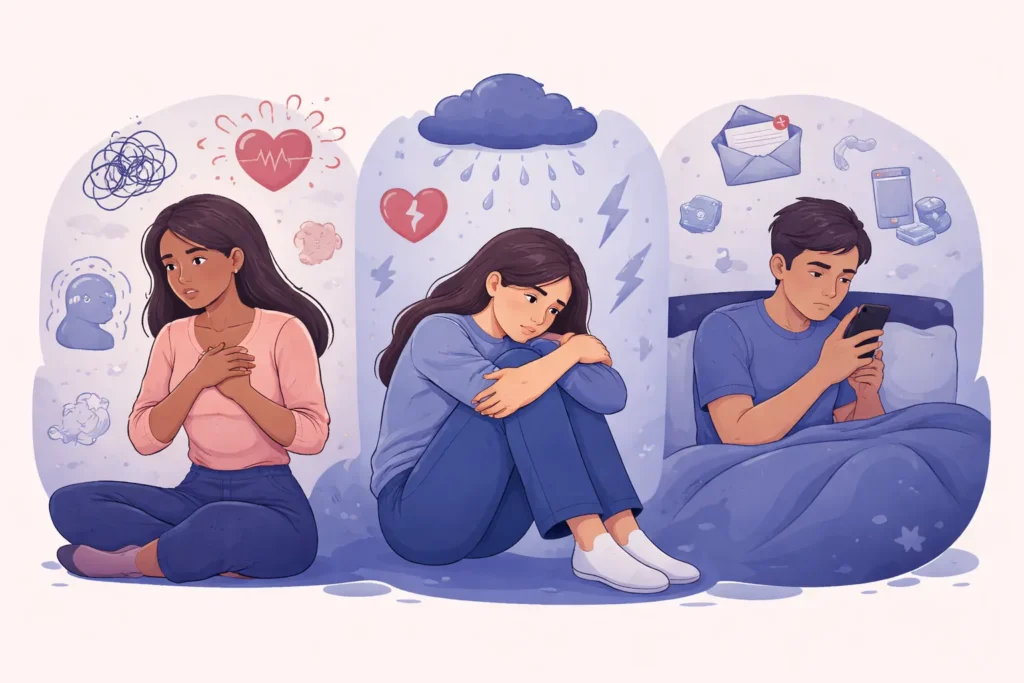
You Googled this for a reason.
Maybe your chest feels tight, and you don’t know why. Maybe your brain won’t stop even when everything’s “fine.” Or maybe you just feel off, and no one around you seems to get it.
That’s anxiety. And it doesn’t always look the way people say it does.
This guide covers everything, the obvious symptoms, the physical ones that scare people, and the hidden signs most people dismiss for months before realising what’s actually going on.
Not sure if what you're feeling is anxiety? Take the Soulbot Anxiety Test — it takes 2 minutes and gives you real clarity. Check your anxiety level →What Are Anxiety Symptoms, Really?
Anxiety symptoms are your body and mind’s response to perceived threat.
Not an actual threat. Perceived threat.
Your nervous system doesn’t always know the difference between a deadline and a tiger. So it reacts the same way with physical signals, emotional overwhelm, and thoughts that spiral.
That’s what anxiety symptoms are. Your system is trying to protect you from something it’s convinced is dangerous.
Physical Symptoms of Anxiety
Why Does Anxiety Hurt?
Because it’s not just in your head.
Anxiety activates your fight-or-flight system. That system is physical. Which means anxiety symptoms show up in your body sometimes more than in your thoughts.
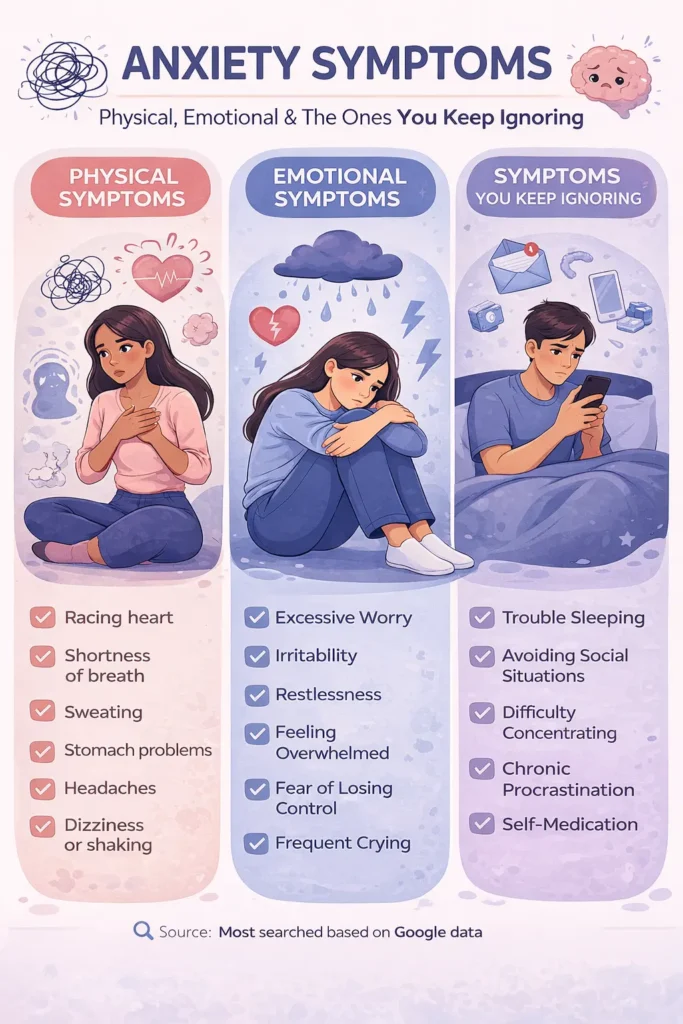
Common physical symptoms of anxiety:
- Rapid or irregular heartbeat
- Chest tightness or pressure
- Shortness of breath
- Dizziness or lightheadedness
- Nausea or stomach pain
- Sweating for no reason
- Trembling or shaking
- Muscle tension — neck, jaw, shoulders
- Frequent headaches
- Fatigue that doesn’t go away after rest
- Trouble falling or staying asleep
What Does Anxiety Feel Like Physically?
People describe it differently. But here’s what comes up most:
- “Like something is sitting on my chest.”
- “My heart races and I don’t know why.”
- “I feel sick to my stomach, but nothing’s wrong.”
All of that is anxiety. All of it is real. And none of it means your body is broken.
🧠SoulFact: Anxiety is one of the most physically experienced mental health conditions. If your body feels it, it counts.If any of those hidden signs felt uncomfortably familiar — that's worth knowing more about. Take the Anxiety Test on Soulbot and find out where you actually stand.
Emotional Symptoms of Anxiety
The Mental Load Nobody Talks About
Physical symptoms get attention. Emotional ones often don’t.
Common emotional symptoms of anxiety:
- Constant, low-grade worry
- Feeling overwhelmed by small things
- Irritability that comes out of nowhere
- Restlessness can’t sit still, can’t settle
- Difficulty concentrating
- Racing thoughts at night
- Feeling like something bad is about to happen
You might not call this “anxiety.” You might call it stress, burnout, or just being tired. But if it’s constant, it’s worth paying attention to.
💜 If you're reading this and something feels familiar, you don't have to figure it out alone. Talk to Soululu, your AI mental wellness companion. Process what you're feeling, understand your patterns, and get support that meets you where you are.Hidden Signs of Anxiety People Often Miss?
This is where it gets confusing. Because some anxiety symptoms don’t look like anxiety at all.
Hidden signs of anxiety:
- Jaw clenching or teeth grinding (often in sleep)
- Brain fog thoughts feel slow or blurry
- Emotional numbness or feeling disconnected
- Avoiding situations without knowing why
- Overthinking small, low-stakes decisions
- Constant fatigue even after sleeping 8 hours
- Head pressure or strange sensations in the body
- Needing to use the bathroom more than usual when stressed
These are sometimes called weird anxiety symptoms. But they’re not weird. They’re common. They just don’t make it into the list that people expect.
🧠SoulFact: You can have anxiety symptoms without feeling “anxious.” Your body stores stress even when your mind thinks it’s coping.
Can You Have Anxiety Without Feeling Worried?
Yes. And this confuses many people.
If you’ve never been formally anxious, never had a panic attack, never felt obviously nervous, you might assume anxiety isn’t your issue. But anxiety can be quiet.
It can look like:
- Always being tired, always on edge.
- Needing things to be “just right”
- Shutting down instead of speaking up
- Feeling disconnected from your emotions
This is sometimes called high-functioning anxiety, where you appear fine on the outside, but your system is running on overdrive underneath.
Anxiety vs Stress: Quick Difference
| Title | Stress | Anxiety |
| Cause | Usually clear | Often unclear |
| Duration | Passes with the situation | Can persist without cause |
| Body response | Temporary | Can become chronic |
Stress has a source. Anxiety doesn’t always need one.
When Anxiety Symptoms Need Professional Attention?
Most anxiety symptoms are manageable. But some need more than self-help.
Talk to a mental health professional if:
- Symptoms are affecting your work, relationships, or sleep regularly.
- You’re having panic attacks.
- You feel constantly overwhelmed and don’t know why
- You’re avoiding things you used to do
⚠️ If you experience chest pain, difficulty breathing, or feel like you might faint, see a doctor first to rule out physical causes.
What Actually Helps in the Moment?
When anxiety symptoms hit, here’s what works:
- Breathe slower than feels natural. Inhale 4 counts, exhale 6. This signals your nervous system to calm down.
- Name five things you can see. Grounding your senses interrupts the spiral.
- Move your body. Even a 5-minute walk shifts your physiological state.
- Write it down. Getting thoughts out of your head and onto paper reduces their weight.
- Stop fighting the feeling. Anxiety gets louder when you resist it. Naming it “this is anxiety, not danger” helps.
Before you scroll away — take 2 minutes. The Soulbot Anxiety Test can tell you whether what you're feeling is mild, moderate, or something that needs more attention. No sign-up. No judgment. Just answers. Take the free anxiety test and talk to soululu for further support.