Signs of Gaslighting in a Relationship- And What to Do About It

Last Updated: May 7, 2026
Gaslighting in a Relationship
Table of Contents

You love this person. That part is real.

But something else is also real- a quiet, persistent feeling that something is off. That you are always apologizing. That you are always the one who misremembers, overreacts, or makes things worse.

You are not sure when it started. You just know that you feel less like yourself than you used to. If this sounds familiar, this blog is for you.

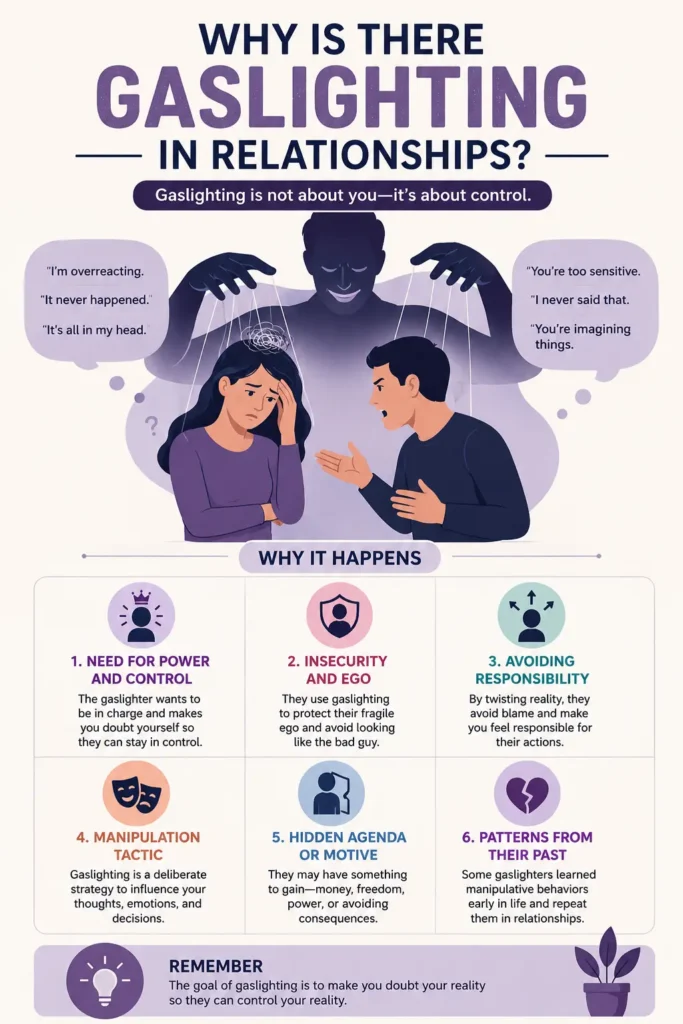
Gaslighting in a relationship is one of the most difficult forms of emotional manipulation to recognize, precisely because it works by making you doubt your own perception. By the time most people realize what is happening, they have already started to believe the gaslighter’s version of reality.

This blog covers the specific signs of gaslighting in a romantic relationship, how it differs from normal conflict, and what you can actually do about it.

💬 If your emotions feel heavy right now, Soululu is here to listen, no judgment, no pressure, anytime.
Gaslighting in a Relationship

What Makes Relationship Gaslighting Different?

Gaslighting can happen anywhere at work, in families, and in friendships. But gaslighting in a romantic relationship is particularly damaging because it happens in the context of intimacy and trust.

When a stranger dismisses your feelings, it stings. When the person you love does it consistently, over time, it rewires how you see yourself.

Gaslighting in intimate relationships typically increases gradually in frequency and intensity, while the victim’s confidence in their own perceptions decreases as a result. This is what makes it so hard to spot. By the time the pattern is clear, you are already deep inside it.

And because you care about this person, your first instinct is to give them the benefit of the doubt. To wonder if maybe you are the problem.

10 Signs of Gaslighting in a Relationship

These signs do not all need to be present. Even a consistent pattern of two or three of them is worth taking seriously.

1. Deny things that definitely happened

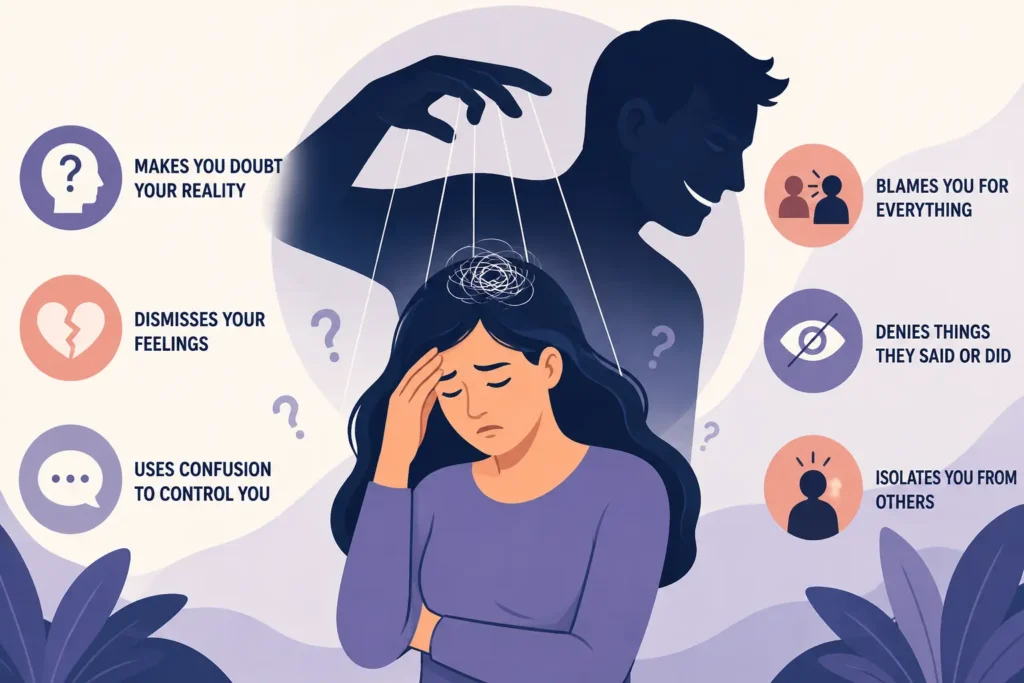
You bring up a conversation. They say it never happened. You remember it clearly, the words, the tone, where you were sitting. They insist you are wrong or imagining things.

Over time, you stop trusting your own memory because theirs always seems more certain.

2. Tell you that you are overreacting every time

Every concern you raise is met with “you’re too sensitive” or “you’re making a big deal out of nothing.” Not occasionally. Consistently. To the point where you stop bringing things up at all because you already know what they will say.

3. Rewrite history

A partner who gaslights will often tell small lies to exert control and make you question yourself. They change the details of what happened, and when you point out the inconsistency, they insist you are the one who has it wrong.

4. Use your insecurities against you

A gaslighter often exploits their victim’s insecurities to assert dominance and control. They know what you are most afraid of about yourself, about your worth, about your past, and they use it to keep you destabilized.

5. Never take accountability

They don’t admit to or take responsibility for their mistakes. They rarely or never apologize for being wrong. When something goes wrong, the conversation somehow always ends with you apologizing, even when you weren’t the one who caused the harm.

6 . Isolate yourself from people you trust

They make you mistrust others or lose interest in people and things that take your attention away from them. Might criticize your friends, create conflict with your family, or make you feel guilty for spending time with people outside the relationship.

7. You feel confused after almost every argument

Getting into a conversation knowing how you feel. You come out of it not sure what just happened. You feel like you lost an argument, but cannot explain how. This is not a coincidence; it is a pattern.

8. You apologize constantly

Apologize when you are hurt or bringing something up. You apologize for the way you reacted when you were hurt. Apologizing has become automatic, a reflex to avoid more conflict.

9. You feel less confident than you used to

Noticing that you are not as happy or as confident as you used to be. Your gut is telling you there is something wrong in your relationship, but you might be afraid to admit it or speak up. You can feel the distance between who you were before this relationship and who you are now.

10. You make excuses for their behavior to other people

When friends or family express concern, you find yourself defending your partner. Explaining why they acted that way. Convincing others and yourself that it is not that bad.

🧠 SoulTip: Gaslighting is not about one bad argument or one difficult week. It is a pattern. If several of these signs feel familiar and consistent, trust that feeling. Your gut recognised it before your mind was ready to.

Gaslighting vs a Difficult Relationship: How to Tell the Difference

Not every relationship problem is gaslighting. Some relationships are genuinely difficult without being abusive. Here is how to tell them apart:

Difficult RelationshipGaslighting in a Relationship
Both people lose their temper sometimesOne person consistently invalidates the other
Arguments are messy but resolvableArguments always end with you feeling like the problem
Your partner can admit when they are wrongYour partner never takes accountability
You feel heard even when you disagreeYou feel dismissed every time you share feelings
You feel secure in the relationship overallYou feel anxious, confused, and uncertain most of the time
You are both the same person you were beforeYou feel like a smaller, quieter version of yourself

The keyword is consistency. A difficult relationship has hard patches. A gaslighting relationship has a consistent pattern of one person’s reality being treated as invalid.

Why Gaslighting in Relationships Is So Hard to Leave?

People often ask: “Why didn’t they just leave?”

The answer is that gaslighting makes leaving feel impossible by design.

By the time the pattern is clear, the person being gaslit has often already lost confidence in their own judgment. They are not sure if what they experienced was real. They have been told so many times that they are overreacting, imagining things, or are too sensitive that they have started to believe it.

People who have been gaslit may even feel grateful because their partner still cares for them. People who gaslight will make their victims feel guilty or question their sanity if they try to seek help.

Add love to this genuine love for the person who is hurting you, and leaving becomes one of the hardest things imaginable.

This is not a personal failing. It is exactly what gaslighting is designed to do.

📖 Want to understand relationship manipulation more deeply? Stephanie Sarkis’s Gaslighting: Recognise Manipulative and Emotionally Abusive People and Break Free is one of the most practical guides for anyone navigating this experience.

What to Do If You Recognize These Signs?

Start by trusting what you feel.

  • You do not need to prove it to anyone yet.
  • You do not need a perfect argument or airtight evidence.
  • You felt what you felt.

That is enough to start paying attention.

Write things down

Keep a private record on your phone, in a notebook, wherever feels safe. Note what was said, when it happened, and how it made you feel. This serves two purposes: it keeps you grounded in your own reality, and it helps you see the pattern over time.

Talk to someone outside the relationship.

Healing begins when you can speak your truth about the impact of gaslighting. A trusted friend, a family member, or a therapist can offer the outside perspective that gaslighting is specifically designed to cut you off from.

Stop trying to convince them.

You cannot reason someone out of gaslighting you. Presenting evidence, explaining your feelings more clearly, or trying harder to make them understand, none of these work with intentional gaslighting. The conversation is not designed to be resolved. It is designed to keep you doubting.

Consider professional support

A therapist can help you rebuild trust in your own perceptions, process the emotional impact of what you have been through, and make decisions about the relationship from a clearer place.

If you are concerned about your safety, please reach out to a domestic violence helpline in your country. You deserve support from people who are trained to help.

🧠 SoulTip: You do not have to have the whole situation figured out before you ask for help. You are allowed to reach out when you are still unsure. That uncertainty is part of what gaslighting does it does not mean your experience is not real.

How SoulBot Can Help?

Processing what is happening in a relationship, especially when you are not sure if what you are experiencing is real, can feel overwhelming.

Soululu offers a private, judgment-free space to talk through your feelings whenever you need it. No labels required. No pressure to have it all figured out.

💬 Start a conversation with Soululu whenever you are ready.
🧠 Not sure how your relationship patterns affect you? Take the free Emotional Availability Test to better understand yourself.

Related Reads

FAQ

Frequently Asked Questions

Key signs include your partner consistently denying what happened, telling you you are overreacting, never taking accountability, using your insecurities against you, isolating you from people you trust, and leaving you feeling confused and less confident than you used to be.
The clearest indicator is a consistent pattern, not one argument or one bad week, but an ongoing experience of having your reality dismissed, your memory questioned, and your feelings invalidated. If you feel like a quieter, less confident version of yourself since being in this relationship, that matters.
Yes. Gaslighting can occur even when genuine affection exists. Sometimes it is intentional and controlling. Sometimes it comes from someone who learned these patterns themselves. Either way, the impact on the person being gaslit is real and harmful.
Yes. Gaslighting is widely recognised as a form of emotional and psychological abuse. It causes lasting harm to self-esteem, mental health, and the ability to trust one’s own judgment.
Start by trusting your own feelings. Keep a private record of incidents. Talk to someone you trust outside the relationship. Consider working with a therapist. Stop trying to reason with someone who is not engaging in good faith. If you are concerned about your safety, contact a domestic violence support service.

About the Author:

Picture of Sonali

Sonali

Sonali Shastri is the Co-founder and Creative Lead at SoulBot Therapy, where she transforms mental health education into content that truly resonates. With a background in psychology-based writing and storytelling, Sonali specializes in creating emotionally intelligent content that bridges empathy and impact. Her work focuses on mental wellness, self-discovery, and breaking stigma through honest, relatable narratives.

More Blog Posts

Your emotional compass wants love, but stays cautious.

Ready to explore your full SoulMap?

Avoidant Attachment
Independent, With Boundaries

Your emotional compass values space and self-reliance.

Ready to explore your full SoulMap?

Anxious Attachment
Deep, But Seeking Reassurance

Your emotional world is intense and connection-driven.

Ready to explore your full SoulMap?

Secure Attachment – Calm & Connected

Your emotional compass feels steady and safe.


Ready to explore your full SoulMap?

The Storm Mind (Severe Anxiety)

Intense, overwhelming, and hard to control at times.

Ready to explore your full SoulMap?

The Overthinker (Moderate Anxiety)

Your mind is active, often running ahead of you.

Ready to explore your full SoulMap?

The Gentle Worrier (Mild Anxiety)

Occasional overthinking, but still in control.
You feel stress at times, but it doesn’t take over your day.

Ready to explore your full SoulMap?

The Grounded Mind (Minimal Anxiety)

Your mind feels mostly at ease, and you handle stress without losing control.

Ready to explore your full SoulMap?

Moderately Emotionally Available- Opening, With Caution

Your emotional compass shows growth, with a few guarded zones.

Ready to explore your full SoulMap?

Your emotional compass points toward openness and connection.

Ready to explore your full SoulMap?

Your emotional compass leans toward self-protection right now.

Ready to explore your full SoulMap?

Submissive Personality

Gentle and supportive. You bring calm energy and emotional depth to every space.

Ready to explore your full SoulMap?

Balanced Personality

Grounded and fair-minded. You value harmony, empathy, and shared understanding.

Ready to explore your full SoulMap?

Dominant Personality

Driven and decisive. You lead naturally, think fast, and act with purpose.

Ready to explore your full SoulMap?

Homosexual —
True North, Same-Gender

Your love compass points to people of the same gender.

Ready to explore your full SoulMap?

Restless and always in motion. May talk fast, act quickly, or jump between ideas. 

Ready to explore your full SoulMap?

High Likelihood
ADHD Combined Type (ADHD-C)

Shows both inattentive and hyperactive traits where focus shifts, energy spikes, and motivation come in waves.

Ready to explore your full SoulMap?

Low Likelihood
ADHD Inattentive Type (ADHD-I)

Often loses focus and misses details, with drifting thoughts that leave tasks unfinished.

Ready to explore your full SoulMap?

🔧 The Virtuoso - ISTP

Hands-On Expert

Ready to explore your full SoulMap?

📋 The Logistician - ISTJ

Steady Rock

Ready to explore your full SoulMap?

🌻 The Adventurer - ISFP

Gentle Spirit

Ready to explore your full SoulMap?

🛡️ The Defender - ISFJ

Caring Guardian

Ready to explore your full SoulMap?

🤔 The Logician - INTP

Curious Explorer

Ready to explore your full SoulMap?

🏛️ The Architect - INTJ

Strategic Mastermind

Ready to explore your full SoulMap?

🦄 The Mediator - INFP

Gentle Idealist

Ready to explore your full SoulMap?

🔮 The Advocate - INFJ

Quiet Visionary

Ready to explore your full SoulMap?

🚀 The Entrepreneur - ESTP

Action Hero

Ready to explore your full SoulMap?

📊 The Executive - ESTJ

Results Driven

Ready to explore your full SoulMap?

🎭 The Entertainer - ESFP

Life of the Party

Ready to explore your full SoulMap?

🤗 The Consul - ESFJ

Heart of Gold

Ready to explore your full SoulMap?

🧠 The Debater - ENTP

Mental Gymnast

Ready to explore your full SoulMap?

👑 The Commander - ENTJ

Strategic Powerhouse

Ready to explore your full SoulMap?

🎨 The Campaigner - ENFP

Creative Visionary

Ready to explore your full SoulMap?

🌟 The Protagonist - ENFJ

Natural Born Leader

Ready to explore your full SoulMap?

🤗 Physical Touch

Hugs Over Hype

Ready to explore your full SoulMap?

🕰 Quality Time

Presence Over Presents

Ready to explore your full SoulMap?

🎁 Receiving Gifts

Thoughtful Tokens, Big Feelings

Ready to explore your full SoulMap?

🤝 Acts of Service

Love in Action

Ready to explore your full SoulMap?

Words of Affirmation

You Speak from the Heart

Ready to explore your full SoulMap?

Gay, Lesbian, or
Queer and Proud

Your love compass points to the same gender

Ready to explore your full SoulMap?

Bisexual -
Go with the Flowy

Your love compass swings in the middle

Ready to explore your full SoulMap?

Heteroflexible —
Some Wiggle in the Compass

You’ve got a touch of bi-curiosity

Ready to explore your full SoulMap?

Hetero -
Straight Up Honest

Your love compass points to the opposite sex.

Ready to explore your full SoulMap?