

What Is Acceptance and Commitment Therapy? How ACT Works

Last Updated: August 1, 2026
acceptance commitment therapy
Table of Contents

Quick Answer: What Is Acceptance and Commitment Therapy?

Acceptance and Commitment Therapy (ACT) is a psychotherapy that helps you stop fighting difficult thoughts and feelings and take actions guided by what matters to you.

ACT does not ask you to approve of pain or think positively. It teaches you to:

  • notice thoughts without treating them as facts;
  • make room for uncomfortable emotions;
  • stay connected to the present;
  • identify your values;
  • take useful action even when discomfort remains.

The goal is psychological flexibility: responding to life according to your values instead of automatically reacting to fear, avoidance or self-criticism.

Feeling stuck in your head? Struggling with thoughts you cannot shake? You are not alone, and you do not need to “fix” every thought before you can feel or live better.

How Does ACT Therapy Work?

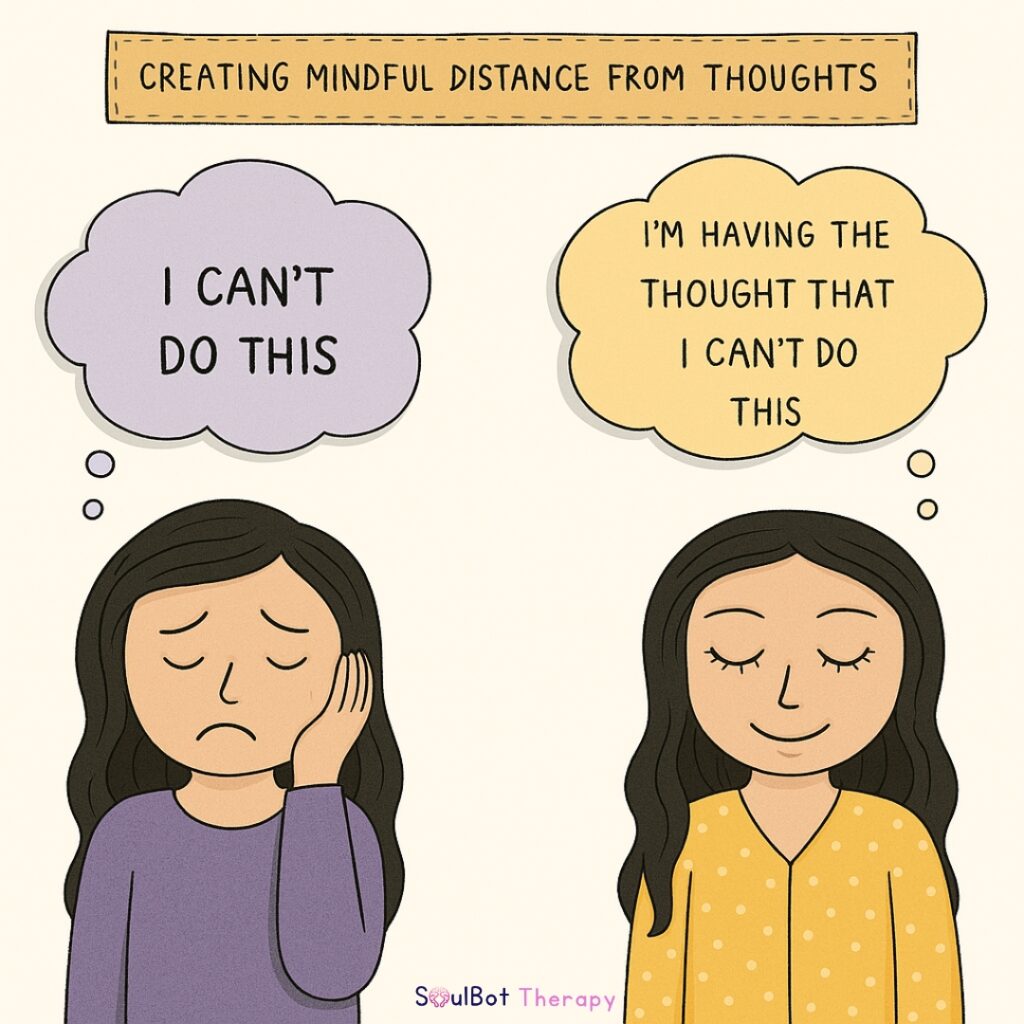
ACT focuses on changing your relationship with thoughts, rather than trying to remove every unwanted thought.

For example, instead of:

“I will fail, so I should not try.”

ACT may help you notice:

“I am having the thought that I will fail.”

The fear has not disappeared, but it no longer has to make the decision for you.

You can then ask:

“What action would move me toward the person I want to be?”

What Are the Six Core Processes of ACT?

ACT processWhat it means
AcceptanceAllowing feelings to exist without immediately escaping or suppressing them
Cognitive defusionSeeing thoughts as mental events, not unquestionable facts
Present-moment awarenessPaying attention to what is happening now
Self-as-contextRecognising that you are more than any thought, emotion or label
ValuesIdentifying what genuinely matters to you
Committed actionTaking realistic steps that support those values

Together, these processes build psychological flexibility. A 2024 systematic review found that ACT was associated with increased flexibility and reduced avoidance, and these changes were linked with lower psychological distress.

ACT Therapy Techniques

1. Thought Labelling

Instead of saying:

“I am useless.”

Try:

“I notice I am having the thought that I am useless.”

This creates distance between you and the thought.

2. Making Space for Emotions

Notice where an emotion appears in your body without immediately trying to remove it.

You might say:

“Anxiety is here. I do not like it, but I can allow it to be present while I decide what to do.”

Acceptance does not mean liking the feeling or giving up.

3. Values Clarification

Ask:

  • What kind of partner, friend or colleague do I want to be?
  • What matters even when life feels difficult?
  • Which action would reflect that value today?

Values provide direction. They are not another checklist you must complete perfectly.

4. Committed Action

Choose one small behaviour connected to your value.

If you value connection, the action might be replying honestly to one message rather than waiting until your anxiety disappears.
acceptance and commitment therapy

Try the SoulBot Notice–Name–Choose Check-In

Use this short ACT-inspired exercise when your thoughts feel overwhelming:

Notice: What thought is showing up?

“I am having the thought that I will embarrass myself.”

Name: What feeling is present?

“I notice anxiety and tension.”

Choose: What small action supports your values?

“I value courage, so I will stay in the conversation for five more minutes.”

This exercise is for reflection. It is not a replacement for ACT with a qualified therapist.

ACT vs CBT: What Is the Difference?

ACTCBT
Often focuses on changing your relationship with thoughtsOften examines and challenges unhelpful thought patterns
Emphasises acceptance and valuesEmphasises links between thoughts, feelings and behaviour
Asks whether a thought is helping you act meaningfullyMay ask whether a thought is accurate or balanced
Builds psychological flexibilityBuilds cognitive and behavioural coping skills

ACT and CBT are not opposites. They overlap, and a therapist may use techniques from both.

Research suggests ACT can reduce psychological distress. However, a 2026 review found that it was not clearly superior to other established psychotherapies. The right approach depends on your needs, preferences and therapist, not which therapy sounds newest.

Who May Benefit From ACT Therapy?

ACT may be considered when you:

  • keep fighting thoughts that return;
  • avoid situations because of anxiety;
  • feel controlled by perfectionism or self-criticism;
  • struggle with uncertainty;
  • feel disconnected from your values;
  • want practical tools alongside emotional exploration.

A qualified professional can help determine whether ACT, CBT or another approach fits your situation.

What Happens in an ACT Therapy Session?

An ACT therapist may help you:

  • identify thoughts and feelings you keep avoiding;
  • practise mindfulness or defusion exercises;
  • clarify what matters to you;
  • recognise where avoidance limits your life;
  • choose small values-based actions between sessions.

ACT is experiential. You do not only discuss the problem; you practise responding differently.

Are Looping Thoughts Affecting Your Daily Life?

The Free Anxiety Test can help you reflect on worry, restlessness and overthinking patterns.

Quick self-check · Instant result · Not a diagnosis

Talk to Soululu About What Matters to You

Soululu does not provide Acceptance and Commitment Therapy, but it can help you reflect on:

  • thoughts you feel stuck inside;
  • emotions you keep avoiding;
  • the difference between fear and facts;
  • values you want to act on;
  • one realistic next step.

👉 Talk to Soululu

Soululu supports self-reflection and emotional awareness. It does not replace therapy with a qualified professional.

Final Thought

ACT does not promise a life without difficult thoughts.

It helps you stop placing your life on hold until those thoughts disappear.

You can feel anxious and still act with courage. You can feel uncertain and still move toward something meaningful.


Related SoulBot Reads

FAQ

Frequently Asked Questions

ACT stands for Acceptance and Commitment Therapy. It combines acceptance, mindfulness, values and behaviour-change strategies.
No. Mindfulness is one part of ACT. ACT also includes cognitive defusion, values clarification and committed action.
Not universally. Both can be effective, and current evidence does not show that ACT is consistently superior to other established psychotherapies.
You can practise basic reflection, mindfulness and values exercises independently. Persistent or severe symptoms should be addressed with a qualified professional.
No. ACT acceptance means allowing an internal experience to be present without wasting all your energy fighting it. Committed action remains an essential part of the approach.

About the Author:

Picture of Sonali Shastri

Sonali Shastri

Sonali Shastri is a Content Expert at SoulBot Therapy, where she creates mental health and self-discovery content that feels clear, relatable, and emotionally grounded. She specializes in translating psychology-informed ideas into simple, relatable blogs, test pages, and reflection-based resources. Her work helps readers understand themselves better while reducing stigma around mental health conversations.

More Blog Posts

You May Look Fine, But It Feels Heavy Inside

Ready to explore your full SoulMap?

🟢The Grounded Socializer

Social Moments Feel Mostly Manageable

Ready to explore your full SoulMap?

🟡The Quiet Overthinker

You Show Up, But Your Mind Replays It

Ready to explore your full SoulMap?

🟠The Cautious Connector

Connection Matters, But It Can Feel Hard

Ready to explore your full SoulMap?

Your emotional compass wants love, but stays cautious.

Ready to explore your full SoulMap?

Avoidant Attachment
Independent, With Boundaries

Your emotional compass values space and self-reliance.

Ready to explore your full SoulMap?

Anxious Attachment
Deep, But Seeking Reassurance

Your emotional world is intense and connection-driven.

Ready to explore your full SoulMap?

Secure Attachment – Calm & Connected

Your emotional compass feels steady and safe.


Ready to explore your full SoulMap?

The Storm Mind (Severe Anxiety)

Intense, overwhelming, and hard to control at times.

Ready to explore your full SoulMap?

The Overthinker (Moderate Anxiety)

Your mind is active, often running ahead of you.

Ready to explore your full SoulMap?

The Gentle Worrier (Mild Anxiety)

Occasional overthinking, but still in control.
You feel stress at times, but it doesn’t take over your day.

Ready to explore your full SoulMap?

Moderately Emotionally Available- Opening, With Caution

Your emotional compass shows growth, with a few guarded zones.

Ready to explore your full SoulMap?

Your emotional compass points toward openness and connection.

Ready to explore your full SoulMap?

Your emotional compass leans toward self-protection right now.

Ready to explore your full SoulMap?

Submissive Personality

Gentle and supportive. You bring calm energy and emotional depth to every space.

Ready to explore your full SoulMap?

Balanced Personality

Grounded and fair-minded. You value harmony, empathy, and shared understanding.

Ready to explore your full SoulMap?

Dominant Personality

Driven and decisive. You lead naturally, think fast, and act with purpose.

Ready to explore your full SoulMap?

Homosexual —
True North, Same-Gender

Your love compass points to people of the same gender.

Ready to explore your full SoulMap?

Restless and always in motion. May talk fast, act quickly, or jump between ideas. 

Ready to explore your full SoulMap?

High Likelihood
ADHD Combined Type (ADHD-C)

Shows both inattentive and hyperactive traits where focus shifts, energy spikes, and motivation come in waves.

Ready to explore your full SoulMap?

Low Likelihood
ADHD Inattentive Type (ADHD-I)

Often loses focus and misses details, with drifting thoughts that leave tasks unfinished.

Ready to explore your full SoulMap?

🔧 The Virtuoso - ISTP

Hands-On Expert

Ready to explore your full SoulMap?

📋 The Logistician - ISTJ

Steady Rock

Ready to explore your full SoulMap?

🌻 The Adventurer - ISFP

Gentle Spirit

Ready to explore your full SoulMap?

🛡️ The Defender - ISFJ

Caring Guardian

Ready to explore your full SoulMap?

🤔 The Logician - INTP

Curious Explorer

Ready to explore your full SoulMap?

🏛️ The Architect - INTJ

Strategic Mastermind

Ready to explore your full SoulMap?

🦄 The Mediator - INFP

Gentle Idealist

Ready to explore your full SoulMap?

🔮 The Advocate - INFJ

Quiet Visionary

Ready to explore your full SoulMap?

🚀 The Entrepreneur - ESTP

Action Hero

Ready to explore your full SoulMap?

📊 The Executive - ESTJ

Results Driven

Ready to explore your full SoulMap?

🎭 The Entertainer - ESFP

Life of the Party

Ready to explore your full SoulMap?

🤗 The Consul - ESFJ

Heart of Gold

Ready to explore your full SoulMap?

🧠 The Debater - ENTP

Mental Gymnast

Ready to explore your full SoulMap?

👑 The Commander - ENTJ

Strategic Powerhouse

Ready to explore your full SoulMap?

🎨 The Campaigner - ENFP

Creative Visionary

Ready to explore your full SoulMap?

🌟 The Protagonist - ENFJ

Natural Born Leader

Ready to explore your full SoulMap?

🤗 Physical Touch

Hugs Over Hype

Ready to explore your full SoulMap?

🕰 Quality Time

Presence Over Presents

Ready to explore your full SoulMap?

🎁 Receiving Gifts

Thoughtful Tokens, Big Feelings

Ready to explore your full SoulMap?

🤝 Acts of Service

Love in Action

Ready to explore your full SoulMap?

Words of Affirmation

You Speak from the Heart

Ready to explore your full SoulMap?

Gay, Lesbian, or
Queer and Proud

Your love compass points to the same gender

Ready to explore your full SoulMap?

Bisexual -
Go with the Flowy

Your love compass swings in the middle

Ready to explore your full SoulMap?

Heteroflexible —
Some Wiggle in the Compass

You’ve got a touch of bi-curiosity

Ready to explore your full SoulMap?

Hetero -
Straight Up Honest

Your love compass points to the opposite sex.

Ready to explore your full SoulMap?