
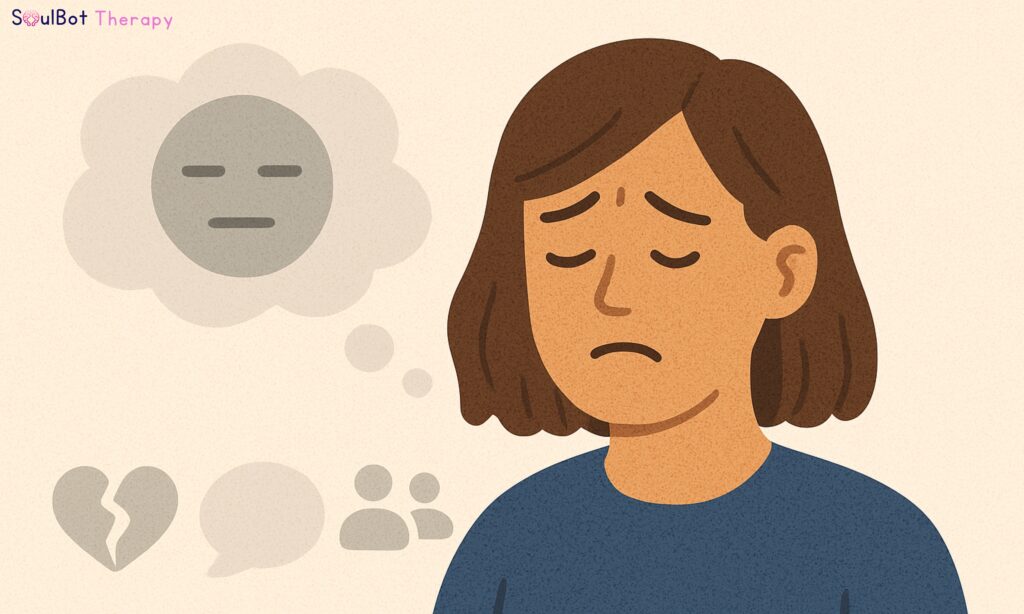
Quick Answer: Why Do I Feel Emotionally Numb?
Emotional numbness means feeling disconnected from emotions that you would normally expect to feel.
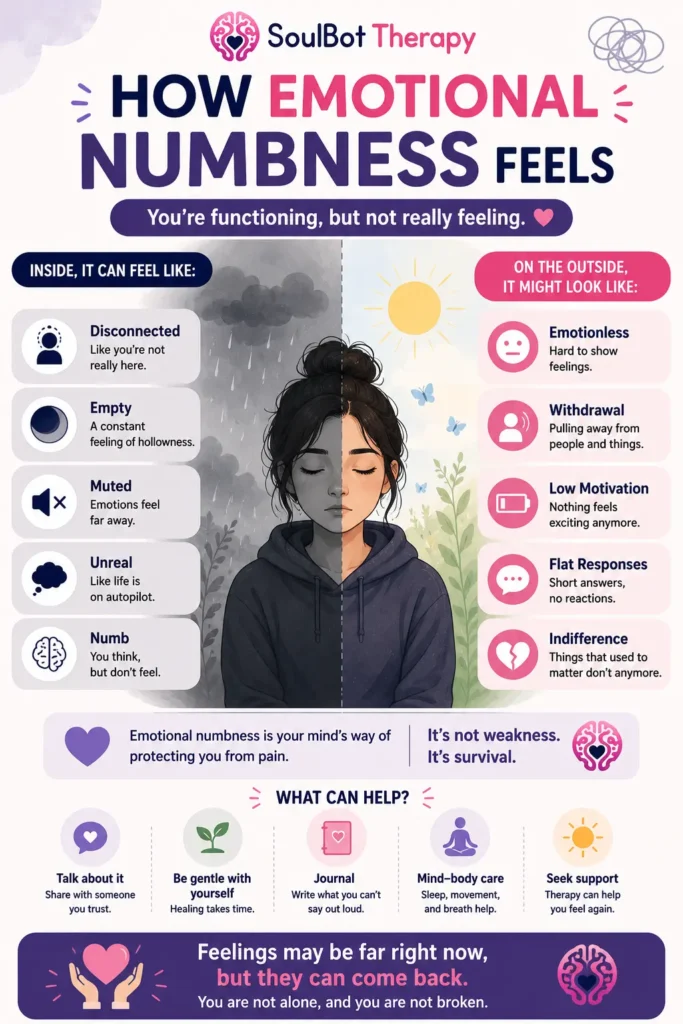
You may feel empty, detached, uninterested or as though you are living on autopilot.
Common causes include:
- Prolonged stress or burnout
- Grief or emotional overwhelm
- Depression
- Anxiety
- Trauma or PTSD
- Duppressing emotions for a long time
- Medication side effects
- Alcohol or substance use
Emotional numbness is not a diagnosis. It may be a temporary response to overwhelm or a symptom that needs professional support.
🧠 Not sure whether you are emotionally disconnected or simply overwhelmed? Take the Free Emotional Availability Test to explore your current emotional patterns.
What Does Feeling Emotionally Numb Mean?
Feeling emotionally numb means your emotional reactions feel reduced, distant or unavailable.
You may know that something is sad, exciting or important without fully feeling the emotion.
Common experiences include:
- Feeling disconnected from people you care about
- Losing interest in activities you previously enjoyed
- Struggling to identify what you feel
- Reacting less strongly to good or bad news
- Feeling detached from your body or surroundings
- Going through daily routines without feeling present
You are not necessarily uncaring. Your mind may be struggling to process stress, difficult emotions or an underlying health condition.
Why Do I Feel Emotionally Numb?
1. Chronic Stress or Burnout
When stress continues for a long time, you may stop responding emotionally in the way you usually would.
You might continue working, caring for others and completing responsibilities while feeling increasingly detached inside.
2. Depression
Depression does not always feel like obvious sadness.
It may involve:
- an empty mood
- loss of interest or pleasure
- low energy
- withdrawal from others
- difficulty concentrating
- feeling detached
The National Institute of Mental Health lists loss of enjoyment, fatigue, withdrawal and detachment among possible signs of depression.
3. Trauma or PTSD
Emotional numbing can occur after trauma.
A person may feel distant from others, lose interest in activities or find it difficult to experience positive emotions. However, feeling numb does not automatically mean you have PTSD.
The US Department of Veterans Affairs includes emotional numbness and difficulty feeling happiness among possible PTSD symptoms.
4. Anxiety and Emotional Overload
Anxiety can create so much mental activity that you feel exhausted rather than emotional.
You may spend hours worrying, analysing or expecting something to go wrong, then feel emotionally flat afterwards.
5. Grief
Grief does not always begin with crying.
Shock after a loss may temporarily make you feel distant, unreal or unable to respond. Emotional reactions may appear gradually rather than immediately.
6. Medication Side Effects
Some medications can contribute to emotional blunting.
The NHS lists feeling emotionally numb as a possible side effect of antidepressants. Do not stop or change prescribed medication without speaking to the clinician who prescribed it.
Emotional Numbness vs Anhedonia
These terms overlap, but they are not identical.
| Emotional numbness | Anhedonia |
|---|---|
| Reduced access to positive and negative emotions | Reduced interest or pleasure |
| You may feel detached or emotionally flat | Activities no longer feel enjoyable |
| Can occur with stress, trauma, depression or medication | Commonly associated with depression |
| May feel like “I cannot feel anything” | May feel like “Nothing feels enjoyable” |
A person can experience both at the same time.
Is Emotional Numbness a Trauma Response?
It can be, but trauma is not the only explanation.
After a traumatic or overwhelming experience, emotional detachment may help someone function without becoming flooded by distress. For some people, however, numbness is linked more closely to depression, burnout, grief, medication or another condition.
Avoid assuming the cause based on one symptom. Notice what happened before the numbness began and whether other symptoms are present.
How to Stop Feeling Emotionally Numb
1. Stop Forcing Yourself to Feel
Pressure can create more frustration.
Try saying:
“I feel disconnected right now. I do not have to pretend otherwise.”
Naming numbness is more useful than judging it.
2. Notice Physical Sensations
Begin with what you can detect:
- Tension in your shoulders
- Heaviness in your chest
- Tiredness
- Warmth from sunlight
- The texture of an object
- Sounds around you
You do not need to identify a complex emotion immediately.
3. Follow a Basic Routine
Emotional recovery is harder when sleep, meals and daily structure are disrupted.
Focus on:
- Regular sleep and waking times
- Eating consistently
- Short walks or gentle movement
- Reducing alcohol or substance use
- Spending some time outside
4. Record When the Numbness Appears
Write down:
- What happened beforehand
- Who you were with
- How long the numbness lasted
- Any medication changes
- Whether you were stressed, exhausted or anxious
Patterns can help you explain the experience more clearly to a healthcare professional.
5. Connect Without Performing
You do not need to act cheerful.
Try telling someone you trust:
“I have been feeling emotionally disconnected lately. I do not need advice, but I would like some company.”
Related: Why Some People Struggle to Open Up
When Should You Seek Professional Help?
Consider speaking with a doctor or mental health professional when emotional numbness:
- Lasts for two weeks or longer
- Is becoming more intense
- Affects work, sleep or relationships
- Comes with persistent low mood
- Makes previously enjoyable activities feel meaningless
- Began after starting or changing medication
- Is connected to trauma, substance use or dissociation
A clinician can explore psychological, medication-related and physical causes rather than assuming it is only stress.
If you feel unable to stay safe or have thoughts of harming yourself, contact emergency services immediately. In India, Tele-MANAS is available at 14416 or 1800-89-14416.
Talk to Soululu When You Feel Disconnected
When you cannot identify an emotion, you can begin with the situation.
Talk to Soululu to reflect on:
- When the numbness began
- What was happening before it appeared
- Whether you feel tired, detached or overwhelmed
- What you have stopped enjoying
- What you may want to discuss with a professional
Soululu supports reflection and emotional awareness. It does not diagnose the cause of emotional numbness or replace professional care.
Final Thought
Feeling emotionally numb does not mean you are cold or incapable of caring.
It means something may be interfering with your ability to access emotions clearly.
Instead of forcing yourself to feel, look for the possible cause, reduce pressure and seek support if the numbness continues.