

💬I want to be close to someone… but something stops me every time.
If you’ve ever wondered, “Why am I emotionally closed off?” you’re not alone. It’s not just fear or trauma. It’s layered, complex, and human.
Your nervous system works hard to protect you from emotional danger, which makes opening up difficult for many people. Emotional unavailability isn’t a flaw. It’s often a survival pattern that once made sense.
Let’s unpack what’s really going on beneath emotional walls and how to start taking them down gently.
🔍 What Does It Mean to Be Emotionally Closed Off?
Being emotionally closed off means you might:
- Avoid sharing vulnerable feelings even with people you trust.
- Feel uncomfortable when others express intense emotions.
- Struggle to connect deeply, even when you want to.
This pattern can show up in romantic relationships, friendships, and even in how you relate to yourself. But again, this isn’t about being cold or heartless. Emotional unavailability is often a sign of deep internal overwhelm.
🧠SoulFact: According to Attachment Theory, people with avoidant attachment styles often disconnect emotionally to maintain a sense of control and safety.
🧠 Why Am I Emotionally Closed Off? (It’s Not Always Obvious)
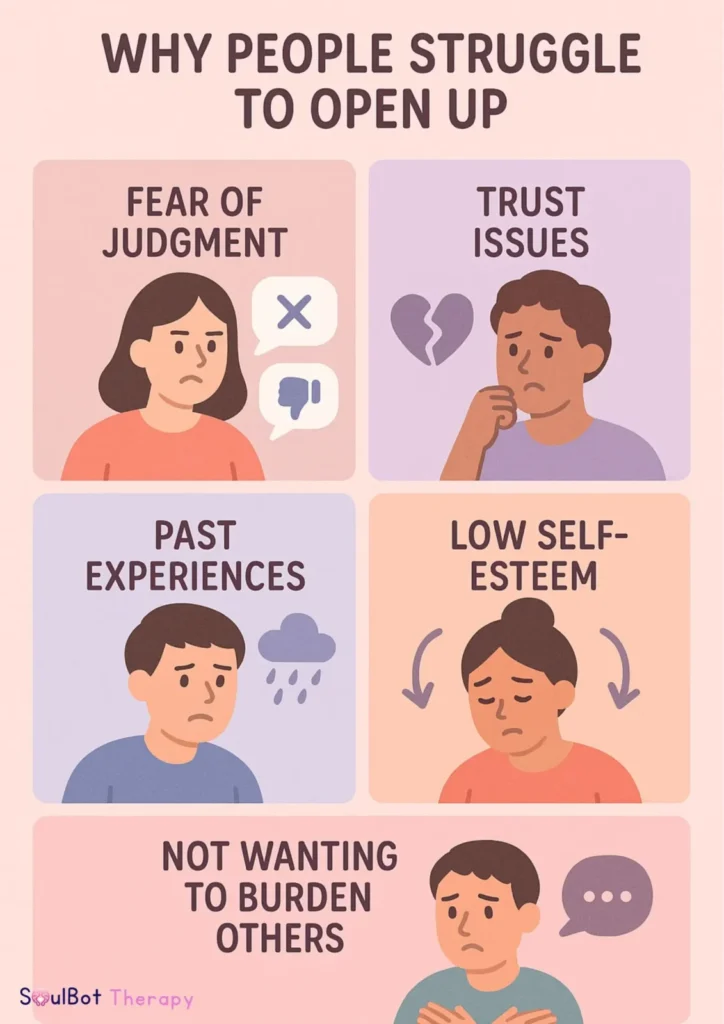
Here are 5 less obvious reasons:
- You Grew Up in an Emotionally Dismissive Home
Hearing “stop crying” or “toughen up” can train your brain to believe that emotions equal weakness. - You Fear Being a Burden
Sharing your inner world feels like “too much,” so you stay silent to protect others even when it hurts you. - You Associate Vulnerability with Danger
Because you opened up and were hurt in the past, your brain now does everything it can to avoid risk. - You Don’t Even Know What You Feel
Emotional suppression becomes emotional numbness. You want to express, but there’s no clarity inside. - You Feel Safer in Control
Emotional openness feels like handing someone the remote to your heart, and that loss of control feels terrifying.
🔗 Want to know how emotionally available you really are? Our free quiz helps you spot emotional patterns, walls, and unmet needs in relationships.
🧰 How to Gently Start Opening Up Emotionally?
Here are actionable steps to rebuild a connection with yourself and others:
- Start by journaling – Name your emotions. Use prompts like: What scared me today? When did I feel safe?
- Share small things first – You don’t have to trauma-dump. Start with honest feelings about your day.
- Use phrases like “I’m working on being more open” – This sets expectations without pressure.
- Recognise the people who hold your emotions safely — Don’t offer vulnerability where it won’t be handled with care.
- Try grounding techniques – Especially when emotional expression feels overwhelming. Explore grounding exercises for anxiety.
💡A SoulBot Reminder: You Can Heal at Your Own Pace. Healing isn’t about flipping a switch. It’s about rewiring years of emotional self-protection bit by bit, with care. Your brain isn’t sabotaging you. It’s protecting you. But now, you're allowed to rewrite the script.