
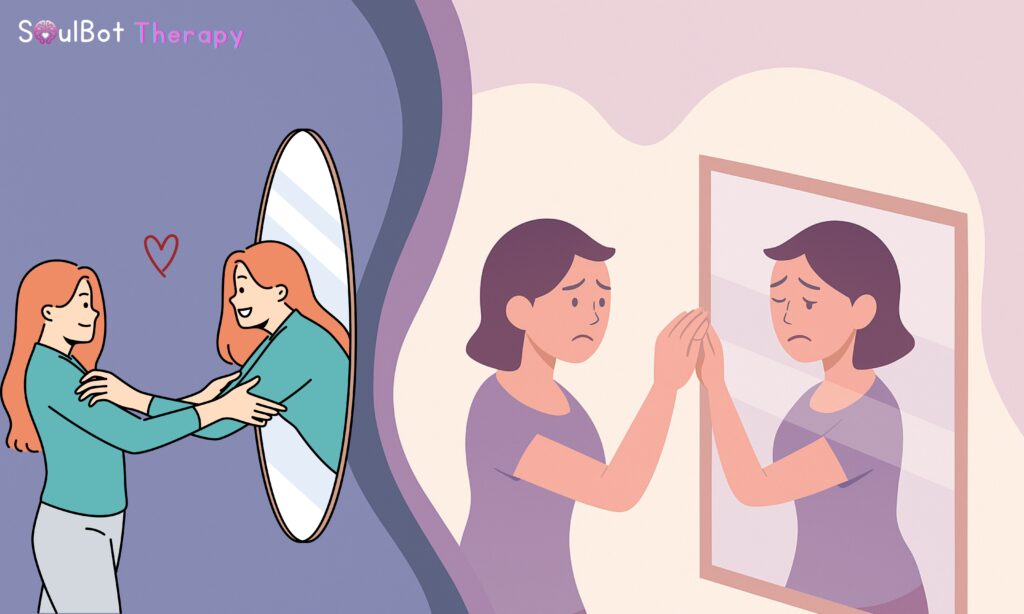
Quick Answer: Do I Have Low Self-Esteem?
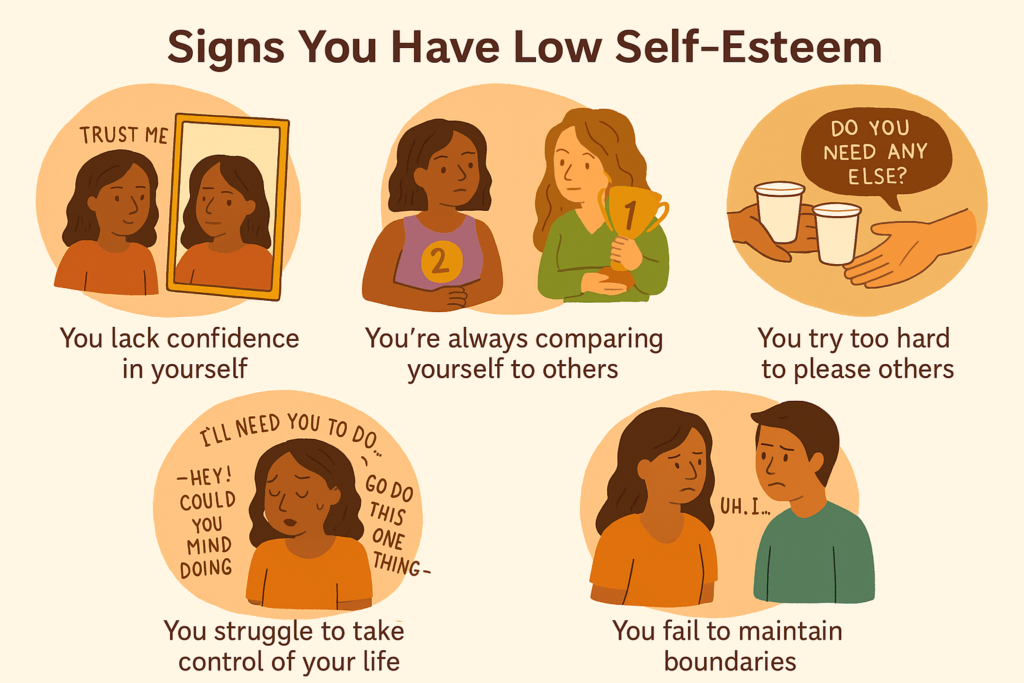
You may have low self-esteem if you regularly:
- doubt your decisions
- dismiss compliments
- Compare yourself with others
- struggle to say no
- feel undeserving of support
- accept treatment that hurts you
- judge yourself more harshly than other people
One difficult week does not mean you have low self-esteem. Look for a repeated pattern affecting your choices, relationships and how you speak to yourself.
Low self-esteem is not a mental health diagnosis. It describes a negative or uncertain view of your own value.
What Is Self-Esteem?
Self-esteem is how positively or negatively you evaluate yourself.
The American Psychological Association defines it as the degree to which you view the qualities within your self-concept positively.
Confidence can change between situations. You may feel confident at work but insecure in relationships.
Self-esteem goes deeper. It affects whether you believe:
- Your needs matter
- You deserve respect
- Mistakes reduce your worth
- Your opinions are valuable
- You can trust yourself
What Are the Signs of Low Self-Esteem?
You do not need to dislike everything about yourself to struggle with low self-esteem. It often appears through everyday habits.
1. You Apologise Too Much
You say sorry for asking questions, expressing needs or taking up space—even when you have done nothing wrong.
2. You Dismiss Compliments
You assume people are only being polite, or immediately explain why your achievement was not impressive.
3. You Need Constant Validation
You frequently ask others whether you made the right choice, look acceptable or handled something correctly.
4. You Struggle to Say No
You agree to things you do not want because disappointing someone feels worse than ignoring your own needs.
Related: How to Set Healthy Relationship Boundaries
5. You Fear Being “Too Much”
You hide your feelings, needs or personality because you worry people will judge, reject or leave you.
6. You Accept Poor Treatment
You excuse repeated disrespect or believe asking for better treatment would make you difficult or demanding.
7. You Remember Criticism More Than Praise
One negative comment stays with you longer than several positive ones.
8. You Feel Like a Burden
You hesitate to ask for help and feel guilty when someone supports you.
9. You Compare Yourself Constantly
Someone else’s appearance, career or relationship becomes evidence that you are falling behind.
10. You Avoid Opportunities
You may delay applying, speaking up or trying something new because failure feels like proof that you are not good enough.
Low self-esteem and an inferiority complex can overlap, but they are not identical. Read: Inferiority Complex: Signs, Causes and How to Overcome It
Why Do I Have Low Self-Esteem?
Low self-esteem often develops gradually rather than appearing without a reason.
Possible influences include:
- repeated criticism
- bullying or rejection
- emotionally invalidating relationships
- unrealistic expectations
- discrimination
- academic or workplace pressure
- difficult life events
- comparing yourself with others
- believing love must be earned through achievement
The NHS explains that negative messages from parents, teachers, friends, partners and the media can shape how people see themselves. Stressful life events can also weaken self-esteem.
These experiences may create beliefs such as:
- “I am not good enough.”
- “I have to please everyone to be accepted.”
- “Making a mistake means I have failed.”
These beliefs can feel true without being accurate.
Quick Self-Esteem Check
Ask yourself:
- Do I struggle to trust my decisions without reassurance?
- Do compliments feel uncomfortable or untrue?
- Do I feel guilty when I rest, ask for help or say no?
- Do I tolerate disrespect because confrontation feels frightening?
- Do I often feel inadequate, even when I am trying my best?
This is a reflection exercise, not a clinical test.
If several questions feel familiar and these patterns affect your relationships or daily choices, your self-esteem may need attention.
🧠 Take the SoulBot MBTI Test for a more detailed summary of your personality type.The result supports self-awareness. It does not diagnose a mental health condition.
How Can You Improve Low Self-Esteem?
1. Question the Inner Critic
When you think, “I always fail,” ask:
- What evidence supports this?
- What evidence does not?
- Would I say this to someone I care about?
The goal is not forced positivity. It is more accurate thinking.
2. Record Evidence of Your Strengths
Write down:
- something you handled well
- a kind choice you made
- a problem you solved
- positive feedback you received
Your brain may dismiss these moments unless you consciously notice them.
3. Practise Small Boundaries
Start with manageable statements:
- “I cannot do that today.”
- “I need time to think.”
- “That comment made me uncomfortable.”
Each boundary teaches you that your needs are allowed to exist.
4. Keep Small Promises to Yourself
Choose one realistic commitment:
- Take a short walk
- Send one delayed email
- Drink water with lunch
- Stop work at a planned time
Self-trust grows when your actions repeatedly support your needs.
5. Spend Less Time With People Who Reduce Your Worth
Notice how you feel around different people.
Healthy relationships allow you to disagree, express needs and make mistakes without being humiliated.
When Should You Seek Support?
Consider speaking with a qualified mental health professional if you have low self-esteem:
- Affects your relationships or work
- Causes strong anxiety or avoidance
- Keeps you in harmful situations
- Appears alongside persistent sadness
- Makes daily responsibilities difficult
- Leads to hopelessness or thoughts of self-harm
Low self-esteem can occur alongside depression and anxiety, although it does not automatically mean you have either condition.
A Gentle Soululu Check-In
When your inner voice says, “I’m not enough,” pause before accepting it as a fact.
Talk to Soululu to explore where the belief came from, notice recurring patterns and choose one small act of self-respect.
Soululu supports emotional reflection. It does not diagnose conditions or replace professional care.
Final Thought
Low self-esteem is not proof that something is wrong with you.
It often means you have repeated certain beliefs for so long that they now feel automatic.
You can question those beliefs, practise boundaries and slowly rebuild trust in yourself—one honest choice at a time.