
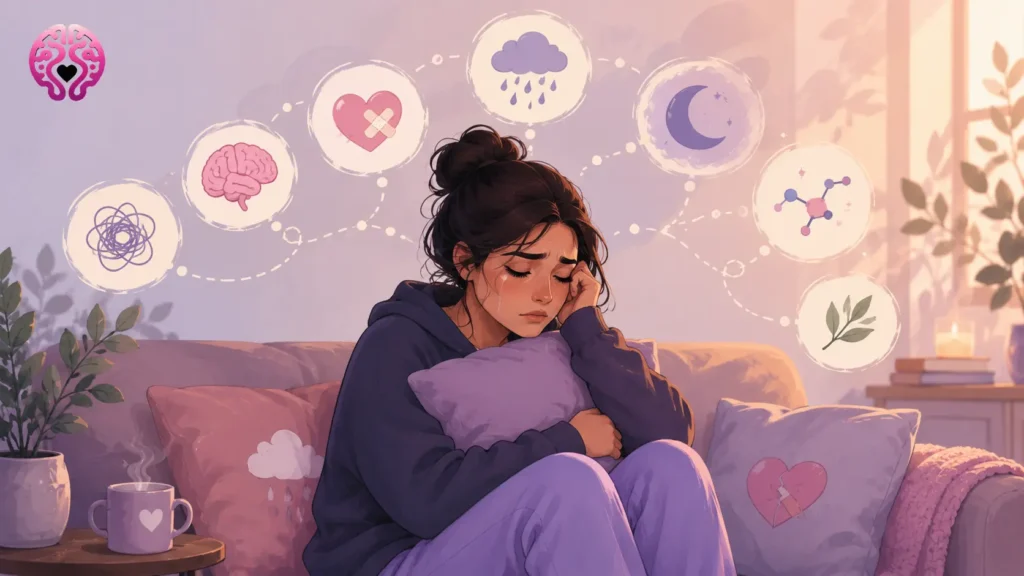
If you cry over small things, feel more emotional than usual, or suddenly tear up without knowing why, it does not automatically mean something is wrong. Stress, exhaustion, strong emotions, hormonal changes and mental health can all affect how easily you cry. Crying is a normal human response and varies widely from person to person.
The more useful question is: Has something changed recently?
Why Am I Crying So Much Lately?
1. You’re More Stressed Than You Realise
Sometimes the thing that makes you cry isn’t the real reason.
A delayed message, small mistake or minor disagreement may simply be the final trigger after days of work pressure, relationship stress or emotional overload. Stress can make you feel more emotional or overwhelmed than usual.
If this sounds familiar, read Why Do I Feel Overwhelmed All the Time?
2. You’re Exhausted
Poor sleep can make emotions harder to regulate. Cleveland Clinic specifically notes that fatigue and sleep deprivation can affect crying because managing emotions becomes more difficult when you’re tired.
Notice whether you cry more easily after late nights, demanding days or prolonged exhaustion.
3. You’ve Been Holding Too Much In
You may stay composed through stressful situations and then cry over something seemingly insignificant.
The trigger may be small. The emotional load behind it isn’t.
Give yourself somewhere to process what you’ve been carrying through journaling, talking to someone you trust or simply naming what you’re feeling.
4. You’re Feeling Anxious or Overwhelmed
Fear, frustration, anger and other intense emotions can all trigger crying; tears aren’t limited to sadness.
If your crying comes with racing thoughts, constant worry or feeling unable to switch off, explore How to Deal With Anxiety.
5. Something in Your Life Has Changed
A breakup, grief, friendship problem, job change, family stress or even a positive major life event can make emotions sit closer to the surface.
You don’t need to be consciously thinking about the situation every time you cry for it to still be affecting you.
6. Hormonal Changes May Be Playing a Role
Hormones can influence how easily some people cry. Cleveland Clinic notes that sex-linked hormones are among the factors that may affect crying.
If crying has changed suddenly or seems linked to other physical or mood changes, consider discussing it with a healthcare professional rather than assuming it is “just emotional.”
7. You May Simply Cry More Easily Than Other People
There is no universal amount of crying that is “normal.”
Some people tear up readily when they’re sad, angry, frustrated, relieved or even happy. Crying easily by itself isn’t a diagnosis.
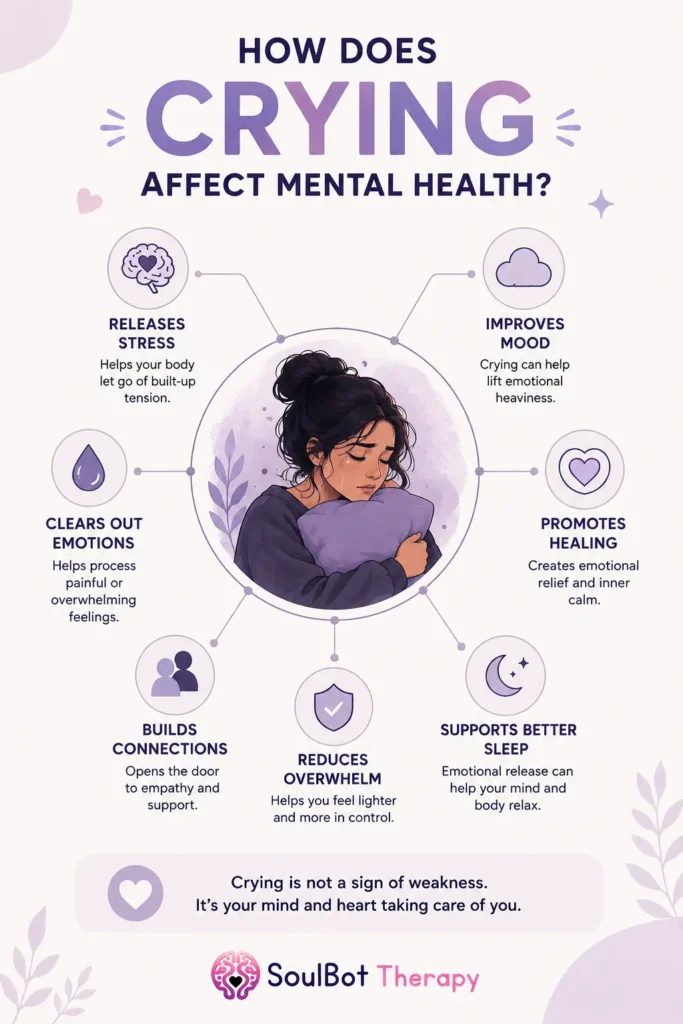
Look at the Pattern, Not Just the Tears
Ask yourself:
- Is crying more common for me lately?
- What usually happens right before it?
- Am I sleeping enough?
- Has my stress increased?
- Have I noticed other changes in my mood?
- Does crying interfere with work, relationships or everyday life?
Tracking these patterns can tell you more than judging yourself for crying.
When Should I Pay More Attention?
Consider talking with a healthcare or mental health professional if crying is a sudden change, feels difficult to control, repeatedly interferes with daily life, or comes with persistent sadness, hopelessness, loss of interest, major sleep/appetite changes or other ongoing symptoms. NIMH recommends seeking professional support when symptoms of depression persist or significantly affect everyday functioning.
Not Sure What’s Behind the Tears?
Instead of trying to figure everything out in one moment, track what you’re feeling over time with SoulBot. Notice what happened before you cried, what else you were feeling and whether a pattern starts to appear.
Track Your Mood with SoulBot →
Or talk privately with a therapist when you know you’re emotional but can’t quite explain why.