

Every relationship changes over time.
The real question isn’t whether you’ve changed—it’s whether you’re growing together or growing apart.
Many couples believe that relationship problems start with major fights or infidelity. In reality, emotional distance often develops slowly through missed conversations, unspoken needs, and daily routines that replace genuine connection.
This relationship growth checklist will help you recognise whether your relationship is strengthening, identify areas that need attention, and discover practical ways to reconnect before small issues escalate into larger ones.
👉 Healthy check-ins depend on knowing how decision-making is shared between you both. The Dominant or Submissive Personality Quiz gives you and your partner a simple starting point for that conversation.What Is Relationship Growth?
Relationship growth means both partners continue to develop individually while intentionally strengthening their connection.
It isn’t measured by how long you’ve been together.
Instead, it’s reflected in how you:
- communicate
- solve problems
- support each other’s goals
- adapt to life changes
- build emotional intimacy over time
Healthy relationships continue evolving rather than remaining the same.
🌱 Why Relationship Growth Matters More Than Compatibility?
Compatibility helps start a relationship.
Growth helps sustain it.
Even couples with similar personalities can drift apart if they stop learning about each other.
Research consistently shows that long-term relationship satisfaction depends more on communication, emotional responsiveness, and adaptability than on having identical personalities or interests.
Without intentional growth:
- Conversations become repetitiveThe
- emotional connection weakens
- Unresolved issues build resentment
- Partners begin living parallel lives instead of shared ones
🟡 Related: What Makes Love Last – The Psychology of Healthy Relationships
Relationship Growth Checklist: Are You Growing Together or Apart?
Ask yourself (or your partner) these 10 relationship check-in questions.
They’re not about blame, they’re about clarity.
1. Do We Repair Conflicts Instead of Avoiding Them?
Every couple argues.
Growing couples focus on repairing after disagreements rather than pretending nothing happened.
Healthy repair includes:
- listening
- apologizing sincerely
- learning from disagreements
- finding solutions together
2. Are We Still Curious About Each Other?
People continue changing throughout life.
Ask yourself:
- Do we still ask meaningful questions?
- Do we know each other’s current dreams?
- Do we celebrate personal growth?
Curiosity keeps relationships emotionally alive.
3. Do We Support Each Other’s Personal Growth?
Healthy relationships encourage both people to grow, not sacrifice themselves.
Support might include:
- encouraging career goals
- respecting hobbies
- celebrating achievements
- supporting therapy or self-development
Your partner should feel like your teammate, not your limitation.
4. Do We Check In Before Problems Become Bigger?
Many couples only communicate deeply during conflict. Relationship growth happens through regular emotional check-ins.
Simple questions like:
- “How are you feeling lately?”
- “Is there anything you need from me?”
can prevent small concerns from becoming major issues.
5. Can We Be Vulnerable Without Feeling Judged?
Emotional safety is one of the strongest predictors of relationship satisfaction.
Can you comfortably say:
- “I’m scared.”
- “I’m struggling.”
- “I need support.”
without worrying about criticism?
If yes, you’re building emotional security together.
6. Have We Adapted to Each Other’s Changing Needs?
Love isn’t static.
The way your partner wanted affection five years ago may be different today. Growing couples regularly ask:
“What makes you feel loved now?”
Instead of assuming the answer never changes.
7. Do We Still Have Shared Goals?
Shared goals create shared direction. These don’t have to be huge life plans. They might include:
- planning travel
- saving money
- improving communication
- building healthier routines
Growing together means imagining a future together.
8. Do We Still Laugh Together?
Playfulness is often overlooked.
Couples who continue laughing, flirting, and enjoying everyday moments tend to maintain stronger emotional bonds.
Joy is an important part of relationship growth, not a distraction from it.
9. Do We Respect Each Other’s Independence?
Healthy relationships include closeness and individuality. Each partner should feel free to:
- maintain friendships
- pursue interests
- spend time alone
- continue personal growth
Connection doesn’t require losing yourself.
10. Are We Choosing Each Other Every Day?
Long-term relationships aren’t sustained by habit alone.
Growing couples intentionally continue choosing:
- kindness
- communication
- affection
- teamwork
The opposite of relationship growth isn’t conflict. It’s emotional stagnation.
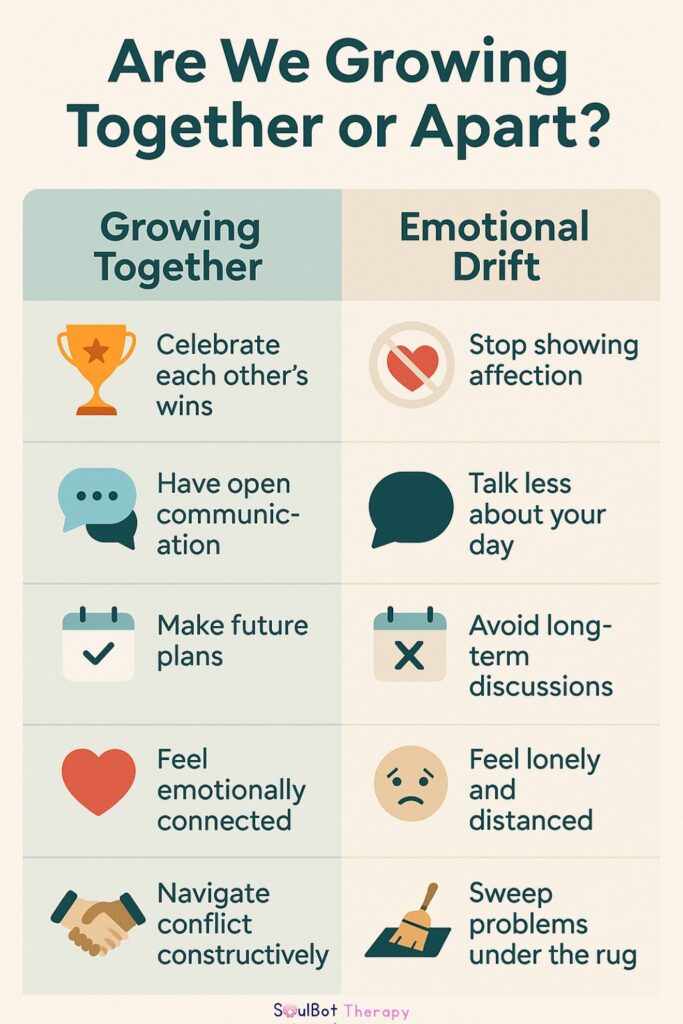
🧾 Growth Table: Compare the Signs
| Growing Together | Growing Apart |
|---|---|
| Conflicts lead to understanding | Conflicts end in silence or blame |
| Shared future goals | Separate visions of the future |
| Emotional safety | Fear of expressing feelings |
| Regular check-ins | Only talking during problems |
| Mutual encouragement | Feeling unsupported |
| Healthy boundaries | Emotional distance or control |
| Curiosity continues | Conversations become routine |
🔗 Learn how small moments lead to big relationship growth.
What Does Relationship Growth Look Like in Everyday Life?
Relationship growth isn’t always dramatic. Often, it appears in small daily choices.
Examples include:
- Asking how your partner is really feeling
- Celebrating small achievements
- apologising without becoming defensive
- Adjusting communication after learning something new
- Supporting each other’s mental health
- Making time for meaningful conversations
Small, consistent efforts often strengthen relationships more than occasional grand gestures.
What Should You Do If You Feel You’re Growing Apart?
Feeling emotionally distant doesn’t automatically mean your relationship is over.
Start by:
Talking honestly
Share how you’re feeling without blaming your partner.
Scheduling regular relationship check-ins
Don’t wait until conflict forces communication.
Rebuilding emotional intimacy
Spend intentional time together without distractions.
Seeking support
A therapist or even guided reflection through Soululu can help you understand recurring patterns before they become deeper problems.
💬 Use Soululu to Track Your Relationship Growth
Sometimes the biggest breakthroughs come from quiet reflection.
🧠 With SoulBot, you can:
- Use the Relationship Growth Tracker to reflect weekly
- Answer pre-built check-in questions
- Track recurring emotional patterns
- Identify moments of connection (and disconnection)
You don’t need to wait for a crisis to start talking about where you stand.
🔮 Try SoulBot’s Relationship Check-In Now
📊 Fact Check
According to a 2023 APA study, couples who did monthly emotional check-ins experienced 32% higher satisfaction and communication resilience than those who only discussed issues reactively.
❤️ Final Word
Strong relationships aren’t built by avoiding problems.
- They’re built by growing through them together.
- The healthiest couples don’t stay connected because life is easy.
- They stay connected because they continue choosing curiosity, communication, and emotional growth.
If today’s checklist helped you notice areas for improvement, that’s not failure. It’s your opportunity to grow together.
🟣 Check in today with SoulBot and build growth into your love story.
External References
- Greater Good Science Centre (emotional connection and healthy relationships)
- American Psychological Association (relationship research)
- The Gottman Institute (communication and relationship stability)