

Many people struggle with the same fear:
“If I say this directly, will I sound rude?”
So they soften their words. They over-explain. They hint instead of asking. And slowly, resentment builds.
Direct communication isn’t the problem. The misunderstanding around it is.
This blog will help you understand what direct communication really is, why it’s often misread as rudeness, and how to use it confidently without damaging relationships.
What Is Direct Communication?
Being direct means expressing your thoughts, needs, or boundaries clearly and honestly, without manipulation, aggression, or emotional padding.
It looks like:
- saying what you mean
- being specific instead of vague
- addressing issues early
- avoiding passive hints
Direct communication is not harshness. It’s clarity with respect.
Why Direct Communication Is Often Misread as Rude?
Many people are taughtespecially from a young agethat being liked is more important than being clear.
As a result:
- Honesty feels uncomfortable
- Boundaries feel selfish
- Clarity feels confrontational
When someone practices direct communication, it can feel unfamiliar to people who are used to indirect or people-pleasing styles.
The discomfort doesn’t mean you’re rude. It often means you’re breaking an unspoken pattern.
SoulFact: Research shows assertive communication increases respect and reduces long-term conflict.
 SoulFact: Research shows
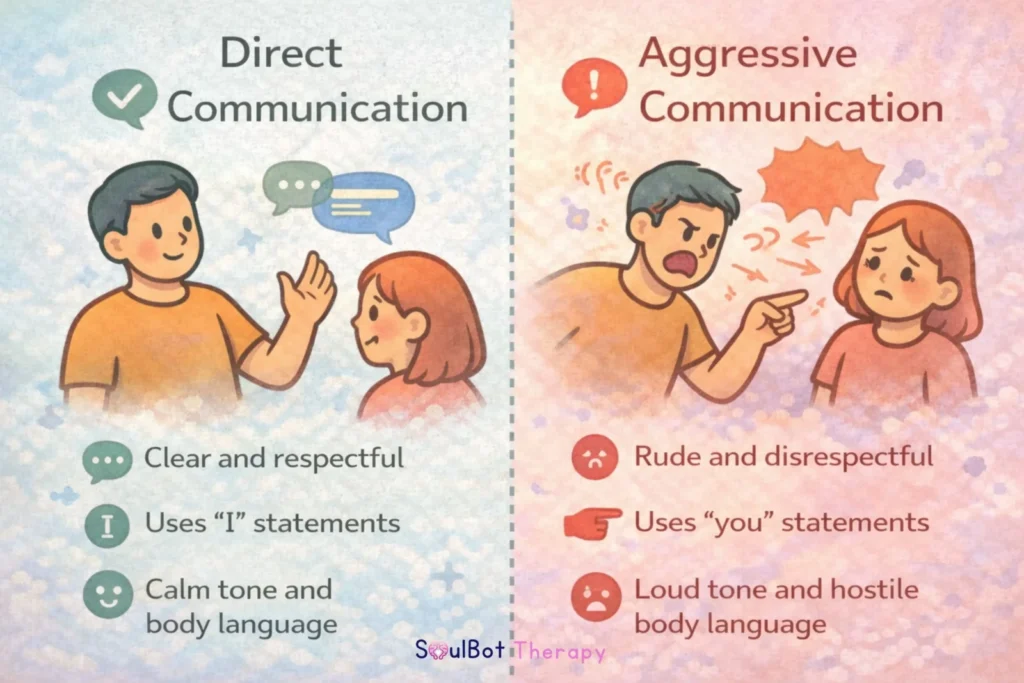
 Direct vs Aggressive Communication: The Real Difference
This distinction matters.
Direct communication:
- is calm
- is respectful
- focuses on facts and needs
- leaves room for dialogue
Aggressive communication:
- is emotionally charged
- blames or criticises
- demands instead of requests
- dismisses the other person
The difference isn’t what you say, it’s how and why you say it. Being clear is not the same as being forceful.
How to Use Direct Communication Without Hurting People?
If you want to be direct without being perceived as rude, focus on delivery, not dilution.
Here’s how:
1. Lead With Observation, Not Accusation
Instead of:
“You never listen.”
Try:
“I noticed I didn’t feel heard in that conversation.”
2. Use “I” Statements
This keeps communication grounded and non-defensive.
“I need more clarity going forward.”
3. Be Specific
Vagueness creates confusion. Specificity creates safety.
“I need a response by Friday.”
4. Drop Excess Apologies
You don’t need to apologise for having needs. Over-apologising weakens communication and reinforces people-pleasing habits.
🧠SoulTip: Clear communication builds trust more consistently than indirect reassurance.
How Tone and Timing Shape Direct Communication?
Tone and timing can change how the same sentence is received.
This communication works best when:
- Emotions are regulated
- The conversation is private
- Stress levels are low
- Both people are receptive
Clarity delivered calmly is far more effective than clarity delivered under pressure.
Direct Communication and Boundaries
Being upfront is essential for communication boundaries.
Boundaries sound like:
- “I’m not available for that.”
- “That doesn’t work for me.”
- “I need space right now.”
You don’t need to over-explain boundaries for them to be valid.
Clear boundaries prevent resentment.
Indirect boundaries create confusion.
Fear of Being Rude: Where It Comes From
The fear of being rude often comes from:
- people-pleasing patterns
- past punishment for honesty
- cultural or family conditioning
- fear of rejection or conflict
If being honest once led to tension, your nervous system may associate clarity with danger.
That doesn’t mean clarity is wrong.
It means your system learned to stay safe by staying quiet.
People-Pleasing Communication Patterns
People pleasing communication often looks like:
- Softening every request
- Hinting instead of asking
- Agreeing when you don’t want to
- Explaining yourself repeatedly
Over time, this leads to:
- Emotional exhaustion
- Resentment
- Confusion in relationships
Direct communication isn’t about being less kind.
It’s about being more honest.
Examples of Direct but Respectful Communication
Here are a few real-life examples:
- Work:
“I can take this on, but I’ll need the deadline extended.”
- Relationships:
“I need more consistency to feel secure.”
- Friendships:
“That comment hurt me, and I want to talk about it.”
These statements are clear, respectful, and emotionally grounded.
How SoulBot Helps You Practice Direct Communication?
SoulBot helps you:
- Identify people-pleasing patterns
- Practice boundary statements
- Regulate emotions before conversations
- Reflect instead of react
- Build confidence in your voice
🧠 Use SoulBot’s journaling tool to practice direct but respectful communication.💬 Chat with SoulBot to rewrite boundary statements in your natural tone.