
If you’ve ever thought, “I know I’m capable… so why don’t I feel good inside?” this blog is for you.
A lot of people carry high self-esteem but still feel emotionally empty, disconnected, or unworthy. Because here’s the truth, no one teaches us:
- Self-esteem is about what you DO.
- Self-love is about who you ARE.
Let’s dive into the genuine difference between self-esteem vs. self-love and why you need both to feel whole.
What’s the Difference Between Self-Esteem Vs. Self-Love?
You’ve heard the terms your whole life, but they’re not interchangeable.
Understanding the difference between self-esteem vs. self-love can literally change how you see yourself.
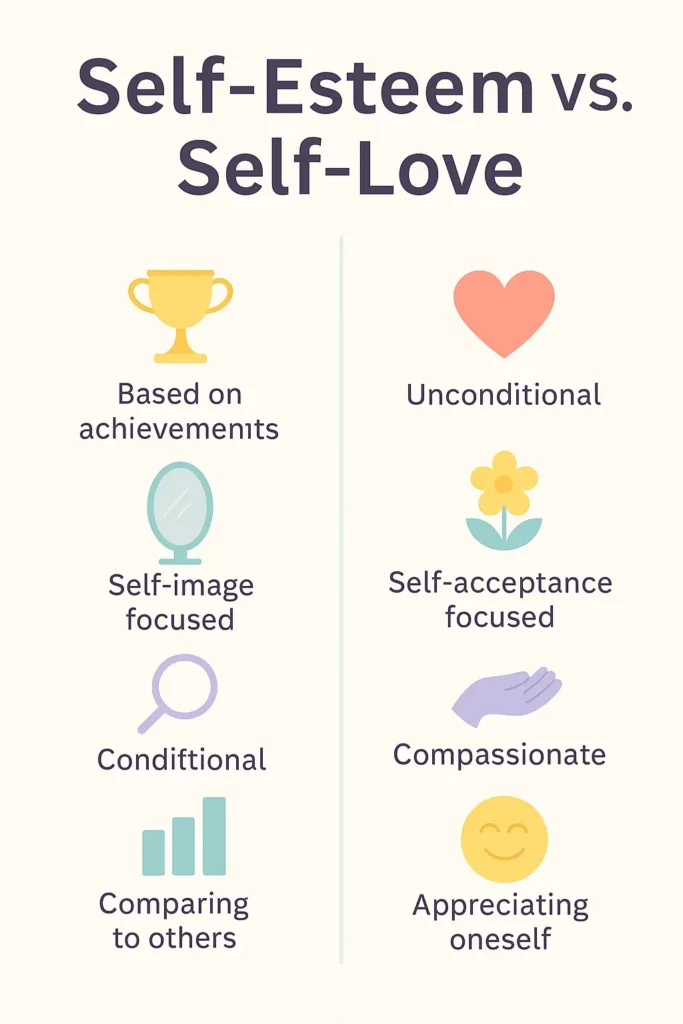
Self-Esteem = How much you value your abilities
It’s based on:
- achievement
- competence
- strength
- performance
- external wins
You feel good when you succeed.
Self-Love = How much you value your existence
It’s based on:
- self-acceptance
- kindness toward yourself
- emotional safety
- How you treat yourself during failure
- Unconditional internal worth
You feel good because you believe you deserve love even when you fail.
- Self-esteem is earned.
- Self-love is practised.
And most people only ever learn the first.
Can You Have High Self-Esteem but Low Self-Love?
Absolutely, and this is more common than you think.
Here’s the paradox:
- You can be confident… while secretly feeling unlovable.
- You can be successful… while feeling emotionally hollow.
- You can have pride… but still fear vulnerability.
This happens when someone’s identity is built on performance rather than emotional connection.
People with high self-esteem but low self-love often:
- need constant validation
- crumble under criticism
- fear intimacy
- feel “never enough.”
- attach self-worth to productivity
- avoid rest because silence feels unsafe
You’re not broken; you learned how to validate your skills, not yourself.
What Self-Esteem Looks Like vs What Self-Love Feels Like
Let’s break down the difference clearly between self-esteem vs. self-love.
Self-Esteem Sounds Like:
- “I’m good at this.”
- “I can handle things.”
- “I’m strong.”
- “I’m capable.”
Self-Love Sounds Like:
- “I deserve kindness.”
- “My feelings matter.”
- “I don’t need to earn love.”
- “I’m enough even when I’m struggling.”
Self-esteem = outer strength.
Self-love = inner safety.
One protects you from the world. The other protects you from yourself.
Signs You Have Self-Esteem but Not Self-Love
These are the signs of low self-love, even if you look confident:
- You’re hard on yourself after small mistakes
- You don’t know how to rest without guilt
- You’re praised often, but still feel insecure
- You chase goals constantly, yet still feel empty
- You struggle to receive love, compliments, or care
- You feel unsafe being vulnerable
- You fear disappointing people
- You ignore your emotions to stay “strong.”
This is emotional disconnection, not failure.
Why Self-Love Is Harder Than Self-Esteem?
Because self-love requires something scarier than confidence:
Acceptance.
Emotional intimacy with yourself.
Sitting with feelings instead of achievements.
Psychology explains that self-love is rooted in:
- Secure attachment
- Emotional validation
- Childhood safety
- Internal acceptance
But most of us were raised on:
- “Be strong.”
- “Don’t cry.”
- “Keep improving.”
- “Make us proud.”
We learned self-esteem, not self-love.
🧠 SoulFact: Self-love is unconditional and emotional, while self-esteem is conditional and performance-based.
How to Build Self-Love When Self-Esteem Isn’t Enough?
Here’s how to stop measuring your worth by what you do and start valuing who you are.
1. Practice Self-Compassion (Not Self-Criticism)
Treat yourself the way you’d treat someone you genuinely care about.
2. Stop Using Productivity to Feel Worthy
Your value isn’t based on how much you accomplish.
3. Build Emotional Intimacy with Yourself
Ask:
- “How am I really feeling?”
- “What do I need right now?”
4. Learn to Receive Love Without Resistance
You don’t have to earn affection or approval.
5. Validate Your Internal Experience
You don’t need a reason to rest, cry, or slow down.
6. Ask Yourself: “What Would I Do If I Loved Myself?”
Then do the most miniature version of that.
🧠 SoulFact: Practising self-compassion is one of the strongest predictors of emotional healing and mental wellness.
Healing Self-Worth Through Identity, Not Image
Self-esteem says:
“I’m valuable because I achieve.”
Self-love says:
“I’m valuable because I exist.”
To reconnect with yourself, focus on identity-based healing:
- Who are you without your achievements?
- What do you need to feel loved?
- What parts of you deserve gentleness?
- What pain are you still carrying alone?
Self-love begins when you stop abandoning yourself emotionally.
How SoulBot Helps You Build Real Self-Love?
SoulBot helps you:
- Practice emotional self-care
- Understand your inner narratives
- Identify where you’re hard on yourself
- Create rituals that nourish your self-worth
- Reflect on patterns that make you feel unworthy
- Build emotional safety, not performance pressure
💬 Chat with SoulBot for daily self-love prompts that soften your internal dialogue.🧠 Take the Self-Esteem Test if you want to understand where your self-worth stands today.