
Quick Answer: What Is Raga Therapy?
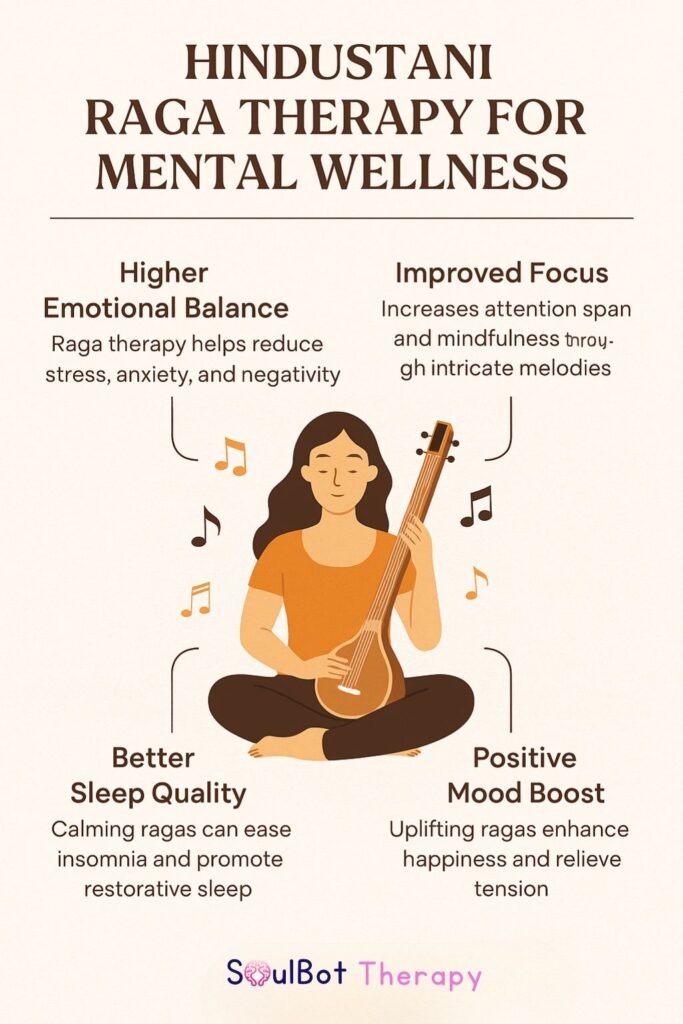
Raga therapy is the intentional use of Indian classical ragas to support relaxation, emotional awareness and well-being.
A raga is a melodic framework that guides how notes are selected, developed and expressed. Ragas are traditionally associated with particular moods, seasons or times of day.
Listening to a raga may help some people slow down, focus or process emotions. However, current research does not prove that a specific raga can cure anxiety, depression, insomnia or another health condition.
Raga listening is best understood as a complementary well-being practice—not a substitute for mental-health or medical treatment.
What Is a Raga?
A raga is more than a musical scale or song.
It provides a framework containing:
- Characteristic notes
- Patterns for moving between notes
- Important musical phrases
- Space for improvisation
- An intended emotional atmosphere
Indian classical traditions connect ragas with musical moods, natural cycles and particular periods of the day. These associations are part of the cultural and aesthetic tradition; they should not automatically be interpreted as medical prescriptions.
Raga Listening vs Music Therapy
These terms should not be used interchangeably.
| Raga listening | Professional music therapy |
|---|---|
| You listen independently for relaxation or reflection | A trained music therapist uses music toward agreed therapeutic goals |
| May include meditation or journaling | May involve listening, singing, instruments or songwriting |
| Does not require assessment | Usually includes assessment and progress monitoring |
| A personal wellness practice | A structured professional intervention |
The US National Centre for Complementary and Integrative Health explains that simply listening to recorded music is a music-based intervention, but it is not necessarily music therapy unless delivered within professional therapeutic practice.
Does Raga Therapy Really Work?
Research on music-based interventions is encouraging, but research specifically identifying the clinical effect of individual ragas remains limited.
What existing studies suggest
A small study involving 44 participants examined six days of Raga Bhairavi presented through virtual reality. Participants in the intervention group showed reductions in self-reported depression, anxiety and stress scores, alongside changes in some heart-rate-variability measures. Because the study combined the raga with virtual reality and had a small sample, the effect of the raga alone remains uncertain.
Broader evidence reviewed by NCCIH suggests that music-based interventions may help with anxiety, depressive symptoms and pain in some settings. Results vary according to the health condition, intervention and study quality.
What research has not established
Current evidence does not establish that:
- Raga Darbari treats insomnia
- Raga Todi releases trauma
- Raga Bhairav cures anxiety
- One raga reliably lowers cortisol in everyone
- Ragas can replace psychotherapy or medication
- Listening at a particular hour guarantees a stronger health effect
These claims should not be presented as medical facts.
How Might Raga Listening Support Mental Well-Being?
Raga listening may help through several overlapping experiences.
Focused attention
Following a melody gives the mind one continuous object of attention. This may briefly interrupt repetitive thinking or digital overstimulation.
Emotional recognition
A performance may bring sadness, calm, longing, devotion or hope into awareness. Music does not always remove an emotion; sometimes it provides a safer way to notice it.
Slower breathing and physical stillness
Quiet listening may naturally encourage slower breathing and reduced movement, especially when combined with a calm environment.
Cultural familiarity
Music connected with a person’s language, family, spirituality or cultural memory may feel more personally meaningful than unfamiliar relaxation audio.
These are possible pathways rather than guaranteed biological effects.
Which Ragas Can You Explore?
There is no scientifically established “best raga” for anxiety or sleep. You can instead use traditional musical associations as starting points and observe your own response.
| Raga | Traditional listening context | What to notice |
|---|---|---|
| Bhairav | Early morning; powerful and devotional | Does it help you feel grounded or does it feel too intense? |
| Bhairavi | Traditionally associated with morning but often performed at any time, especially at the end of a concert | Does it create reflection, softness or emotional release? |
| Darbari Kanada | A sombre midnight raga | Does its slower, deeper mood settle you or make you feel heavier? |
| Yaman | Commonly associated with an evening, romantic or meditative atmosphere | Does it help you shift out of the pace of the day? |
These descriptions reflect musical tradition—not a claim that each raga treats a particular condition.
Try the Soulbot 10-Minute Raga Check-In
Rather than choosing a raga by diagnosis, choose one and observe how you respond.
Before listening
Rate these from 0 to 10:
- mental noise
- physical tension
- emotional heaviness
- ability to focus
Write one sentence:
“Right now, I notice…”
While listening
For ten minutes:
- use a comfortable, low volume;
- sit or lie somewhere safe;
- avoid scrolling or working;
- follow one instrument, voice or repeated phrase;
- allow thoughts to arise without forcing relaxation.
After listening
Rate the same four areas again.
Then complete:
“After listening, I notice…”
Your score does not prove that the raga “worked.” It helps you identify whether that recording, performer and listening environment supported you at that moment.
Raga Therapy for Anxiety
Raga listening may offer a temporary grounding routine when worry feels loud. It can be paired with slow breathing, journaling or a short walk.
It should not become a way of continually avoiding the cause of anxiety.
Consider professional help when anxiety:
- frequently interrupts sleep or work
- causes panic or persistent physical distress
- leads to significant avoidance
- feels difficult to manage independently
Is Anxiety Affecting Your Daily Life?
The Free Anxiety Test can help you reflect on worry, restlessness, avoidance and overthinking patterns.
Quick self-check · Instant result · Not a diagnosis
Can Raga Therapy Improve Sleep?
Quiet music may help some people prepare for sleep, but evidence is mixed.
In one randomised trial involving 57 people with insomnia, bedtime music improved participants’ perception of sleep and quality of life, but researchers did not find a clear improvement in the primary measure of insomnia severity or objective sleep measures.
Use music as part of a broader wind-down routine:
- choose a familiar, non-stimulating performance;
- keep the volume low;
- turn off autoplay;
- avoid listening through the entire night;
- stop if the music increases alertness or emotion.
Persistent insomnia deserves proper assessment rather than reliance on a particular raga.
Can Raga Therapy Cause Discomfort?
Music is generally low-risk, but it is not emotionally neutral.
A performance may activate grief, memories or uncomfortable feelings. Stop or change the music when you feel more distressed rather than calmer.
Listening at excessive volume can also contribute to hearing damage.
Reflect With Soululu Before or After Listening
Use Soululu for a brief emotional check-in:
- What was I feeling before the music?
- Which part of the raga affected me?
- Did I become calmer, heavier or more alert?
- What memory or thought appeared?
- What do I need after this listening session?
Soululu supports emotional reflection. It does not provide music therapy, diagnose mental-health conditions or replace professional care.
Final Thought
Raga therapy does not need exaggerated healing claims to be meaningful.
Indian classical music offers a rich language of mood, attention, time and emotional expression. Listening intentionally may help you pause, notice yourself and create a calmer transition through the day.
Treat the raga as an invitation, not a prescription.