
You’ve heard of IQ. Maybe even taken a test or two.
But what is Emotional intelligence (EQ)?
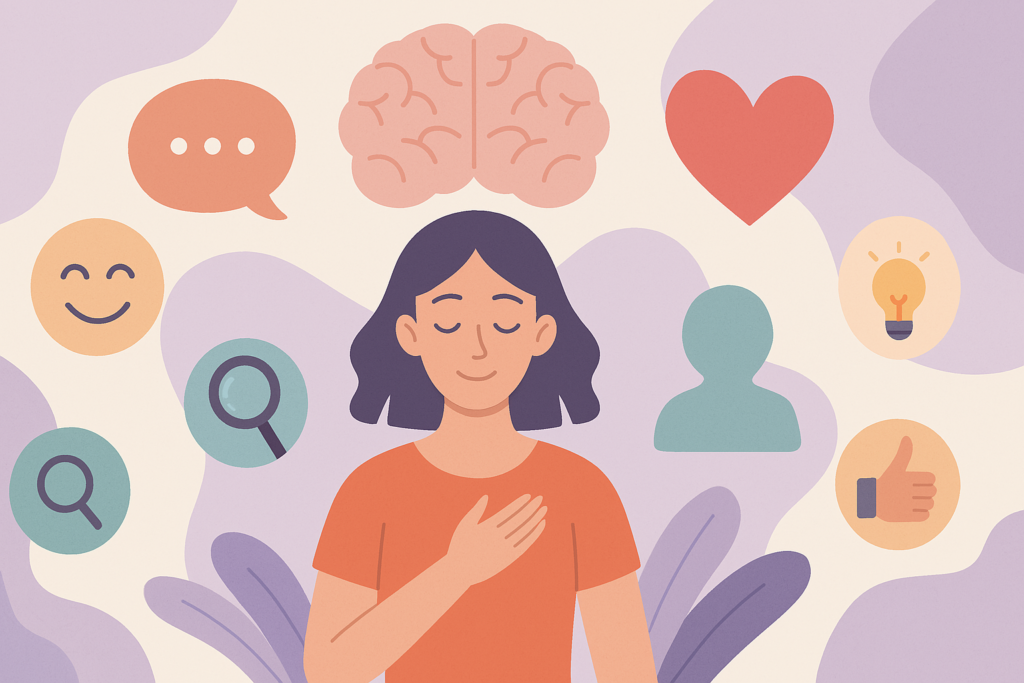
Emotional intelligence (EQ) is the ability to understand, manage, and express your emotions, while also understanding others.
In a world that awards achievement and logic, EQ is usually the missing link in healthy relationships, personal growth, and self-trust.
In simple terms:
It’s not about what you feel. It’s about how you handle it.
In this blog, we’ll unpack:
- What emotional intelligence really means
- Why it matters more than you think
- Signs you might already have it
- And a quick self-check to reflect on your emotional strengths
🔍 Quick Answer: What Is Emotional Intelligence?
Emotional intelligence (EQ) is your ability to:
- Recognize your emotions
- Control reactions under stress
- Understand other people’s feelings
- Communicate with empathy
It’s the difference between reacting instantly and responding thoughtfully.
💬 Not sure how emotionally aware you are?
Talk to Soululu and reflect on your emotional patterns instantly.
👉 Start chatting now
What Are the 5 Components of Emotional Intelligence?
Psychologist Daniel Goleman (who popularized EQ) broke it down into 5 Core Components:
- Self-Awareness – Can you name what you feel and why?
- Self-Regulation – Can you manage emotions in real time?
- Motivation – Can you keep going even when things are tough?
- Empathy – Can you understand how others might feel?
- Social Skills – Can you communicate clearly and connect meaningfully?
Why Is Emotional Intelligence Important in Real Life?
Most people search this 👇
👉 “Why is emotional intelligence important? Here’s the answer:
Emotional intelligence helps you:
✔ Handle stress better
✔ Build stronger relationships
✔ Communicate clearly
✔ Avoid emotional burnout
✔ Make better decisions
📊 Studies show that 90% of top performers have high emotional intelligence.
💡Fact: According to Psychology Today, emotional intelligence involves the ability to recognize, understand, and manage both your own emotions and those of others making it a key factor in personal and professional success.
What Are Signs of High Emotional Intelligence?
1️⃣ You Pause Before Reacting
You don’t lash out impulsively. You breathe. Process. Then speak. This is EQ in action, especially in high-stress moments.
2️⃣ You Can Name Your Emotions
Not just “I feel bad” but:
- “I’m feeling overwhelmed because I didn’t set boundaries.”
- “I’m anxious because I want to impress them.”
Naming creates clarity. Clarity reduces chaos.
3️⃣ You are a Good Listener
- Being a good listener means tuning in both emotionally and verbally.
- Rather than waiting to speak, you hold space, ask meaningful questions, and offer validation.
- Instead of jumping in with advice, you reflect what’s being shared showing genuine care and understanding.
4️⃣ You Own Your Mistakes
No deflection. No ego-driven excuses. High EQ people apologize with sincerity and repair without shame.
5️⃣ You Recognize Triggers And Take Responsibility
You don’t blame others for your reactions.
You say: “That really activated something in me. I’m going to sit with it.” You own your part, not others’ actions.
6️⃣ You Set Boundaries With Kindness
- You don’t ghost. You don’t overextend.
- You know your limits and communicate them clearly and compassionately.
7️⃣ People Feel Safe Around You
You create an emotional environment where others can be honest, soft, and real without fear of judgment. That’s not personality. That’s emotional intelligence.
❤️ Want to improve your emotional intelligence fast?
Start by understanding your emotional patterns.
What Happens When Emotional Intelligence Is Low?
Low EQ doesn’t mean someone’s bad. It just means they haven’t learned how to relate emotionally.
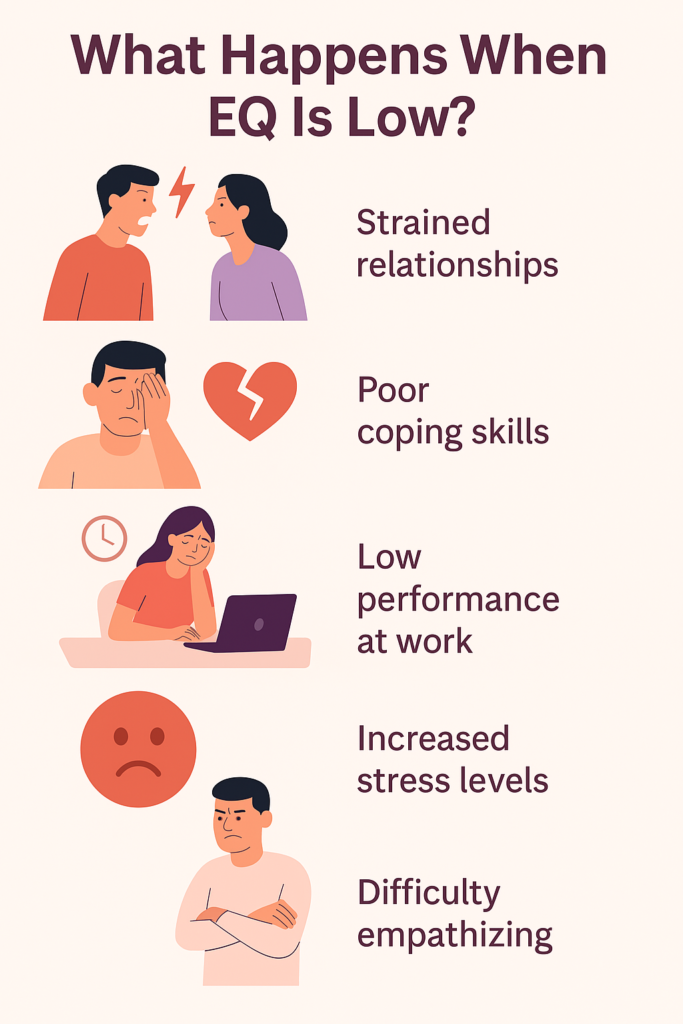
Here’s how it might show up:
- They respond defensively to feedback
- They blame instead of self-reflecting
- They struggle to apologize or validate emotions
- They can’t sit with discomfort, so they avoid or shut down
- They make people feel unheard, unsafe, or small
You might know someone like this. You might be someone like this.
Either way, EQ isn’t fixed. It’s teachable.
🧠 Pro Tip: Build EQ Faster with Daily Reflection. Tracking emotions daily improves awareness.
Emotional Intelligence vs IQ: What’s the Difference?
Another major user query 👇
- IQ → Logic, memory, problem-solving
- EQ → Emotions, empathy, communication
👉 IQ helps you succeed academically
👉 EQ helps you succeed in life
“You don’t need to control your emotions. You need to understand them.”
Want to Know Where Your EQ Stands?
Take our free, psychology-informed Emotional Intelligence Test to reflect on:
- How you handle feedback
- How you communicate under stress
- How do you relate to your feelings
- And how others might feel around you
🎯 It takes 2 minutes, & it gives insight, not labels.
🔗 Take the Emotional Intelligence Test →
Can EQ Be Learned?
Absolutely. Like a muscle, it strengthens with:
- 👂 Deep listening
- ✍️ Reflective journaling
- 🧠 Therapy or coaching
- 💬 Practicing uncomfortable conversations
- 🙅♀️ Saying “no” when you need to
- 🫶 Replacing judgment with curiosity
Small choices, repeated often → Build emotional intelligence over time.
Emotional Intelligence in Relationships
High emotional intelligence leads to:
- Better communication
- Less conflict
- Stronger emotional safety
👉 Related: How Emotional Intelligence Affects Relationships
Final Thought: Smart Is Great. Emotionally Smart Is Game-Changing.
You can be brilliant, skilled, and talented and still struggle in relationships, communication, and emotional safety. EQ is what bridges the gap. It’s not about being “perfectly calm.”
It’s about showing up with clarity, compassion, and courage even when it’s hard.
See what your inner world is trying to teach you. Talk to soululu today, and help yourself build that emotional side.