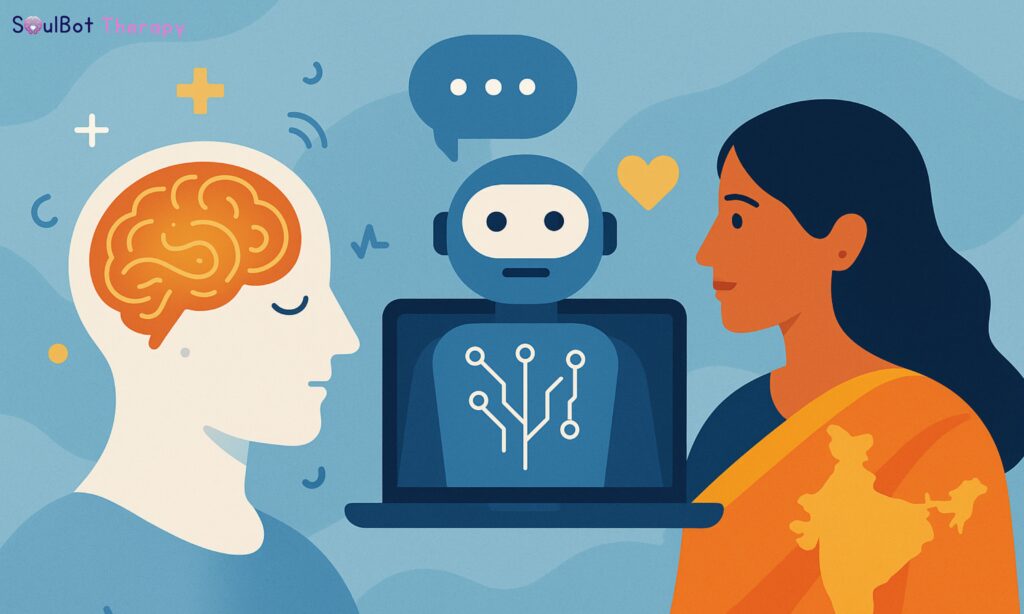
Why AI in Mental Health Matters Now?
AI for mental health in India is no longer futuristic; it’s happening now. From AI-powered chatbots offering emotional support to intelligent tools that analyse mood patterns, artificial intelligence transforms how Indians access, understand, and prioritise mental well-being.
In a country where stigma, accessibility, and affordability remain significant challenges, AI emerges as a bridge, not a replacement for mental health care. Let’s explore how, why, and what it means for the future.
📈 Trends: How India Is Embracing AI Mental Health Solutions
India’s mental health crisis is real. With over 200 million people affected by mental illness and only one psychiatrist per 100,000 people, access to support is scarce.
But here’s the shift:
- Over 61% of Indians experiencing anxiety are open to AI therapy tools.
- Nearly 49% say AI reduces stigma and makes them more likely to seek help.
This rise is mainly due to:
- 🌐 24/7 access to support via mobile devices
- 🧠 Reduced fear of judgment when talking to AI chatbots
- 💸 Lower costs compared to traditional therapy
Explore SoulBot’s free AI therapy experience.
💡 Struggling with stress or anxiety? Get personalised mental health support with SoulBot, your AI-powered companion for mindfulness, therapy guidance, and emotional well-being. Try it now and take your first step toward a healthier mind!
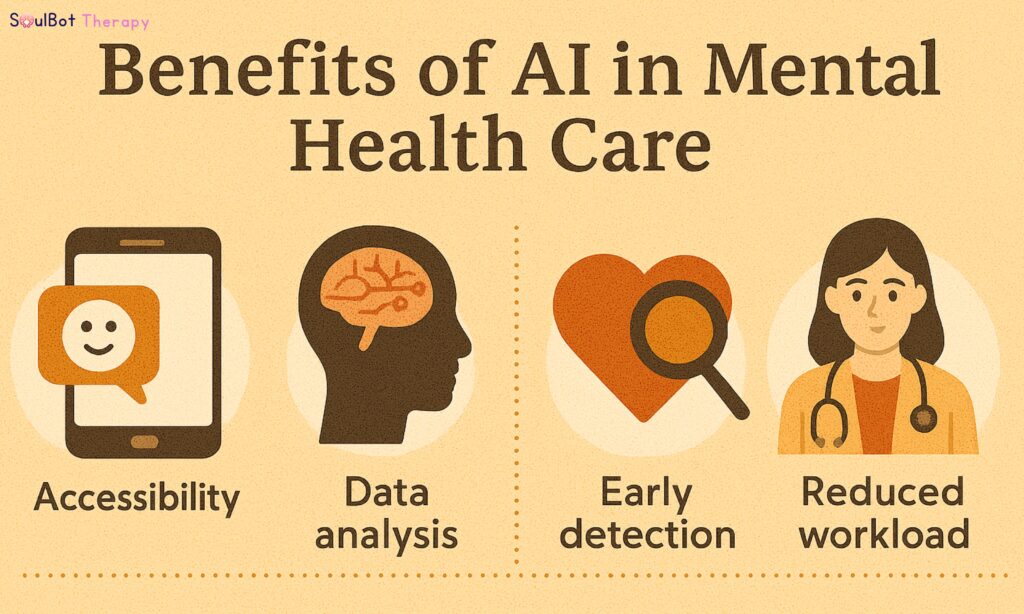
✅ Benefits of AI in Mental Health Care
AI tools aren’t replacing therapists; they’re enhancing the system. Here’s how:
1. Accessibility for All
Whether you’re in a Tier 1 city or a rural village, AI chatbots and mental health platforms remove geographic and financial barriers.
2. Personalised Support at Scale
AI adapts responses based on tone, mood, and behaviour, offering more tailored support than standard one-size-fits-all advice.
3. Early Detection & Crisis Flagging
AI models can detect warning signs in language and behaviour patterns, alerting users or professionals before a crisis occurs.
4. Reduced Stigma
For many Indians, speaking to an AI feels safer than opening up to a person. There’s no judgment, support.
Expert Insight: Mental health experts predict that by 2027, online therapy in India will be a primary mode of counselling, helping millions overcome stress, anxiety, and mental health struggles.
🤖 SoulBot’s Role in India’s Mental Health Revolution
At SoulBot, we’ve built an AI mental health assistant specifically designed for the Indian context. It supports users through:
- 🌍 Regional language support (coming soon)
- 💬 Emotion-based response flows
- 📊 Mood tracking & journaling
- 🔐 Complete confidentiality, no data shared
Tools like the Stress Assessment Test or Anxiety Self-Test help users understand their emotional state, while the chatbot offers grounding exercises and coping strategies.
⚠️ Ethical Challenges & AI Mental Health Risks
Of course, every innovation comes with concerns:
- Privacy Risks: AI tools must protect sensitive emotional data.
- Cultural Bias: Algorithms must reflect India’s diversity, not just Western datasets.
- Over-reliance: AI should complement, not replace, human therapists, especially in complex or crisis cases.
Regulatory frameworks and ethical design principles must evolve alongside technology.
🌟 Final Thoughts: India’s Mental Health Future Is AI-Assisted
AI is not the enemy of therapy; it’s its most powerful ally. For India, where mental health needs are urgent and underserved, artificial intelligence offers a path forward that’s scalable, stigma-free, and deeply personal.
SoulBot is proud to be part of that movement, supporting users daily, one message at a time.
📌 Ready to explore your emotional health with AI? Start your SoulBot journey today.