
PTSD and trauma are related, but they are not the same thing. Trauma refers to an overwhelming or threatening experience and the responses that may follow it. PTSD, or post-traumatic stress disorder, is a diagnosable mental-health condition that can develop after certain traumatic experiences.
Most people exposed to trauma do not develop PTSD. Reactions such as fear, poor sleep, intrusive thoughts or feeling on edge can occur immediately after trauma and may gradually improve. PTSD becomes a concern when a specific pattern of symptoms persists and significantly affects daily life.
What Is the Difference Between PTSD and Trauma?
| Trauma | PTSD |
|---|---|
| Refers to exposure to or the impact of an overwhelming event | A specific mental-health diagnosis |
| Reactions may be temporary | Symptoms persist for more than 1 month |
| Does not always cause a disorder | Requires specific symptom criteria |
| Symptoms may gradually improve naturally | Symptoms cause significant distress or impairment |
| Can affect people differently | Includes intrusion, avoidance, mood/thought changes and heightened arousal |
A simple way to remember the PTSD vs trauma difference is:
Trauma describes what happened and how it affected you. PTSD describes a specific persistent symptom pattern that may develop afterward.
There is one more important distinction: not every painful or distressing experience automatically meets the formal trauma exposure criteria used to diagnose PTSD. The DSM-5 criteria involve exposure to actual or threatened death, serious injury or sexual violence through direct experience, witnessing, learning about certain events involving someone close, or repeated occupational exposure to traumatic details.
That does not make other painful experiences unimportant. It simply means PTSD has specific diagnostic criteria.
What Can Happen After a Traumatic Event?
Immediately after trauma, people may experience:
- fear or anxiety
- difficulty sleeping
- upsetting memories
- poor concentration
- irritability
- feeling emotionally numb
- avoiding reminders
- feeling unusually alert or easily startled
These responses do not automatically mean PTSD.
NIMH notes that most people experience some reactions after traumatic events and many improve naturally over time.
If you are trying to understand why your body remains highly alert after stress, SoulBot’s guide to regulating your nervous system during stress explains the stress response in more detail.
When Does Trauma Become PTSD?
For PTSD to be diagnosed, symptoms must last longer than one month, create significant distress or interfere with functioning, and fit several specific symptom categories.
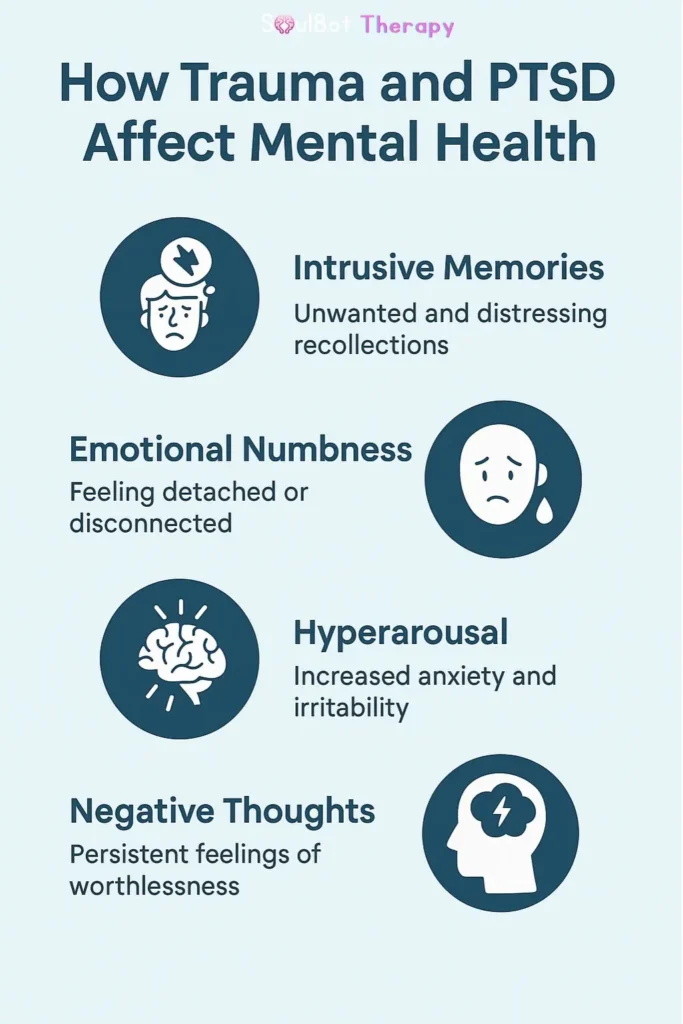
The four main groups of PTSD symptoms are:
1. Intrusion
The traumatic experience enters your awareness when you do not want it to.
This can include:
- unwanted memories
- nightmares
- flashbacks
- strong emotional reactions to reminders
- physical distress when triggered
2. Avoidance
You may avoid:
- people
- places
- conversations
- activities
- thoughts or feelings
that remind you of what happened.
3. Changes in Thoughts and Mood
These may include:
- persistent guilt or shame
- feeling detached from people
- losing interest in activities
- negative beliefs about yourself or the world
- difficulty experiencing positive emotions
4. Heightened Arousal and Reactivity
This can include:
- hypervigilance
- being easily startled
- irritability
- difficulty concentrating
- sleep problems
- reckless behaviour
A professional evaluates the whole pattern, not one symptom.
What If Symptoms Have Lasted Less Than a Month?
This is an important distinction many PTSD articles miss.
Severe trauma symptoms during the first month after an event do not automatically mean PTSD.
Acute Stress Disorder (ASD) can be diagnosed when qualifying symptoms occur from 3 days to 1 month after trauma. PTSD is considered once symptoms persist beyond one month and meet the necessary criteria.
So:
Trauma → immediate stress reactions → possible ASD → possible PTSD
is one potential pathway.
It is not inevitable. Many people recover without developing either condition.
Try the SoulBot Event–Pattern–Impact Check
If you are wondering whether what you are experiencing may be more than a normal trauma response, check three things.
EVENT
Was there an experience that felt threatening, frightening or overwhelming?
PATTERN
Are you repeatedly experiencing:
- intrusive memories
- avoidance
- changes in mood or beliefs
- feeling constantly on guard?
IMPACT
Is the pattern affecting:
- sleep
- work or study
- relationships
- concentration
- everyday activities?
This cannot diagnose PTSD, but it helps you move beyond the vague question:
“Am I traumatised?”
and look at the pattern that actually needs attention.
Complex Trauma vs PTSD: Are They the Same?
No.
Complex trauma generally refers to repeated or prolonged exposure to traumatic experiences, often involving interpersonal situations such as chronic abuse or violence.
Complex PTSD (CPTSD) is something more specific.
The World Health Organization’s ICD-11 recognises complex PTSD as a separate diagnosis. In addition to PTSD symptoms, CPTSD includes persistent difficulties with:
- emotion regulation
- negative self-concept
- relationships
The DSM-5 does not currently list complex PTSD as a separate diagnosis.
Another important correction is that prolonged trauma does not automatically mean someone has CPTSD. The diagnosis is based on symptoms and impairment, not simply the type of trauma experienced.
If you notice patterns such as fight, flight, freeze or people-pleasing after difficult experiences, you can also explore SoulBot’s explanation of common trauma response patterns.

How Is PTSD Treated?
PTSD is treatable.
Evidence-based psychological treatments include trauma-focused cognitive behavioural therapies such as:
- Cognitive Processing Therapy
- cognitive therapy for PTSD
- prolonged exposure therapy
- narrative exposure therapy
NICE also recommends EMDR (Eye Movement Desensitisation and Reprocessing) for appropriate adults with PTSD. These treatments should be delivered by trained professionals rather than attempted alone through general self-help exercises.
Grounding, breathing, movement and supportive routines may help someone manage distress, but they should not be presented as substitutes for evidence-based PTSD treatment.
For day-to-day emotional regulation, SoulBot’s guide on how to deal with anxiety when it feels overwhelming includes grounding and practical coping techniques.
When Should You Seek Professional Support?
Consider speaking with a qualified mental-health professional if trauma-related symptoms:
- persist for weeks
- are getting worse
- interfere with sleep or everyday functioning
- cause significant avoidance
- affect relationships or work
- involve frequent flashbacks or nightmares
- leave you feeling constantly unsafe even when the danger has passed
You do not have to wait until symptoms become unbearable before seeking support.
If you are experiencing thoughts of harming yourself or feel unable to stay safe, seek immediate emergency mental-health support.
Talk to Soululu When You Need to Untangle What You’re Feeling
Soululu can help you reflect on:
- what triggered a difficult reaction
- what you noticed in your body
- what emotion came up
- whether a reminder connects with a past experience
- what might help you feel more grounded right now
👉 Talk to Soululu
Soululu is an emotional wellness companion. It cannot diagnose PTSD, process trauma for you or replace trauma-focused professional treatment.
Final Thought
The most useful way to understand PTSD vs trauma is not:
“Trauma is the wound and PTSD is a wound that didn’t heal.”
That makes recovery sound like a personal failure. A more accurate distinction is:
Trauma is an experience and its impact. PTSD is one possible clinical response to certain traumatic experiences.
Many people experience trauma without developing PTSD. And when PTSD does develop, effective treatment is available.