
ESTJs are often described as structured, efficient, and confident, the people who get things done when everyone else is still planning.
But beneath the stereotypes, ESTJs have depth, loyalty, emotional responsibility, and a powerful internal compass that makes them natural leaders.
🧠 Take the MBTI Test to understand your ESTJ pattern more deeply.If you’re looking for a clear, human-centered explanation of the ESTJ meaning, this guide breaks down everything you need to understand your strengths, challenges, emotional patterns, relationships, and growth.
ESTJ Meaning & Overview
ESTJ stands for:
- E — Extraverted
- S — Sensing
- T — Thinking
- J — Judging
So the real ESTJ meaning is:
👉 A logical, organized, confident leader who values structure, clarity, and responsibility.
ESTJs bring order where there is chaos.
- You take action where others hesitate.
- You follow through when others fall apart.
- Your strength is not just discipline, it’s dependability.
Core ESTJ Traits
The ESTJ personality type blends clarity, logic, and forward momentum.
Key traits include:
- Strong leadership instincts
- Clear communication
- Direct and honest expression
- Practical problem-solving
- Commitment to structure and routine
- High accountability
- Focus on efficiency and results
- Confidence in decision-making
ESTJs lead because it feels natural, not forced.
People trust you because your actions match your words.
ESTJ Strengths and Weaknesses
⭐ ESTJ Strengths
- Excellent planners and organizers
- Strong sense of duty
- Reliable and action-oriented
- Clear thinkers under pressure
- Great at making tough decisions
- Motivational leaders
- High integrity and follow-through
⚠️ ESTJ Weaknesses
- Can be too blunt or direct
- May struggle with emotional expression
- Resistant to sudden change
- Overfocus on control or perfection
- Difficulty understanding emotional nuances
- Can come across as rigid or authoritative
ESTJs grow most when they balance logic with emotional awareness.
🧠SoulFact: ESTJs often have higher stress tolerance, enabling clearer thinking in crises.
ESTJ-A vs ESTJ-T: What’s the Difference?
ESTJ-A (Assertive)
- More confident
- Independent under stress
- Less impacted by judgment
- Decisive and bold
ESTJ-T (Turbulent)
- More sensitive to criticism
- Overthinks decisions
- High self-awareness
- More adaptable emotionally
Both types retain ESTJ strength; one is steadier, the other more reflective.
How ESTJs Communicate?
ESTJ communication style is:
- direct
- clear
- structured
- solution-focused
You prefer:
- facts over feelings
- clarity over ambiguity
- action over overthinking
This makes you excellent in leadership roles and crisis situations, as people rely on your stability.
Emotionally, though, you can struggle to slow down, soften, or express vulnerability.
Your emotional world is simpler, but not shallow.
🧠SoulFact: Studies show ESTJs are among the top leadership-driven personality types, excelling in decision-heavy roles.
ESTJ Compatibility & Relationships
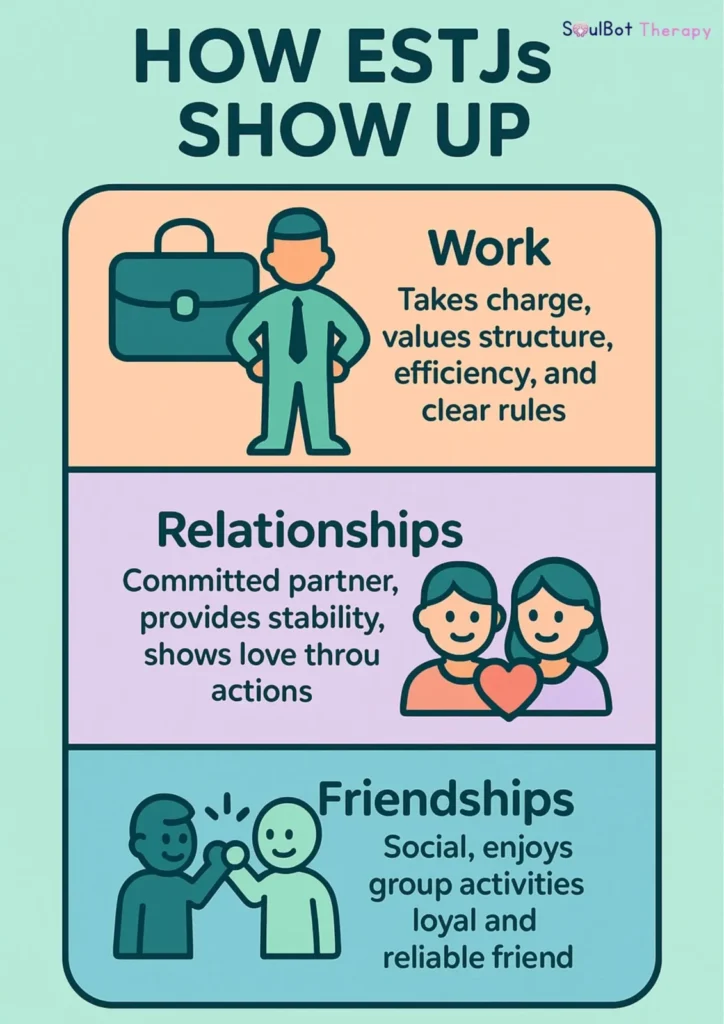
ESTJs love loyalty, commitment, and consistency.
You show love through:
- stability
- acts of service
- solving problems
- honoring commitments
Best compatibility matches include:
- ISTP — logic + independence
- ISFP — emotional grounding
- ENTJ — shared drive
- INTP — intellectual balance
ESTJs need relationships where communication is clear and emotional needs are expressed directly.
Famous ESTJs (Characters & Celebrities)
Fictional ESTJs
- Monica Geller (Friends)
- Dwight Schrute (The Office)
- Mufasa (The Lion King)
- Hermione Granger (often typed as ESTJ/ISTJ)
Celebrity ESTJs
- Michelle Obama
- Judge Judy
- John D. Rockefeller
- Simon Cowell
Known for confidence, structure, and no-nonsense leadership.
ESTJ Work Style & Strengths at Work
In the workplace, ESTJs excel when:
- expectations are clear
- processes are defined
- Leadership is required
- results matter
- Decisions need to be made fast
- Systems need structure
Your natural abilities make you well-suited for:
- management
- operations
- project leadership
- finance
- law enforcement
- business strategy
You create order, efficiency, and results.
Growth Tips for ESTJs
ESTJs thrive when they develop emotional flexibility. Try:
- Practicing softer communication
- Listening without immediately fixing
- Letting go of control when appropriate
- Allowing spontaneity
- Asking others how they feel
- Slowing down when stressed
- Accepting that not everyone processes like you
Your power increases when you add emotional awareness to your existing logic.
🧠SoulFact: Research shows ESTJs may struggle with emotional processing because they prioritize action over introspection.
How SoulBot Supports ESTJ Growth?
SoulBot helps ESTJs develop:
- emotional awareness
- communication softness
- grounding during stress
- reflection habits
- better boundary-setting
- balance between leadership and rest
💬 Chat with SoulBot for daily insights tailored to your thinking style.🧠 Take the MBTI Test to understand your ESTJ pattern more deeply.