Being in a long-distance relationship can feel emotionally intense in ways you didn’t expect.
You love deeply, but you also miss, worry, overthink, and sometimes feel lonely even when things are “going well.” That’s why long-distance relationship self care isn’t optional; it’s essential.
Loving someone from afar should not come at the cost of your mental health, emotional stability, or sense of self.
This guide will help you stay emotionally connected without burning yourself out.
Why Long-Distance Relationships Feel So Emotionally Draining?
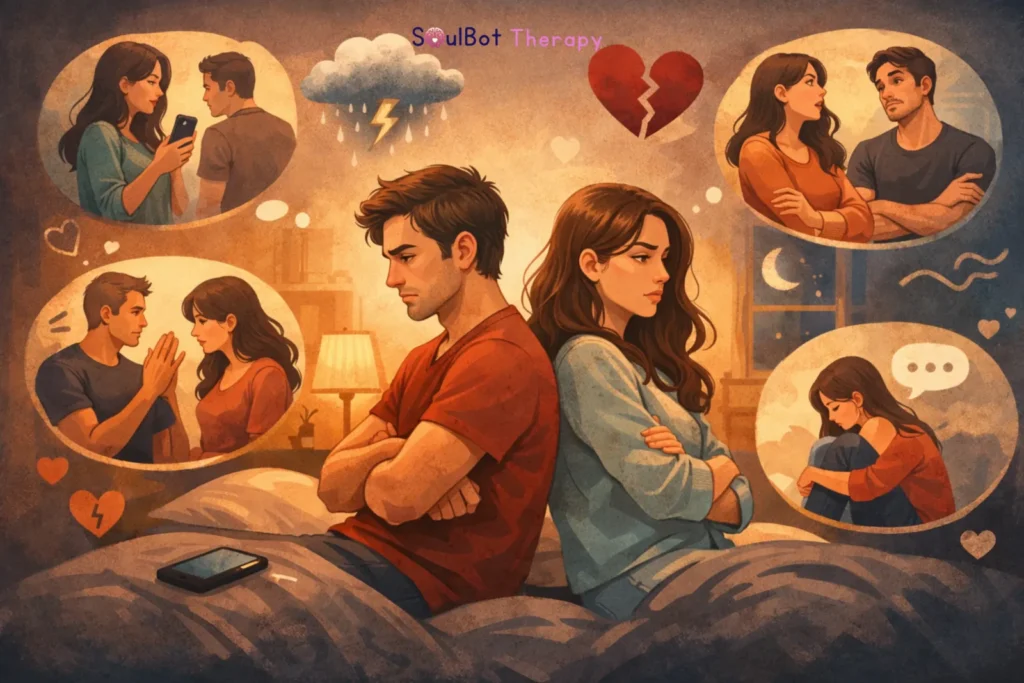
Long-distance relationships place a unique load on your nervous system.
Here’s why they can feel exhausting:
- Physical absence increases emotional uncertainty
- You rely heavily on communication for reassurance
- Small changes in tone or response can trigger anxiety
- You spend more time imagining than experiencing
- There’s often no precise end date
This constant emotional vigilance affects long-distance relationship mental health, especially for people with anxious or avoidant attachment patterns.
Missing someone isn’t the problem. Losing yourself while missing them is.
What Does Self-Care Look Like in a Long-Distance Relationship?
Self-care in long-distance relationships is not about distractions or “staying busy.”
Real self-care means:
- regulating your emotions
- maintaining your identity
- creating emotional safety within yourself
- preventing emotional dependence
Long-distance relationship self-care is about learning to love with someone, not through them.
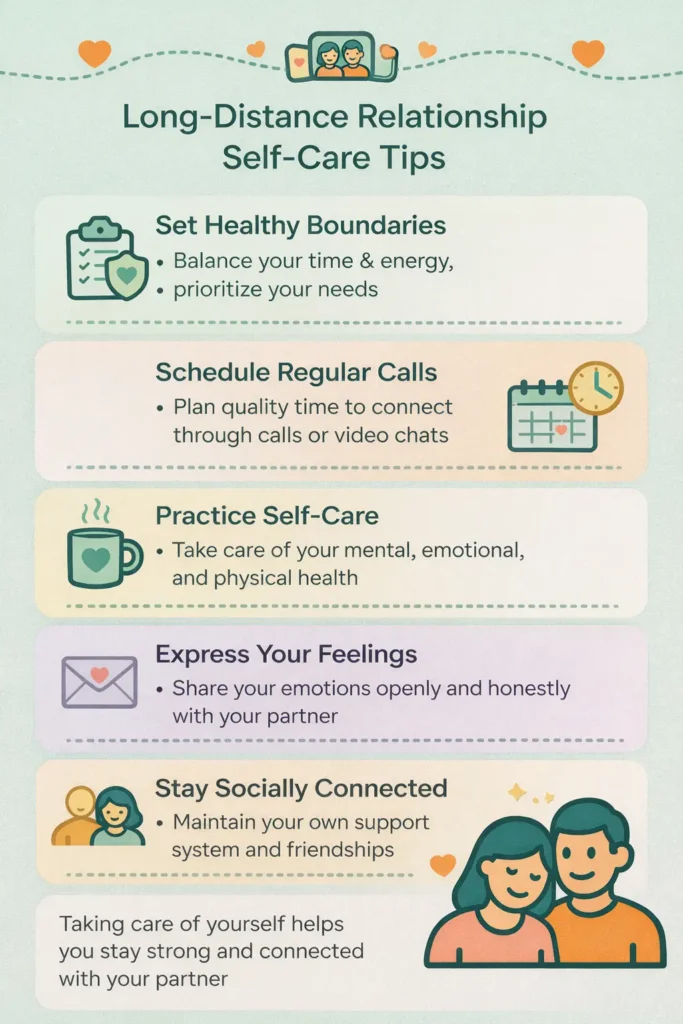
Long-Distance Relationship Self-Care Tips That Actually Help
Here are practical, emotionally grounded long-distance relationship self-care tips that protect both your heart and mind.
1. Create Emotional Independence (Without Emotional Distance)
You can love deeply without centring your entire emotional world around one person.
Ask yourself:
- Do I have a whole life outside this relationship?
- Do I feel okay even when they’re unavailable?
Healthy independence makes love sustainable.
2. Set Communication Boundaries That Feel Safe
Constant texting doesn’t equal emotional security.
Instead:
- Agree on communication rhythms
- Prioritise quality over quantity
- Avoid checking your phone compulsively
- Don’t force conversations when emotionally drained
This helps prevent burnout and reduces relationship anxiety in long-distance relationships.
3. Ground Your Nervous System Daily
Long-distance relationships keep your nervous system alert.
Simple grounding practices:
- Slow breathing (longer exhales)
- Walking without your phone
- Body-based grounding (stretching, movement)
- Journaling before bed
Calm your body → calm your thoughts.
4. Maintain Your Own Routine and Identity
Your life should not be on pause until the next visit.
Protect:
- Hobbies
- Friendships
- Goals
- Routines
People who lose themselves in long-distance relationships often experience emotional exhaustion.
5. Name Your Feelings Instead of Suppressing Them
Missing, jealousy, sadness, and frustration are normal. What hurts mental health is pretending you’re “fine.”
Try:
- Writing what you’re feeling
- Sharing gently (without blame)
- Checking in with yourself before reacting
Emotional honesty prevents resentment.
How to Maintain Emotional Connection Without Over-Attachment?
Strong emotional connection in long-distance relationships doesn’t come from constant availability.
It comes from:
- Emotional presence
- Shared vulnerability
- Meaningful conversations
- Trust over reassurance-seeking
Try:
- Scheduled deep conversations
- Intentional check-ins
- Sharing experiences, not just updates
- Asking emotional questions, not just “How was your day?”
Closeness grows through depth, not frequency.
Coping With Long-Distance Relationship Anxiety
Anxiety often shows up as:
- Overthinking texts
- Needing constant reassurance
- Fear of abandonment
- Emotional spirals
To cope:
- Notice when anxiety is about fear, not facts
- Pause before reacting
- Ground your body before seeking reassurance
- Remind yourself: connection does not disappear when communication pauses
Learning to cope with long-distance relationship anxiety protects both you and the relationship.
How to maintain Intimacy in a Long-Distance Relationship?
Maintaining intimacy long-distance is more emotional than physical.
Intimacy grows through:
- Emotional openness
- Feeling safe sharing fears
- Consistent care
- Vulnerability without pressure
You don’t need constant closeness; you need emotional attunement.
When Long-Distance Relationships Start Affecting Your Mental Health?
It’s essential to notice warning signs:
- chronic anxiety
- emotional dependency
- neglecting your own needs
- feeling drained more than loved
- loss of self-identity
- constant emotional highs and lows
If a relationship consistently dysregulates you, self-care means pausing and reflecting, not pushing harder.
Love should expand you, not shrink you.
How SoulBot Supports Self-Care in Long-Distance Relationships?
SoulBot helps you:
- Regulate relationship anxiety
- Check in with your emotions daily
- Understand attachment patterns
- Journal safely without judgment
- Build emotional independence
- Maintain balance between love and self-care
🧠 Take the Attachment Style Test to understand your relationship patterns.💬 Chat with SoulBot for daily emotional grounding and clarity.