
Most people don’t wake up and say, “I’m emotionally unavailable.”
In fact, many emotionally unavailable people genuinely believe they’re great at communication, independent, or simply “not too emotional.” But emotional unavailability isn’t about being cold, rude, or distant.
It’s about being unable to let someone into your inner world, even if you want to. If relationships feel draining, confusing, or “too much,” this blog is your mirror.
Let’s decode the real signs of emotional unavailability, the subtle ones most people miss.
What Does It Really Mean to Be Emotionally Unavailable?
At its core, being emotionally unavailable means struggling to access, express, or share your emotional world, especially when connection requires vulnerability. It’s not about being strong or private. It’s about emotional distance, even with people you love.
These patterns are common in people who are emotionally unavailable, even when they genuinely want closeness.
- Shut down during emotional moments
- Avoid deep conversations
- Fear of being truly known
- Stay guarded to protect themselves
- Feel uncomfortable with vulnerability
- Prefer control over closeness
This isn’t a character flaw; it’s often a survival response.
Subtle Signs You’re Emotionally Unavailable (But Don’t Realize It)
These are the quiet, everyday emotionally unavailable traits people overlook:
1. You avoid talking about your feelings
You’ll talk about work, goals, jokes, anything except what’s going on inside.
2. You pull back when someone gets too close
The moment things feel serious, you need space, distraction, or distance.
3. You feel overwhelmed when someone expresses emotions
You may shut down, get irritated, or freeze.
4. You’re attracted to unavailable people
Because subconsciously, they feel “safe”- there’s no real risk of intimacy.
5. You confuse independence with emotional distance
Being self-reliant is healthy. Never needing anyone is avoidant.
6. You keep relationships surface-level
You connect profoundly intellectually or physically, but emotionally? It isn’t very easy.
7. You disappear or go quiet during conflict
Instead of talking it out, you detach.
8. You feel numb, blank, or disconnected inside
Emotional availability starts with knowing your own feelings, and you rarely do.
If even two of these felt familiar, you may have emotional intimacy issues you never noticed.
Emotional Intimacy Issues: Why Vulnerability Feels Unsafe
Here’s the truth no one tells you:
Emotionally unavailable people are not heartless; they’re unprotected. Most emotional intimacy issues come from:
- parents who dismissed emotions
- chaotic or unpredictable upbringing
- relationships where vulnerability was punished
- trauma or emotional neglect
- being told to “be strong” or “deal with it alone.”
- having no model of healthy emotional expression
Your brain learned: Feelings are dangerous. Closeness is risky. Emotional avoidance became armour.
Where Emotional Unavailability Comes From?
To understand emotional unavailability, it helps to look at where these patterns usually begin.
Common roots:
1. Fear of vulnerability
In these signs of emotional unavailability, you don’t want anyone to see the “real you” because you fear being hurt or rejected.
2. Attachment avoidance
You crave love but fear losing yourself inside it.
3. Overachiever survival mode
You learned to be strong, capable, and self-sufficient, but not emotionally open.
4. Childhood emotional neglect
If your feelings weren’t acknowledged growing up, sharing them now feels unnatural.
🧠 SoulFact: Emotional unavailability is often shaped by unsafe or invalidating emotional environments rather than personality flaws.
Can Emotionally Unavailable People Change?
Yes, emotionally unavailable people can change, but not through pressure, guilt, or being “loved harder.”
Emotional unavailability isn’t a fixed personality trait. It’s a learned protection pattern. And anything learned can be unlearned.
Change usually happens when someone:
- becomes aware of their emotional shutdown patterns
- feels emotionally safe enough to explore vulnerability
- learns how to name and regulate emotions instead of avoiding them
- practices staying present during emotional discomfort
What doesn’t work:
- forcing vulnerability
- ultimatums
- shaming someone for being “cold”
- expecting instant emotional openness
Change is gradual. It looks like:
- staying in conversations a little longer
- sharing one honest feeling instead of disappearing
- choosing connection even when fear shows up
The key question isn’t “Can they change?”
It’s “Are they willing to become aware and practice emotional presence?”
That willingness, not promises, is what predicts real change.
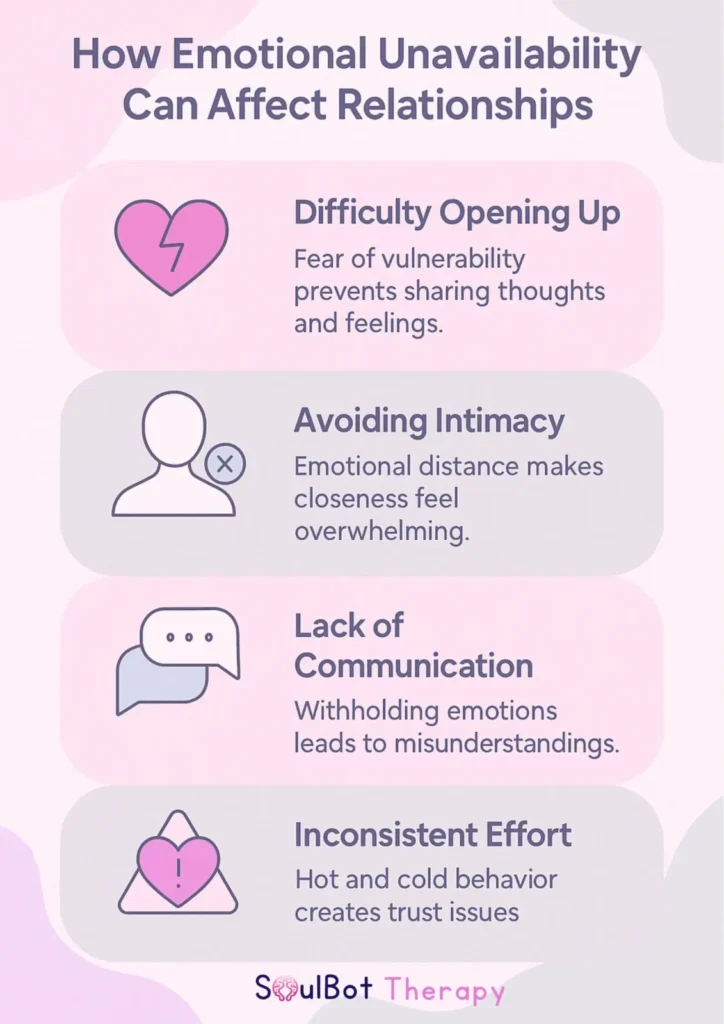
How Signs of Emotional Unavailability Show Up in Relationships?
This is where things get painful.
You vanish after intimacy.
Closeness triggers panic, not comfort.
You choose partners you can’t fully connect with
It feels safer than choosing someone who could hurt you.
You shut down emotionally during conflict.
Instead of expressing hurt, you disconnect.
You get irritated by emotional needs.
Not because you don’t care, but because you don’t know how to respond.
You want love, but also want distance.
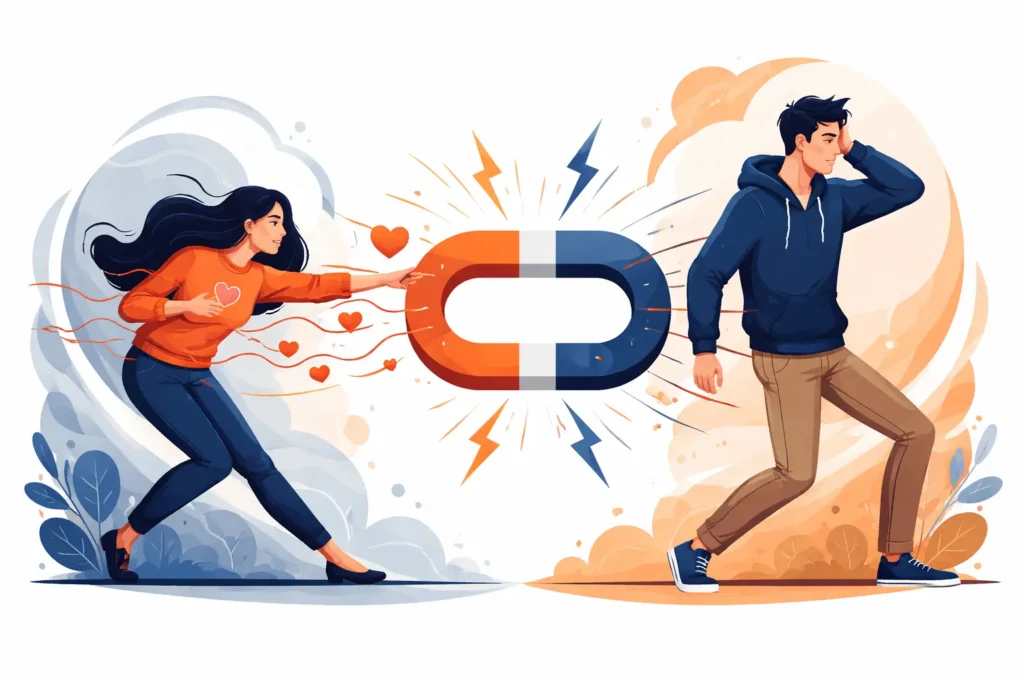
Push-pull dynamics drain both partners.
These patterns aren’t a lack of love; they’re emotional walls.
Emotional Walls: Why You Block Connection
Walls form when your nervous system perceives emotional closeness as dangerous.
These walls might look like:
- staying “busy” to avoid intimacy
- constantly needing alone time
- never sharing personal fears
- focusing on flaws in others to avoid getting close
- keeping conversations superficial
- avoiding long-term commitment
What you call “not ready” might actually be emotional unavailability.
How to Start Opening Up (Even If It Feels Scary)
Emotional unavailability often overlaps with low emotional awareness, which is why emotional intelligence plays such a key role in healing. Becoming emotionally available doesn’t mean oversharing or becoming extremely emotional.
It means being present and honest.
❤️ 1. Start by naming your emotions
You can’t express what you can’t identify.
❤️ 2. Stay in difficult conversations 10% longer
Slowly stretch your tolerance for vulnerability.
❤️ 3. Share one slight fear with someone you trust
Start small. Vulnerability grows in increments.
❤️ 4. When you feel like shutting down, pause
Ask yourself:
“Am I scared or disconnected?”
❤️ 5. Build emotional safety within yourself
Regulate your emotions before responding.
Feel → Name → Express.
🧠 SoulFact: Emotional availability increases when people learn to regulate fear during intimate moments.
How SoulBot Helps You Become Emotionally Available?
SoulBot supports you through:
- Emotional naming exercises
- Daily mood reflections
- Prompts that deepen intimacy with self
- Attachment insights
- Communication tools
- Emotional regulation support
💬 Chat with SoulBot when you feel numb, distant, or scared of opening up.🧠 If you’re unsure how deeply these patterns affect you:
Take the Emotional Availability Test to understand your signs of emotional unavailability.