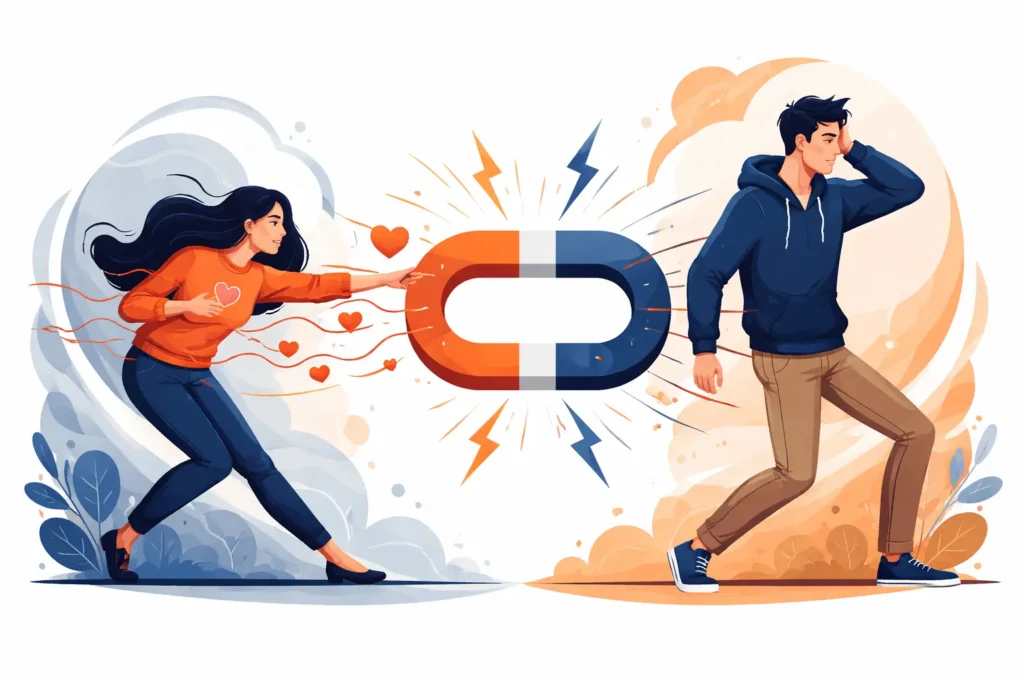

Have you ever wondered why some people automatically step back, soften their voice, avoid conflict, or say “yes” even when they’re breaking inside?
This isn’t weakness; it’s submissive behavior, a deeply emotional pattern shaped by personality, history, and survival.
Some people lead, and some people blend.
Both styles are valid, but understanding why you lean submissive can help you build emotional balance and healthier boundaries.
Take the Dominant or Submissive Personality Quiz to explore your spectrum.Let’s explore what submissive behavior truly means, how it forms, and how you can grow without losing your natural sensitivity.
What Is Submissive Behavior?
Submissive behavior refers to a pattern of deferring, yielding, or prioritizing others’ needs, often to maintain peace or avoid conflict.
It’s not about being powerless. It’s about how you feel safe.
Submissive individuals often:
- Choose harmony over confrontation
- Avoid disappointing others
- Feel responsible for others’ emotions
- Stay quiet to “keep the peace”
- Fear of being abandoned or misunderstood
This isn’t a flaw. It’s a coping style that once protected you.
Signs of a Submissive Person
Here are the most common signs of a submissive person:
- You agree to things you don’t want
- You freeze or shut down when conflict appears
- You apologize even when it’s not your fault
- You struggle to say “no”
- You fear upsetting people
- You rely heavily on validation
- You avoid expressing your own needs
These submissive traits often come from emotional sensitivity, empathy, and a deep desire for connection. You weren’t taught to speak up; you were taught to stay safe. Chat with SoulBot when you feel overwhelmed, unable to say no, or emotionally drained.
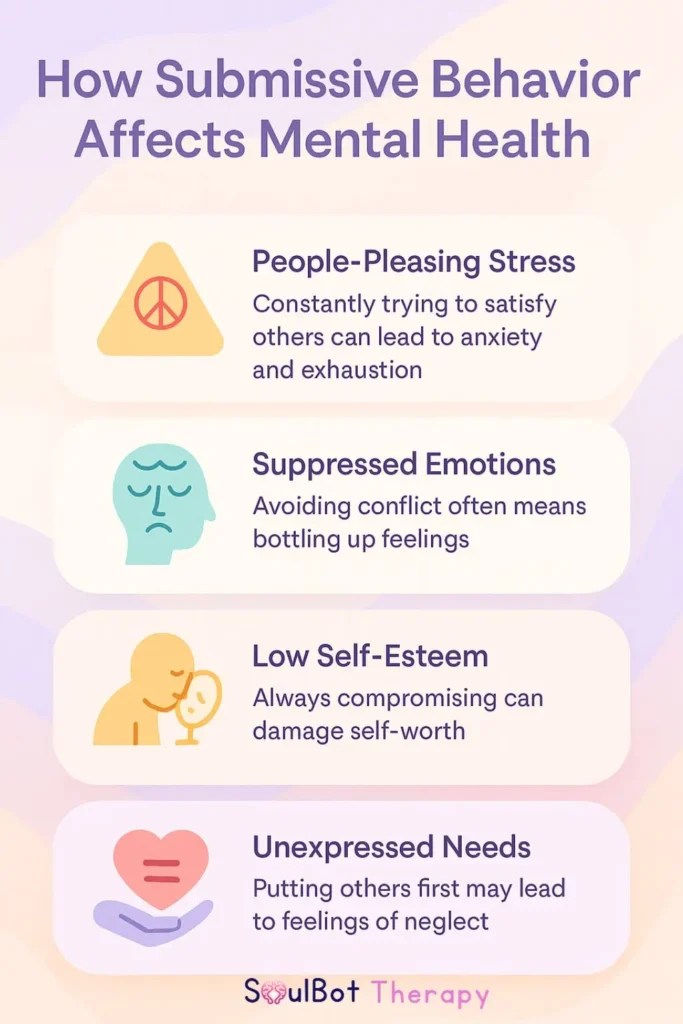
Why Do People Develop Submissive Tendencies?
Submissive behavior doesn’t appear out of nowhere. It usually develops from:
1. Childhood conditioning
If you grew up in environments where speaking up led to conflict, punishment, or guilt, your brain learned that silence = safety.
2. Attachment wounds
Fear of abandonment can turn into people-pleasing behavior.
3. Trauma responses
When fight-or-flight fails, the nervous system chooses “fawn,” pleasing others to avoid danger.
4. Personality traits
Highly empathetic people often become submissive because they feel others’ emotions intensely.
🧠 SoulFact: Psychology Today reports that submissive tendencies often originate as fawn responses, a trauma-linked behavior where the brain chooses peace to avoid emotional pain.
Submissive Tendencies in Relationships
In relationships, your softness becomes both a superpower and a struggle.
Strengths:
- You’re deeply empathetic
- You avoid unnecessary conflict
- You give emotionally and consistently
- You create emotional stability for your partner
Challenges:
- You attract dominating or emotionally unavailable partners
- You suppress your needs to avoid being a burden
- You accept mistreatment to maintain a connection
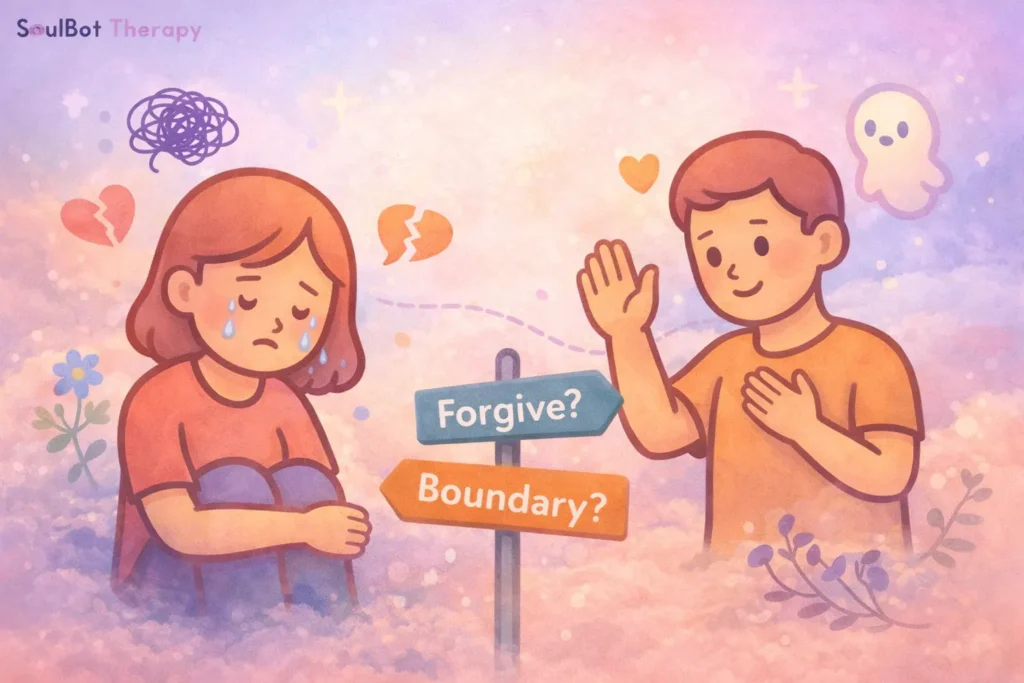
- You equate boundaries with rejection
This is where emotional dependence often appears, not because you’re weak, but because you love deeply.
Healthy relationships need your softness and your self-respect.
Healthy vs Unhealthy Submissive Behavior
Not all submissive tendencies are harmful. But imbalance can lead to emotional burnout.
Healthy Submission
- Letting others lead sometimes
- Being supportive and empathetic
- Compromising without self-loss
Unhealthy Submission
- Avoiding conflict at all costs
- Silencing your needs
- Feeling undeserving of love
- Allowing disrespect to avoid abandonment
If you constantly shrink yourself, your emotional boundaries need attention.
How to Be Less Submissive (Without Losing Your Softness)
You don’t need to become dominant; you just need to become balanced.
Here’s how to start:
1. Practice small “no’s.”
Say no where the stakes are low. It rewires your nervous system.
2. Pause before agreeing.
Use the phrase: “Let me think about it.”
3. Communicate needs clearly.
Your needs don’t hurt people; silence does.
4. Stop apologizing unnecessarily.
Replace “sorry” with “thank you.”
5. Use SoulBot for daily emotional check-ins.
Awareness reduces automatic submissive reactions.
🧠 SoulFact: Research shows that practicing assertiveness 10 minutes a day increases self-confidence and reduces people-pleasing patterns significantly.
How SoulBot Helps You Build Confidence & Healthy Boundaries
SoulBot helps you decode your emotional patterns, especially those tied to submissive tendencies.
Through journaling, daily prompts, and boundary-centered reflections, you’ll learn:
- Why you shrink
- Where your fear comes from
- How to speak up without conflict
- How to build emotional safety within yourself
💬 Chat with SoulBot when you feel overwhelmed, unable to say no, or emotionally drained.🧠 Or take the Dominant or Submissive Personality Quiz to explore your spectrum.Related Reads