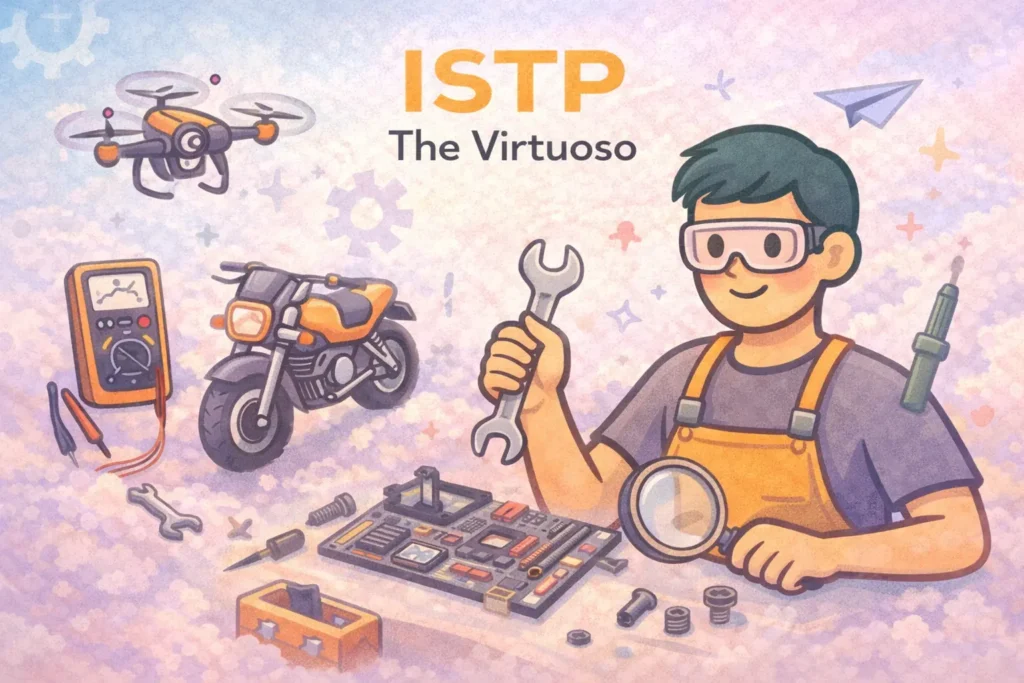
If you’ve been told you’re “too quiet,” “too independent,” or “hard to read,” there’s a good chance you relate to the ISTP personality. ISTPs aren’t distant because they don’t care.
🧠Take the MBTI Test to explore your type deeper.They’re private because they process the world internally through logic, action, and experience rather than words. This blog breaks down what the ISTP personality actually looks like in real life: how ISTPs think, connect, work, and grow without the stereotypes.
What Is the ISTP Personality Type?
The ISTP personality is often described as practical, analytical, and action-oriented.
At a core level, ISTPs are:
- internally logical
- observant of their environment
- adaptable under pressure
- independent thinkers
Rather than talking through emotions or ideas, ISTPs prefer to understand things by doing.
They trust experience more than theory and clarity more than emotional noise.
ISTP Personality Traits in Everyday Life
Some common ISTP personality traits show up subtly, not dramatically.
You might notice that ISTPs:
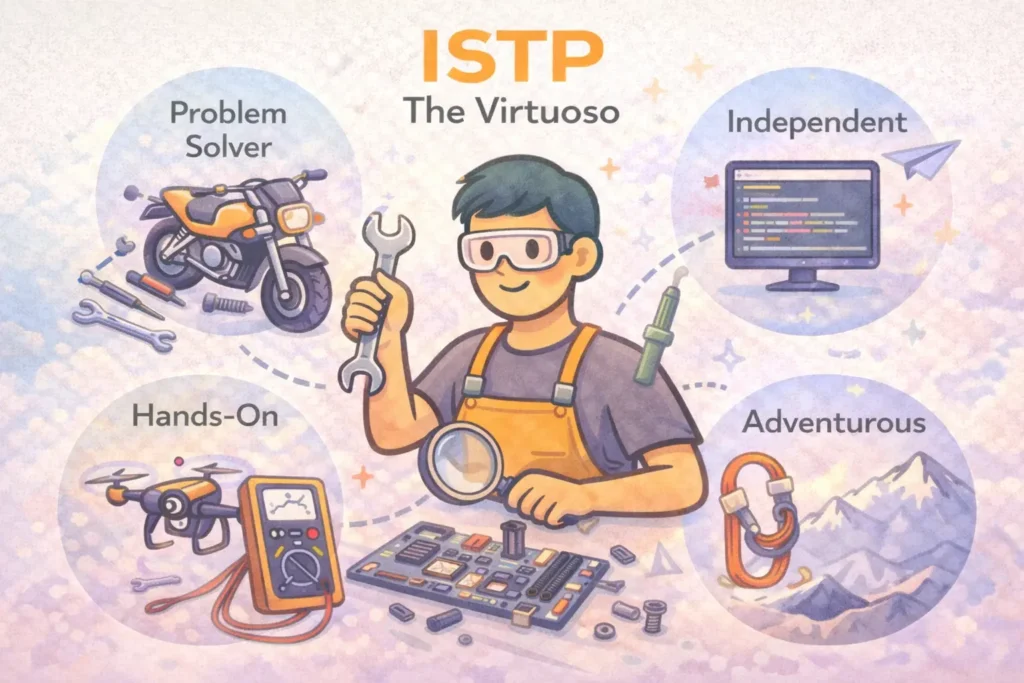
- value independence deeply
- dislike being micromanaged
- Stay calm during crises
- prefer working alone or quietly
- observe more than they speak
- act when something needs fixing
ISTPs don’t rush decisions.
They gather information silently, then act decisively.
ISTP Strengths and Weaknesses
Like every personality type, ISTPs have strengths that can turn into challenges when overused.
ISTP Strengths
- strong problem-solving ability
- practical intelligence
- emotional self-control
- adaptability in unpredictable situations
- hands-on learning
- efficiency under pressure
ISTP Weaknesses
- difficulty expressing emotions
- appearing emotionally distant
- resistance to long-term planning
- discomfort with emotional confrontation
- tendency to withdraw instead of explain
Understanding these patterns helps ISTPs work with their nature, not against it.
How ISTPs Think and Make Decisions?
The ISTP personality is often described as an introverted thinking personality.
This means:
- Decisions are made internally
- Logic comes before emotional reaction
- personal reasoning matters more than external opinions
- Efficiency matters more than appearances
ISTPs usually ask:
- “Does this make sense?”
- “Does this work?”
They don’t need constant validation; they need internal clarity.
ISTP Behaviour Patterns People Often Misread
Many ISTP behaviours are misunderstood.
- Silence is mistaken for disinterest
- Distance is mistaken for a lack of care
- Independence is mistaken for avoidance
In reality:
- ISTPs care deeply but express it practically
- They show loyalty through action, not words
- They need space to process emotions before sharing
An ISTP may fix something for you before saying “I’m here.”
ISTP in Relationships: What to Expect
ISTP in relationships looks different from emotionally expressive types.
ISTPs value:
- autonomy
- trust
- honesty
- low emotional pressure
- mutual respect
They show love through:
- reliability
- presence during emergencies
- problem-solving
- protecting their partner’s independence
Challenges may arise around:
- emotional expression
- discussing feelings
- long emotional conversations
ISTPs do best with partners who respect space without interpreting it as rejection.SoulFact
🧠SoulFact: Research in personality psychology suggests that action-oriented thinkers like ISTPs regulate stress better through hands-on engagement than emotional discussion alone.
ISTP at Work and Problem Solving
One of the strongest ISTP traits is ISTP problem-solving.
ISTPs thrive in environments that:
- allow autonomy
- reward practical solutions
- involve hands-on work
- minimise unnecessary rules
They excel in roles involving:
- engineering or technical work
- troubleshooting
- crisis management
- design or mechanics
- independent research
ISTPs shine when allowed to do, not just discuss.
Common Myths About the ISTP Personality
Let’s clear a few up.
❌ “ISTPs are cold.”
→ ISTPs are emotionally contained, not emotionless.
❌ “ISTPs don’t care about relationships.”
→ They care deeply but value freedom alongside connection.
❌ “ISTPs avoid commitment.”
→ They avoid pressure, not loyalty.
Understanding these myths prevents mislabeling emotional styles as flaws.
How ISTPs Can Grow Without Losing Themselves?
Growth for ISTPs doesn’t mean becoming more emotional or talkative.
It means:
- naming emotions when possible
- communicating needs clearly
- Recognising when withdrawal creates confusion
- Practising emotional expression in safe spaces
Small steps go a long way, especially when they feel authentic.
ISTPs grow best when growth feels useful, not forced.
How SoulBot Helps ISTPs Understand Their Patterns?
SoulBot supports ISTPs by offering:
- quiet reflection tools
- emotional check-ins without pressure
- pattern recognition
- clarity around boundaries and needs
- non-judgmental self-understanding
🧠 Take the Free MBTI Personality Test to explore your type deeper.💬 Chat with SoulBot to reflect on emotional patterns at your own pace.