Ever wondered why you naturally take charge in a relationship or why you feel more comfortable letting someone else lead?
That’s not random. It’s a reflection of your dominant or submissive personality, the way you express trust, safety, and emotional connection.
🧠 Take the Dominant or Submissive Personality Quiz to discover where you fall on the spectrum and what emotional needs shape your behavior.
Contrary to what people assume, these traits aren’t about control or weakness. They’re about how you give and receive emotional energy in your relationships. Let’s decode what these patterns mean, how they shape your connections, and how to find balance between the two.
What Does Dominant and Submissive Personality Mean?
Dominance and submission exist on a spectrum, not as labels.
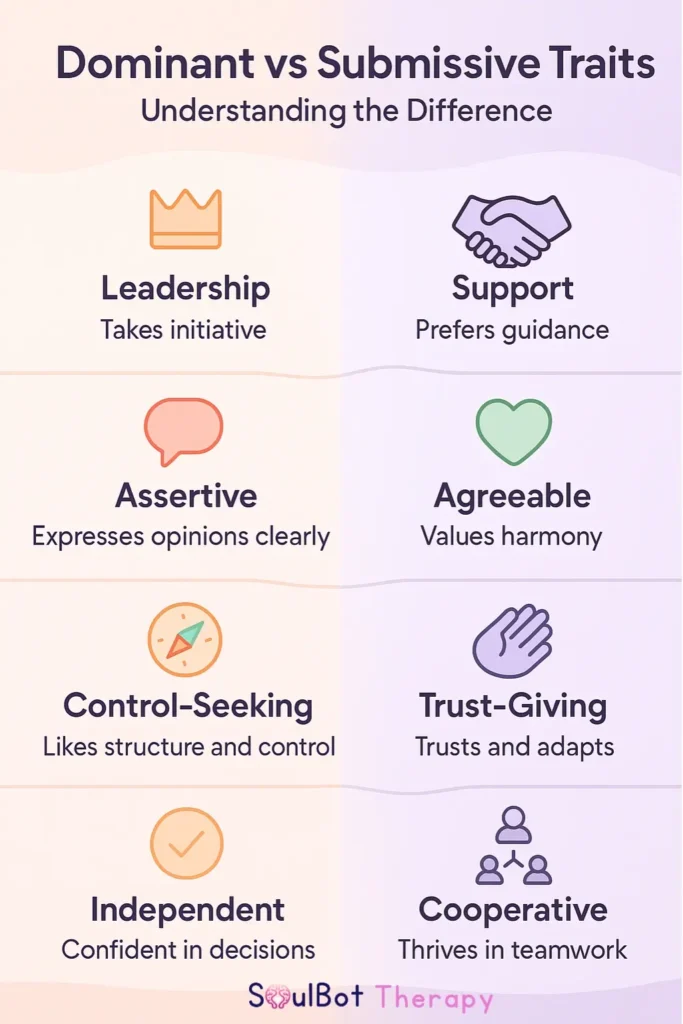
A dominant personality tends to lead, make decisions, and create structure. A submissive personality prefers harmony, adaptability, and emotional connection through trust.
Psychologically, both are valid. You might lean one way depending on your personality, upbringing, or emotional experiences, and sometimes you shift between both.
- Being dominant doesn’t mean being controlling.
- Being submissive doesn’t mean being passive.
They’re simply two ways of expressing emotional needs and relationship comfort.
Dominant Personality Traits: Leading with Confidence and Control
If you have dominant personality traits, you likely find comfort in responsibility and direction. You lead not because you want power but because it helps you feel grounded and secure.
Common signs include:
- Naturally taking charge of decisions or plans
- Feeling frustrated when others seem uncertain
- Expressing emotions through action rather than words
- Having a strong need for independence and control
- Protectiveness toward loved ones
Dominant personalities often build emotional safety by creating stability for others. But that same drive can lead to burnout or frustration if you feel unsupported.
🧠 SoulFact: Dominance is often linked with assertiveness and confidence traits shaped by experience and emotional conditioning, not ego.
Submissive Personality Traits: The Strength in Sensitivity and Trust
If you identify more with submissive personality traits, your emotional strength lies in trust, adaptability, and empathy. You connect by attuning to others’ needs and maintaining emotional harmony.
Signs you may have a submissive personality include:
- Preferring to avoid conflict or confrontation
- Finding fulfillment in helping or supporting others
- Adapting easily to your partner’s preferences
- Feeling anxious when relationships feel unstable
- Expressing love through care, not control
This sensitivity is powerful; it allows you to understand people deeply. The challenge is ensuring you don’t lose your identity while caring for others.
If you saw yourself in either of these patterns, it doesn’t mean you’re one thing forever.
Your emotional style can shift depending on safety, trust, and connection. The Dominant or Submissive Personality Quiz helps you understand how you show up emotionally and why.
🧠 SoulFact: Studies show that emotionally sensitive individuals often develop submissive tendencies as a way to preserve connection and reduce conflict in early relationships.
Dominant or Submissive Behavior: It’s About Balance, Not Power
Healthy relationships thrive when both traits exist in balance.
Dominant vs submissive behavior isn’t a competition; it’s a rhythm. Dominant partners provide direction and confidence; submissive partners create trust and emotional softness.
But an imbalance can cause problems:
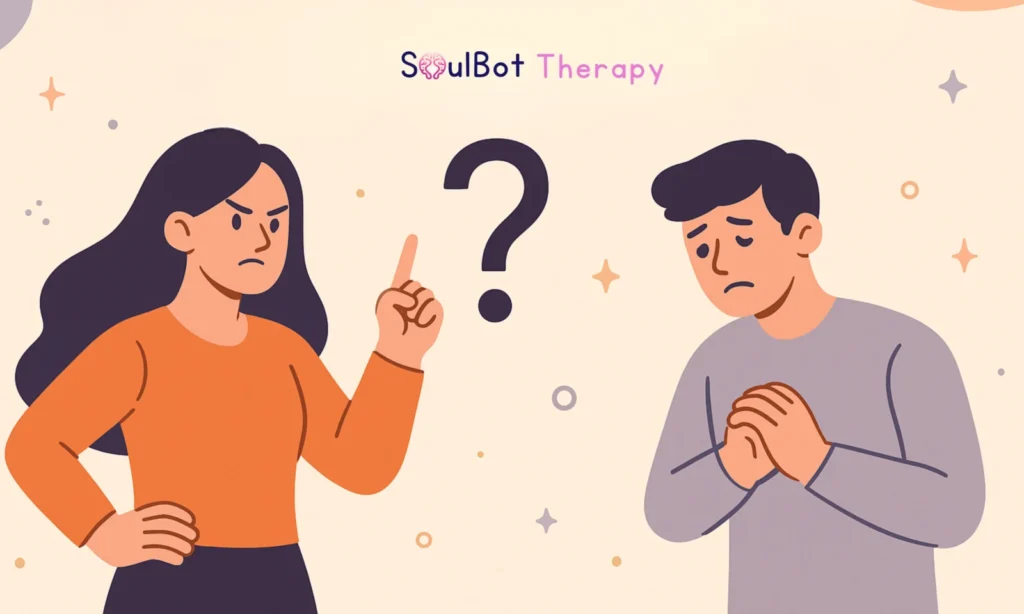
- A dominant person without empathy may become controlling.
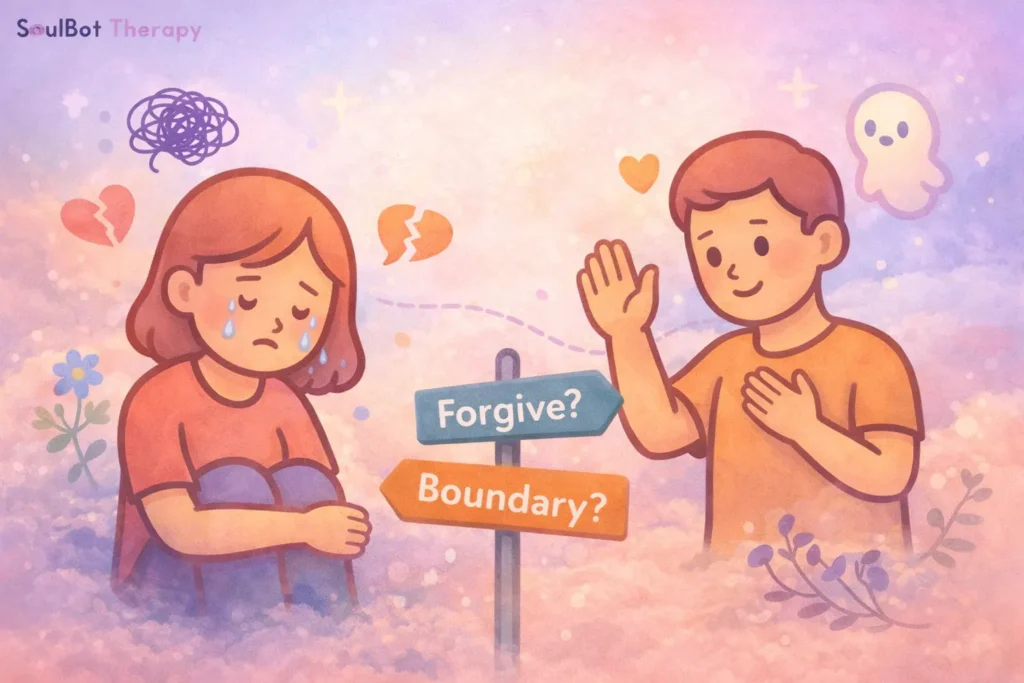
- A submissive person without boundaries may lose self-worth.
The key is emotional awareness. Genuine connection happens when dominance meets compassion and submission meets self-respect.
Dominance isn’t about power, and submission isn’t about surrender both are emotional strategies shaped by safety and trust.
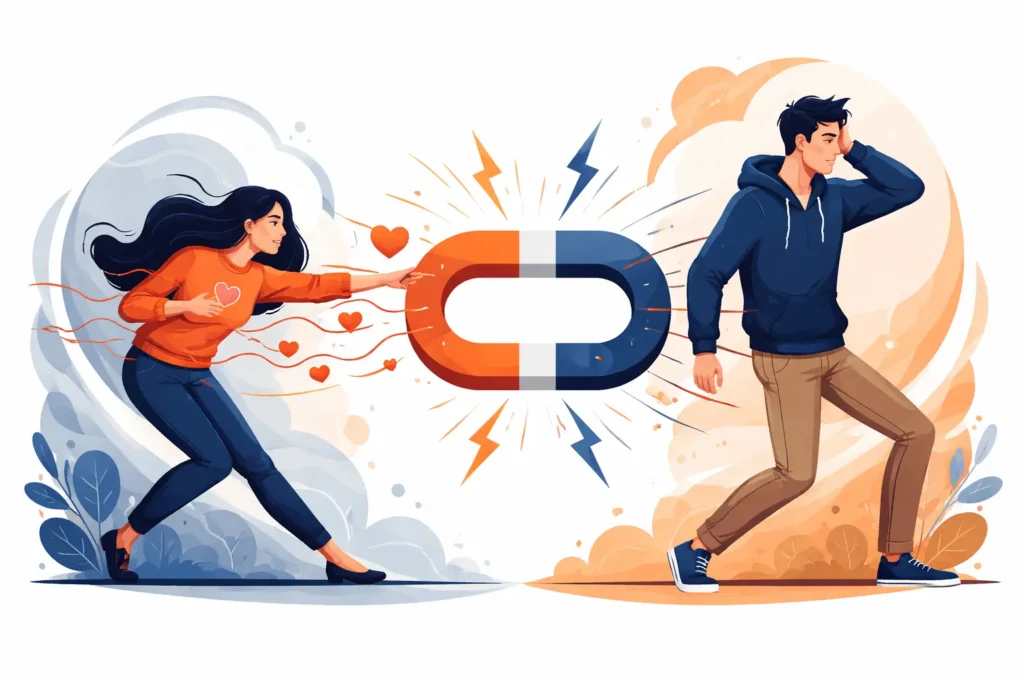
Relationship Power Dynamics: Why Opposites Often Attract?
Ever noticed how confident personalities often pair with nurturing ones? That’s relationship power dynamics in action.
Dominant and submissive personalities complement each other when both feel respected. The dominant finds purpose in leading; the submissive feels safe in trust. This attraction works because both roles fulfill emotional needs for security and belonging.
However, if trust breaks or power isn’t mutual, the same pattern can turn toxic. Healthy power dynamics depend on emotional equality, not control.
How to Build Healthy Emotional Balance?
Whether you’re dominant or submissive, emotional awareness is your anchor. Here’s how to create balance:
- Check your motives. Are you leading to guide or to control?
- Set clear boundaries. Respect needs yours and others’.
- Communicate openly. Vulnerability builds mutual respect.
- Share decisions. Balance means both voices matter.
- Reflect regularly. Journaling or using SoulBot helps you stay emotionally aware.
Remember, it’s not about changing your personality; it’s about finding the healthiest version of it.
How SoulBot Helps You Understand Your Personality Style?
SoulBot helps you go beyond labels like “dominant” or “submissive” by showing how your emotional patterns shift in real-time.
💬 Chat with SoulBot to reflect on your emotional patterns, practice healthier communication, and build balance in your relationships — one conversation at a time.

Not sure whether you lean more toward dominance, submission, or a mix of both?

🧠 Take the Dominant or Submissive Personality Quiz to understand your emotional tendencies and how they shape your relationships.