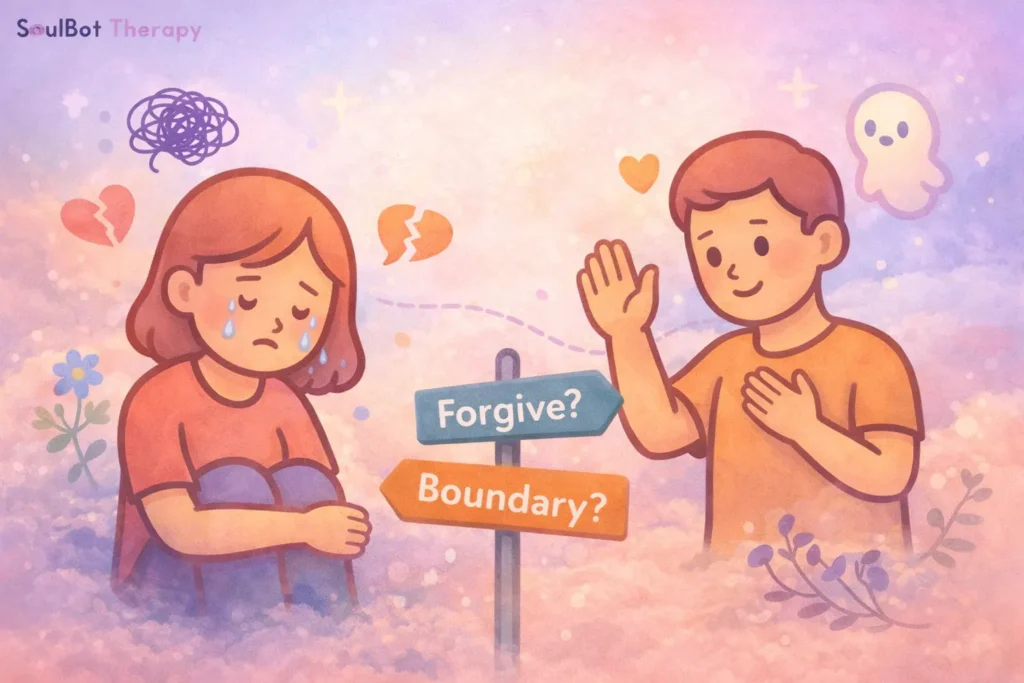
A friendship breakup doesn’t always come with closure.
Sometimes it comes with confusion, guilt, and one painful question:
“Should I forgive them… or is it time to walk away?”
Unlike romantic breakups, friendship endings are rarely talked about openly. There’s pressure to “be mature,” “let it go,” or “not make a big deal out of it.”
But when a friend hurts you, your pain is real, and it deserves clarity, not dismissal.
This guide will help you understand when forgiveness heals, when distance protects you, and how to decide without betraying yourself.
What Is a Friendship Breakup (And Why It Hurts So Much)?
A friendship breakup happens when emotional trust is broken and cannot be repaired, or shouldn’t be.
This can come from:
- Betrayal
- Repeated disrespect
- Emotional neglect
- Crossed boundaries
- Growing into different values
Friendship betrayal cuts deep because friendships are built on choice, not obligation. When that safety breaks, it often shakes your self-trust. Losing a friend isn’t just losing a person; it’s losing a version of yourself that felt safe with them.
SoulFact: Research shows unresolved friendship betrayal can impact self-trust more than romantic conflict.
Why Friendship Betrayal Feels So Personal?
When a friend hurts you, it often feels worse than romantic conflict.
Why?
- Friends see your unfiltered self
- You expect loyalty without conditions
- There’s less social permission to grieve
- Betrayal feels unexpected
Many people minimize their pain by saying:
“It’s just a friend.”
But emotionally, it’s not “just” anything.
When Forgiving a Friend Who Hurt You Can Be Healing?
Choosing to forgive a friend who hurt you can be healthy, but only under certain conditions.
Forgiveness helps when:
- They acknowledge the ha
- They take responsibility
- Their behavior changes consistently
- boundaries are respected
- Trust can be slowly rebuilt
In these cases, forgiveness isn’t weakness; it’s repair. But forgiveness should never require self-silencing or emotional erasure.
When Forgiveness Starts Costing You Your Self-Respect
Forgiveness becomes harmful when:
- The same behavior repeats
- Your feelings are minimized
- Accountability is missing
- boundaries are ignored
- You feel smaller after reconciling
If forgiving means teaching someone that access to you has no limits, it’s not healing; it’s self-abandonment. This is where many people confuse compassion with obligation.
When to Walk Away From a Friendship?
Knowing when to walk away from a friendship isn’t about being cold or dramatic. It’s about recognizing emotional reality. Walking away may be necessary if:
- The friendship drains you emotionally
- resentment keeps building
- Trust is consistently broken
- You feel anxious or unsafe about being honest
- growth only happens on one side
Ending a friendship doesn’t mean you didn’t care. It means care alone wasn’t enough.
 SoulTip: Forgiveness without accountability increases emotional resentment.
Forgiving vs Setting Boundaries: What’s the Difference?
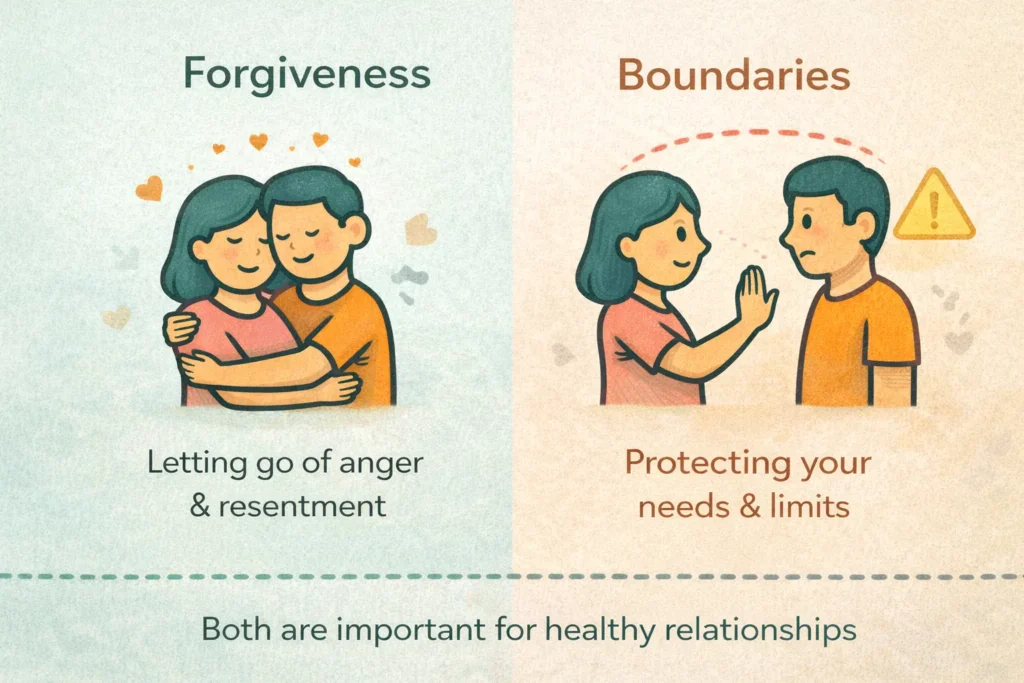
This is a crucial distinction. Forgiving vs setting boundaries are not opposites.
- Forgiveness is an internal process
- Boundaries are an external action
You can forgive someone and still:
- Limit access
- Change closeness,
- Redefine expectations
And you can set boundaries without forgiving immediately. Boundaries protect your nervous system. Forgiveness protects your heart only when you’re ready.
Signs You’re in an Unhealthy Friendship
Some unhealthy friendships don’t explode; they erode you quietly.
Watch for:
- Constant guilt or obligation
- One-sided emotional labor
- Feeling dismissed or unheard
- Fear of speaking honestly
- Pressure to tolerate disrespect
- Emotional exhaustion after interactions
If a friendship costs your peace, it’s worth questioning.
How to Decide What’s Right for You (Without Guilt)
If you’re stuck between forgiving and walking away, ask yourself:
- Do I feel emotionally safe with this person now?
- Has anything meaningfully changed?
- Am I staying out of hope or fear?
- Do I feel respected, or tolerated?
- What would I advise a friend in my position?
Your body often knows the answer before your mind does. Choosing distance isn’t cruelty. Sometimes it’s clarity.
How SoulBot Helps You Process a Friendship Breakup?
SoulBot helps you:
- Reflect on emotional patterns
- Process betrayal without self-blame
- Clarify boundaries
- Reduce guilt around walking away
- Journal safely through grief and anger
- Rebuild self-trust
🧠 Use SoulBot’s journaling tools to explore whether forgiveness or distance feels safer.💬 Chat with SoulBot when guilt and grief feel tangled.