Ever felt like your emotions come out of nowhere, like one small thing flips a switch and suddenly, you’re overwhelmed, angry, or ready to disappear?
If that sounds familiar, you’re not broken. You might just be experiencing BPD emotional triggers, moments when your nervous system reacts to reminders of pain, rejection, or fear that your mind hasn’t processed yet.
🧠 Take the BPD Test to identify your emotional patterns and build self-awareness around your unique triggers.Let’s understand what triggers BPD, why it feels so intense, and how you can gently calm your emotional system when it happens.
What Triggers BPD Episodes?
Triggers are emotional reminders, not always logical, but deeply real to your brain. For someone with Borderline Personality Disorder (BPD), triggers are moments that activate old emotional wounds, especially those linked to abandonment, rejection, or feeling unseen.
So, what triggers BPD? It’s usually situations that feel like losing attention, love, control, or connection.
Common examples:
- Someone is not replying to your message
- A. partner sounding distant
- A friend is cancelling plans.
- Feeling criticised, even gently
- Being left out of a group or a decision
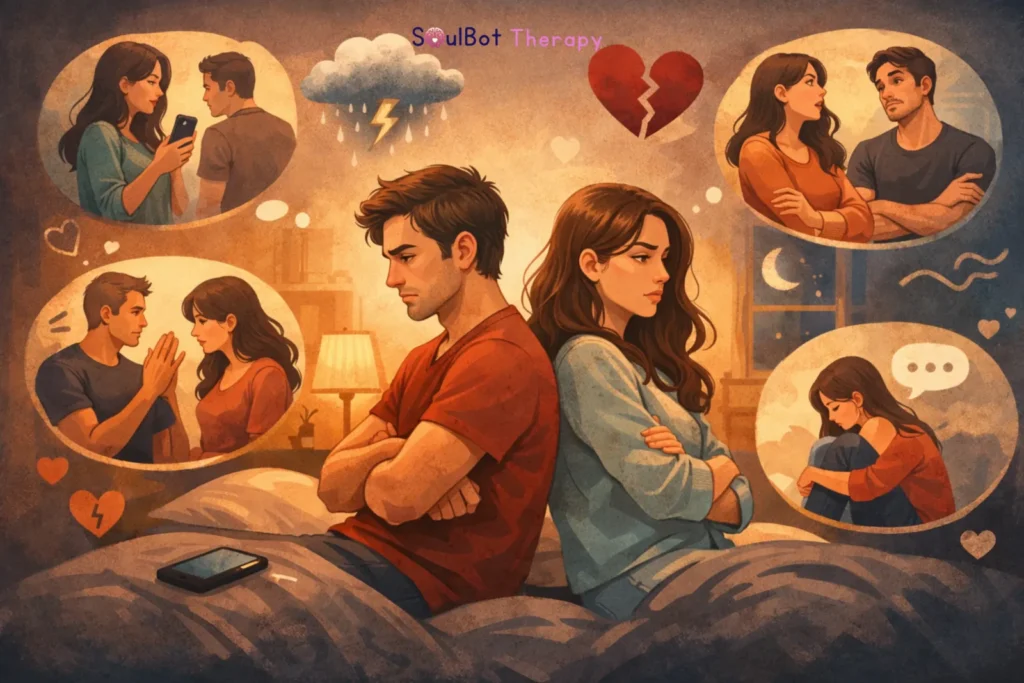
To others, these might seem small. To you, they can feel like proof that you’re unworthy or being left behind, and your body reacts before your logic can catch up.
The Most Common BPD Emotional Triggers
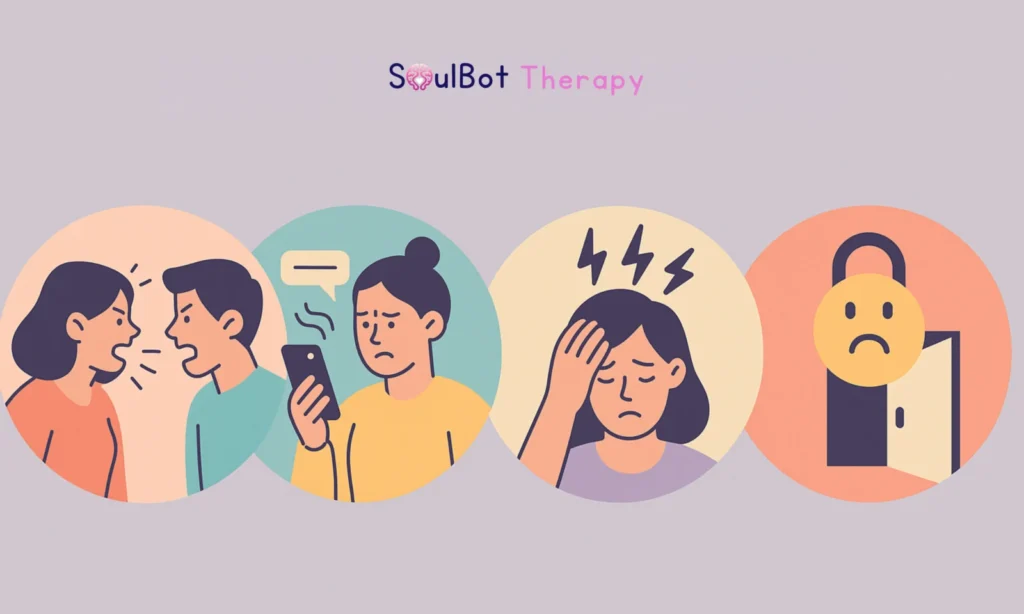
Everyone’s triggers look different, but research and therapy reports show several common BPD triggers that spark emotional dysregulation:
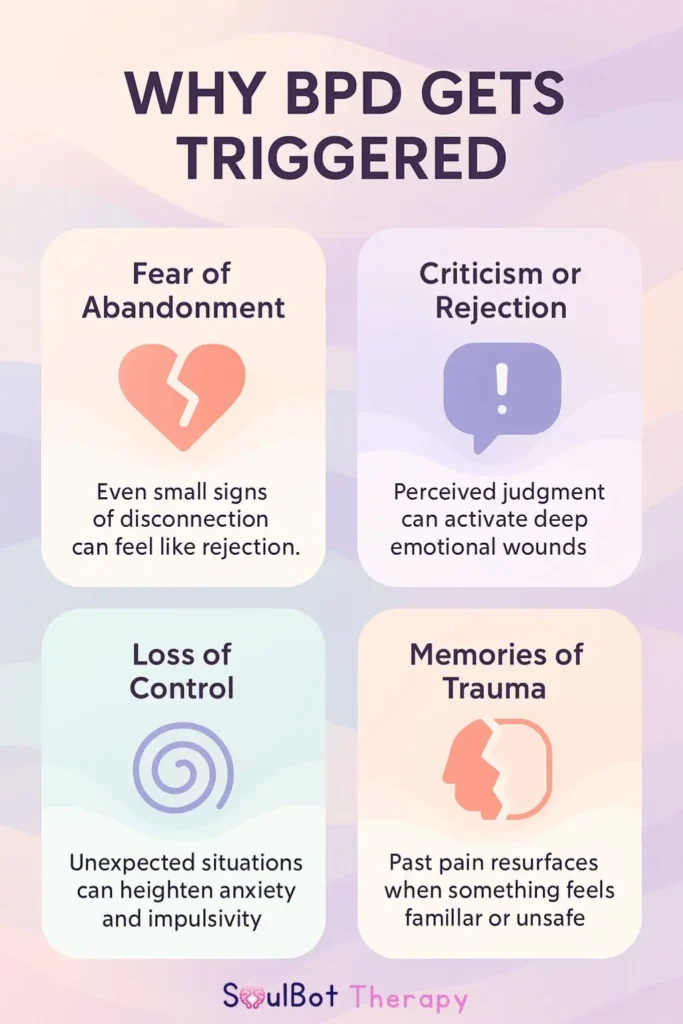
- Fear of Abandonment – Even slight changes in attention or availability can feel like rejection.
- Criticism or Disapproval – BPD brains often translate feedback into “I’m not good enough.”
- Feeling Ignored or Misunderstood – Emotional invalidation reactivates deep-seated trauma.
- Sudden Change or Uncertainty – Unexpected shifts can create panic or mistrust.
- Conflict or Rejection – The nervous system interprets it as emotional danger, not disagreement.
These BPD emotional triggers don’t mean you’re overreacting; they mean your emotional system is overprotective. It’s trying to keep you safe from pain you once couldn’t escape.
Why Do These Triggers Feel So Intense?
Because your brain remembers pain even when you forget the details.
BPD is often rooted in early trauma, invalidation, or attachment wounds that taught you love isn’t safe unless you’re perfect, quiet, or needed.
According to the National Institute of Mental Health (NIMH), people with BPD have a hyperactive amygdala (the brain’s emotional alarm centre) and less activity in areas that regulate emotion.
That means your brain feels everything louder, longer, and faster than most.
This is called emotional dysregulation. Your emotions turn up to 100 before you even realise the dial moved. You’re not dramatic. You’re wired to feel more deeply than the world allows.
🧠 SoulFact: NIMH research shows that people with BPD have heightened amygdala activity, which makes emotional reactions stronger and more immediate.
How BPD Triggers Affect Relationships?
Relationships can feel like walking a tightrope when you live with BPD.
Even minor emotional shifts can activate BPD and relationship triggers:
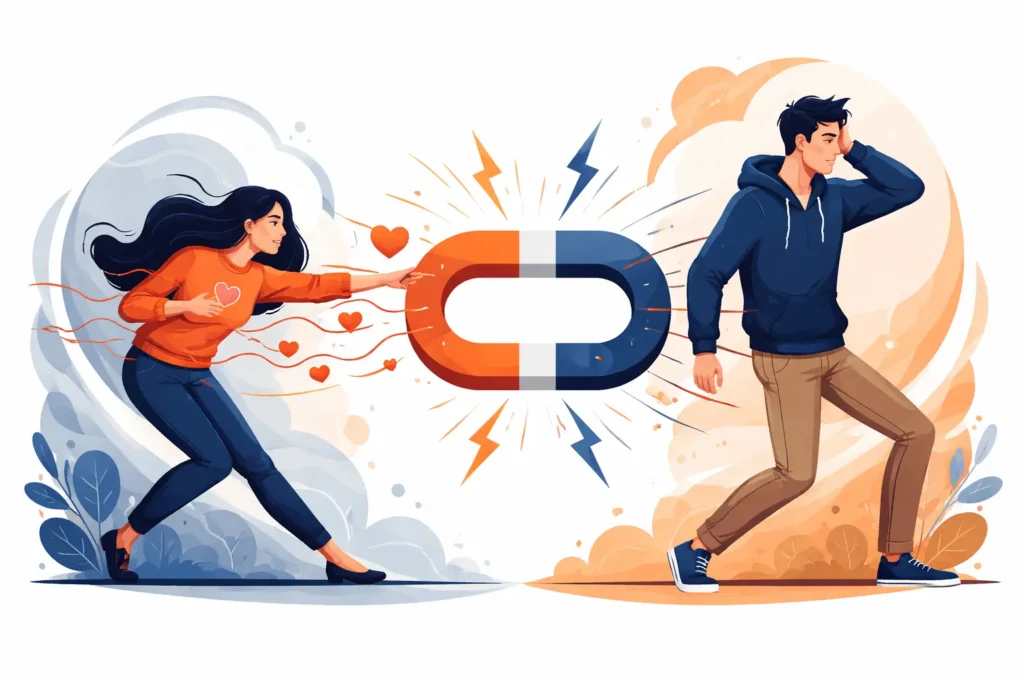
- You might push people away to see if they’ll come back.
- You might test love by creating distance, not out of manipulation, but fear.
- You may struggle to trust reassurance, thinking it’ll disappear.
This push-pull pattern comes from a deep fear: “If you really knew me, you’d leave.”
But what if love didn’t have to feel like a test? Healing starts with recognising that your reactions come from pain, not personality.
How to Deal with BPD Triggers Safely?
You can’t always prevent triggers, but you can change how your mind and body respond to them.
Here’s how to deal with BPD triggers with awareness and compassion:
- Pause Before Reacting – A few slow breaths tell your body you’re safe.
- Label the Feeling – Naming emotions activates the logical part of your brain.
- Journal the Trigger – Write what happened and what you felt, not just what you thought.
- Ground Yourself in Reality – Ask: “Is this pain from now, or from before?”
- Use SoulBot’s Reflection Tool – Track patterns to understand your emotional rhythm.
🧠 SoulFact: Mindfulness and self-reflection can reduce BPD trigger intensity by up to 40%, improving emotional recovery time.
How SoulBot Helps You Calm Emotional Triggers?
SoulBot isn’t here to judge your reactions; it’s here to help you understand them.
Through daily reflection prompts, mood tracking, and grounding reminders, SoulBot helps you notice what sets you off before it spirals.
💬 Chat with SoulBot when you feel emotionally charged or misunderstood. It offers calming reflection questions and helps you breathe through your emotions instead of fighting them.🧠 Take the Borderline Personality Disorder Test, discover your emotional intensity level, and what your triggers reveal about you.