If your emotions feel unpredictable, calm one moment, anxious the next, it might not just be “in your head.”
Your body’s chemical messengers, hormones, are deeply tied to your emotions, energy, and focus. When they fluctuate, your mind often feels the impact before your body does.
💜Take our free, compassionate BPD test for gentle self-insight.Let’s explore how hormonal imbalance and mental health connect and what you can do to find balance again.
What’s the Link Between Hormones and Mental Health?
Hormones are your body’s built-in communication system. Produced by glands like the thyroid, adrenal, and ovaries, they regulate everything from sleep and appetite to stress response and mood.
When this system is balanced, you feel stable, focused, and emotionally resilient.
But when it’s off even slightly, your emotional world can shift fast.
Harvard Health explains that hormones like estrogen, cortisol, and thyroid hormones influence neurotransmitters such as serotonin and dopamine, the chemicals responsible for happiness, calmness, and motivation. That’s why hormonal changes can trigger emotional highs and lows, fatigue, or unexplained anxiety.
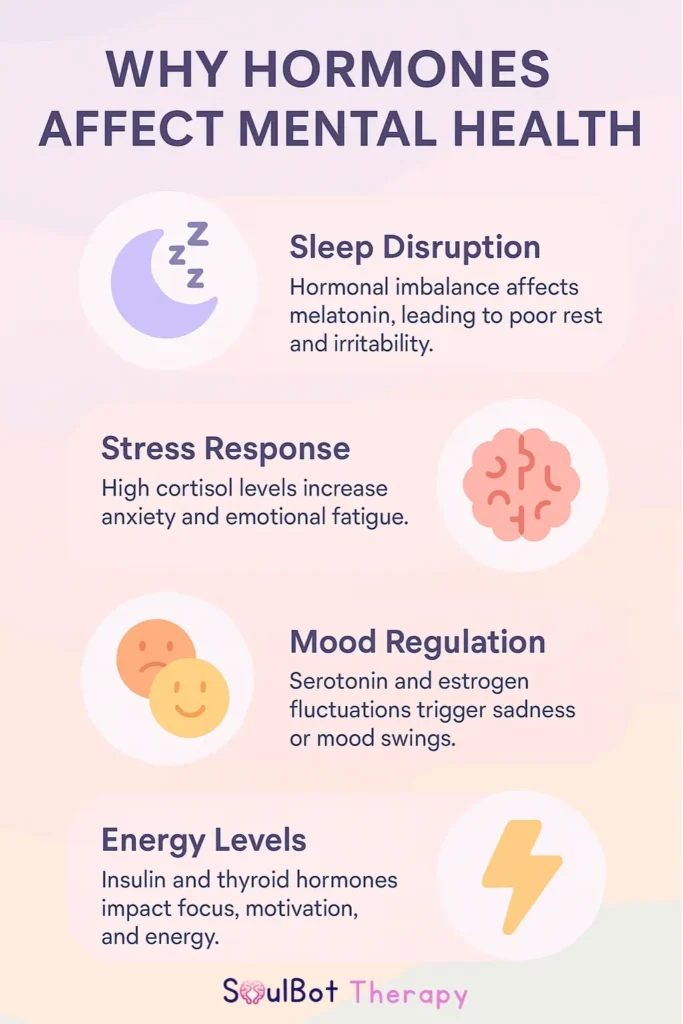
How Hormonal Imbalance Affects Emotions and Focus?
The effects of hormonal imbalance go far beyond physical symptoms. It can subtly shape your thoughts, emotional patterns, and daily motivation.
Common emotional effects include:
- Sudden irritability or mood swings
- Persistent fatigue or brain fog
- Anxiety that spikes without an apparent reason
- Low motivation or feelings of emptiness
- Overreaction to minor stressors
When your hormones misfire, your brain chemistry follows. You might notice a shorter fuse, difficulty concentrating, or feeling detached even when life seems “fine.”
Your mind isn’t betraying you. It’s responding to your body’s internal imbalance.
Which Hormones Impact Mental Health Most?
Let’s look at the three most influential hormones linked to mood, motivation, and emotional stability:
1. Estrogen and Depression
Estrogen plays a vital role in regulating serotonin, your brain’s natural mood stabilizer.
When estrogen drops (like before menstruation, after childbirth, or during menopause), serotonin levels fall too, often leading to sadness, irritability, or emotional sensitivity.
That’s why hormonal mood changes are common and valid. They’re not weaknesses; they’re biochemistry.
2. Thyroid Hormones and Mental Health
The thyroid gland controls metabolism and energy regulation, but its hormones T3 and T4 also affect cognitive and emotional balance.
Both hyperthyroidism (overactive thyroid) and hypothyroidism (underactive thyroid) can mimic symptoms of anxiety or depression.
🧠 SoulFact: According to the Cleveland Clinic, undiagnosed thyroid imbalances are one of the most overlooked causes of chronic fatigue and low mood.
3. Stress Hormones and Anxiety
Cortisol, your primary stress hormone, helps you react in emergencies. But when stress becomes constant, cortisol levels stay elevated, and that can wreak havoc on your mental health.
High cortisol can cause:
- Restlessness and racing thoughts
- Sleep disruption
- Emotional burnout
- Difficulty feeling joy or calm
This is why managing stress hormones and anxiety through mindfulness, sleep, and emotional regulation is key to restoring mental balance.
Common Hormonal Imbalance Symptoms You Might Overlook
Hormones don’t just affect emotions, they influence nearly every body system.
You might be dealing with an imbalance if you notice:
- Irregular or painful periods
- Chronic fatigue or poor sleep
- Cravings or unexplained weight changes
- Hair loss or acne
- Mood swings and irritability
These hormonal imbalance symptoms are your body’s language signals, not flaws. Listening early prevents emotional overload later.
Struggling with intense emotions? Get gentle, judgment-free clarity with our Free ADHD Test.How to Balance Hormones Naturally for Emotional Wellness?
Your body and mind crave rhythm, not perfection. Supporting both doesn’t always require drastic measures; it starts with daily choices.
Here’s how to support hormonal and emotional alignment:
- Sleep consistently: Your circadian rhythm resets hormone release cycles.
- Eat balanced meals: Include protein, omega-3s, and fiber for blood sugar stability.
- Move your body: Exercise regulates cortisol and boosts serotonin.
- Journal and reflect: Track emotions to notice patterns across your cycle or stress levels.
- Practice mindfulness: Breathing, meditation, or gentle yoga can calm your nervous system.
🧠 SoulFact: According to Harvard Health, estrogen fluctuations directly affect serotonin levels, while chronic stress disrupts cortisol balance, both impacting emotional stability.
How SoulBot Helps You Track Mood & Hormonal Patterns
Hormonal changes can be unpredictable, but your awareness doesn’t have to be.
SoulBot helps you track emotional shifts, stress levels, and daily reflections to uncover how your mind and body communicate.
💬 Chat with SoulBot for daily grounding prompts and emotional awareness reminders that align your mental state with your body’s signals.