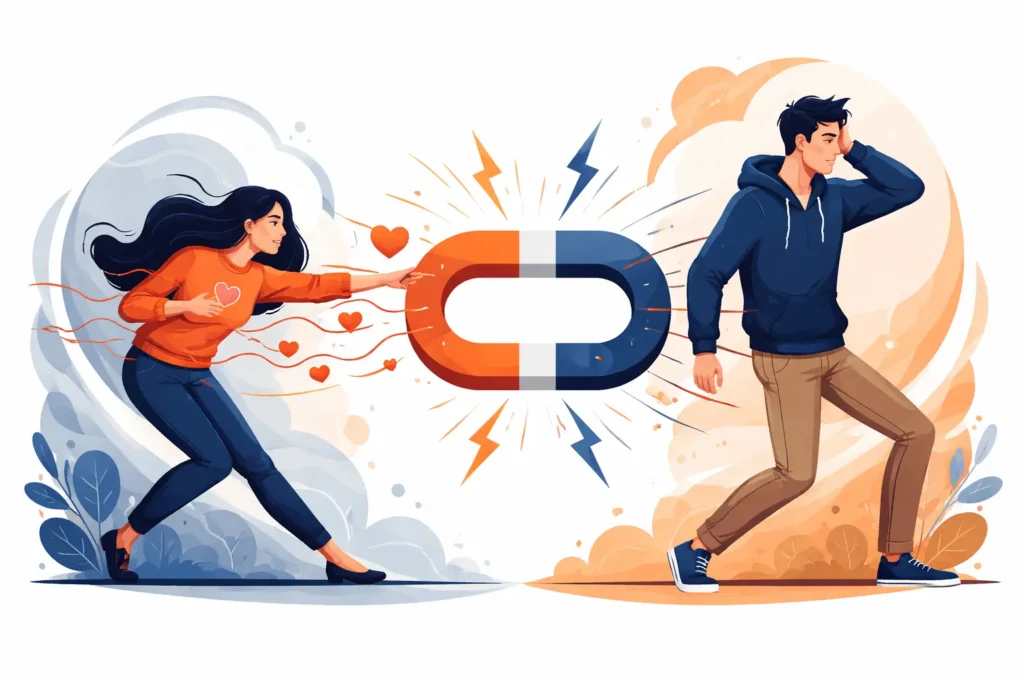
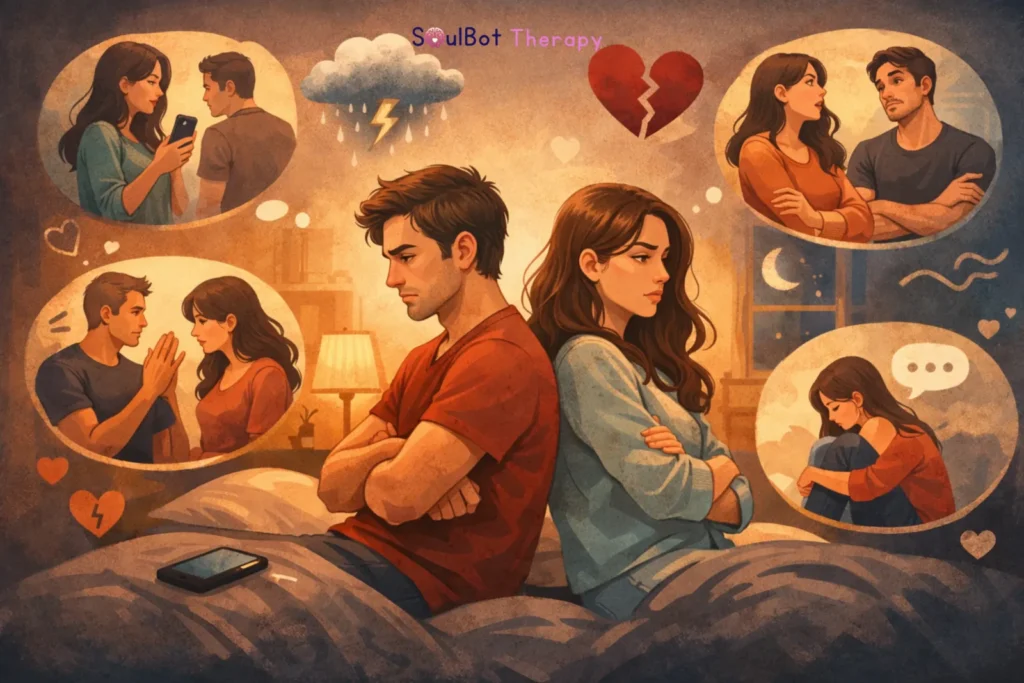
That uneasy feeling hits suddenly. Your partner’s tone feels different. Replies are shorter. Affection feels off. And your mind jumps to one question:
“Is my partner mad at me?”
Before you spiral, here’s something grounding to remember: Not every shift in behavior means anger. But emotional distance is still worth paying attention to.
This guide will help you understand the signs your partner is upset, how to respond without making things worse, and when this becomes a deeper relationship issue.
Is My Partner Mad at Me, or Am I Overthinking?
If you’re prone to anxiety or overthinking, emotional changes can feel louder than they are.
Ask yourself:
- Is this a pattern or a single moment?
- Has something stressful happened in their life recently?
- Do they usually communicate when upset or withdraw?
Sometimes what feels like anger is actually:
- stress
- exhaustion
- emotional overwhelm
- shutdown, not hostility
The key is learning to tell the difference between perception and pattern.
Why Partners Don’t Always Say When They’re Upset?
Not everyone expresses emotions the same way.
Some people avoid saying they’re upset because:
- Harmony is a key priority for them.
- Time is taken to process emotions.
- Expressing feelings can be challenging.
- Their difficulties reflect a thoughtful nature.
- There is a strong desire for understanding and connection.
Silence doesn’t always mean punishment; sometimes it means protection.
Signs Your Partner Is Upset (Beyond Obvious Anger)
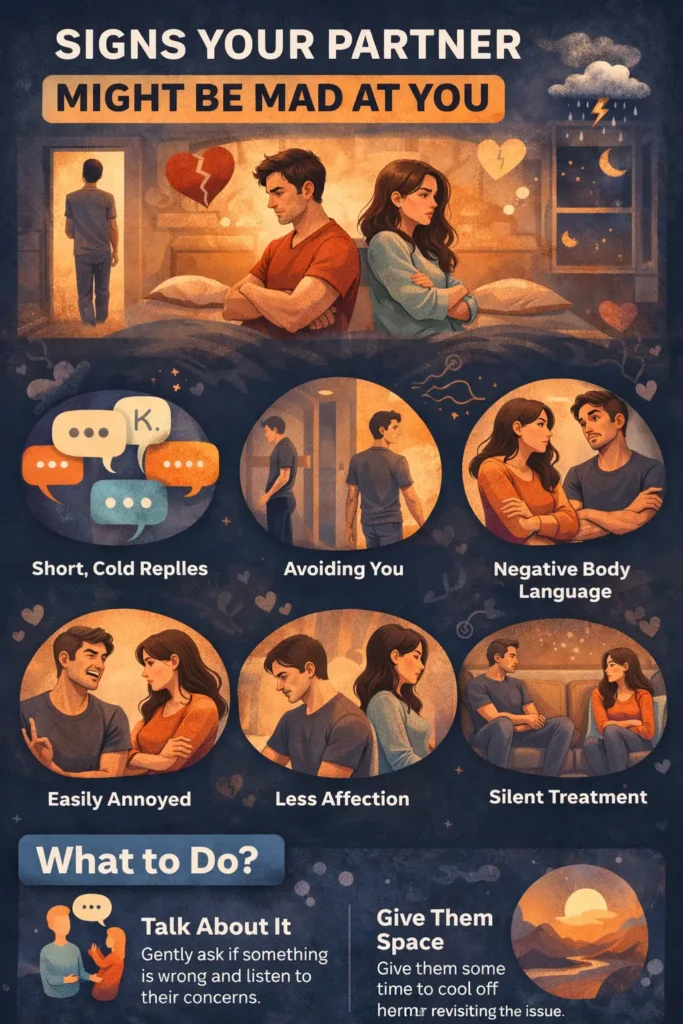
Here are subtle but common signs your partner is upset, especially when they don’t say it outright:
- Short, minimal responses
- Less warmth or affection
- Avoiding conversations
- A noticeable change in tone
- Emotional distance
- Irritability over small things
- Less engagement than usual
One sign alone doesn’t mean much. Several, repeated over time, do.
When Silence Means Anger and When It Doesn’t?
The partner’s silent treatment is confusing because silence can mean very different things.
Silence may mean anger when:
- It’s paired with coldness
- It feels punishing
- communication stops completely
- It’s used to avoid accountability
Silence may not mean anger when:
- They later reconnect calmly
- They’ve said they need space
- It’s consistent with how they process emotions
- they’re overwhelmed, not resentful
Look at intent, not just behavior.
 SoulFact: Research shows people often misinterpret emotional distance as anger due to anxiety, not actual conflict.
Emotional Withdrawal in Relationships: What It Signals
Emotional withdrawal in relationships doesn’t always mean “I’m mad at you.”
It can signal:
- Stress or burnout
- Emotional overload
- Unresolved resentment
- Feeling misunderstood
- Fear of conflict
- Lack of emotional tools
Withdrawal becomes a problem when it replaces communication instead of supporting it.
What to Do If You Think Your Partner Is Mad at You?
Before reacting, regulate first.
1. Pause the story your mind is telling
Anxiety fills in gaps with worst-case scenarios.
2. Ground yourself
Slow breathing, movement, or a short pause helps calm the nervous system.
3. Don’t accuse
Avoid:
“Why are you mad at me?” This triggers defensiveness.
4. Lead with curiosity
Try:
“I’ve noticed some distance and wanted to check in.”
5. Pick the right time
Not mid-stress. Not during conflict. Timing matters more than wording.
SoulFact: Avoidant communication styles tend to withdraw when stressed, not necessarily when angry.
How to Communicate Without Making Things Worse?
Healthy relationship communication issues often come from how something is said, not what is said.
Use this structure:
- Observation (not assumption)
- Emotion (not blame)
- Invitation (not demand)
Example:
“I noticed we’ve been a bit distant, and I’m feeling unsure. Can we talk about what’s going on?” This keeps the door open instead of pushing it shut.
When This Pattern Becomes a Relationship Issue?
If you frequently ask yourself, “Is my partner mad at me?”, something deeper may be happening.
Watch for:
- Repeated emotional withdrawal
- lack of repair after conflict
- avoidance instead of resolution
- fear of expressing needs
- chronic anxiety in the relationship
These patterns point to conflict avoidance in relationships, not just a bad day.
How SoulBot Helps With Relationship Communication Anxiety?
SoulBot supports you by helping you:
- Understand emotional reactions
- Regulate anxiety before conversations
- Identify attachment patterns
- Reflect instead of react
- Communicate with clarity and calm
🧠 Take the Attachment Style Test to understand your response patterns.💬 Chat with SoulBot when you feel unsure, anxious, or emotionally triggered.