Resentment doesn’t show up loudly. It builds quietly in the pauses, the swallowed words, the moments you tell yourself “it’s fine” when it isn’t.
You might still love your partner.
You might still care. But something inside feels heavy, irritated, or emotionally distant. That doesn’t make you a bad partner. It means something important hasn’t been heard.
This guide will help you understand how to overcome resentment in relationships without blame, suppression, or pretending everything is okay.
What Is Resentment in Relationships?
Resentment in relationships is unexpressed emotional pain that turns into bitterness over time.
It’s not the same as anger.
- Anger is immediate and expressive
- Resentment is quiet, stored, and cumulative
Resentment forms when:
- Your needs aren’t met
- Your boundaries are crossed
- Your feelings are minimised
- You keep giving without repair
Emotional resentment is what happens when emotions have nowhere safe to go.
SoulFact: Research shows suppressed resentment activates long-term stress responses in the brain.
 SoulFact: Research shows
What Causes Resentment in Relationships?
Most resentment isn’t about one big event. It’s about patterns.
Common causes include:
- Unequal emotional or practical effort
- Feeling unseen or unheard
- Lack of appreciation
- Emotional neglect
- Unresolved conflict
- People-pleasing or self-silencing
- Broken agreements
- Poor communication
Resentment grows fastest where honesty feels unsafe.
Relationship Resentment Signs People Often Ignore
Resentment rarely says, “I’m resentful.”
It shows up indirectly. Watch for these relationship resentment signs:
- Irritability over small things
- Emotional withdrawal
- Passive-aggressive comments
- Lack of patience
- Keeping mental score
- Loss of empathy
- Fantasising about emotional distance
- Feeling emotionally “done.”
If you feel tense around someone you love, resentment may already be present.
🧠SoulTip: Unexpressed resentment is one of the strongest predictors of emotional distance in relationships.
Why Unresolved Resentment Doesn’t Go Away on Its Own?
Many people hope resentment will fade if they:
- Wait it out
- Forgive silently
- Avoid conflict
- Focus on the positives
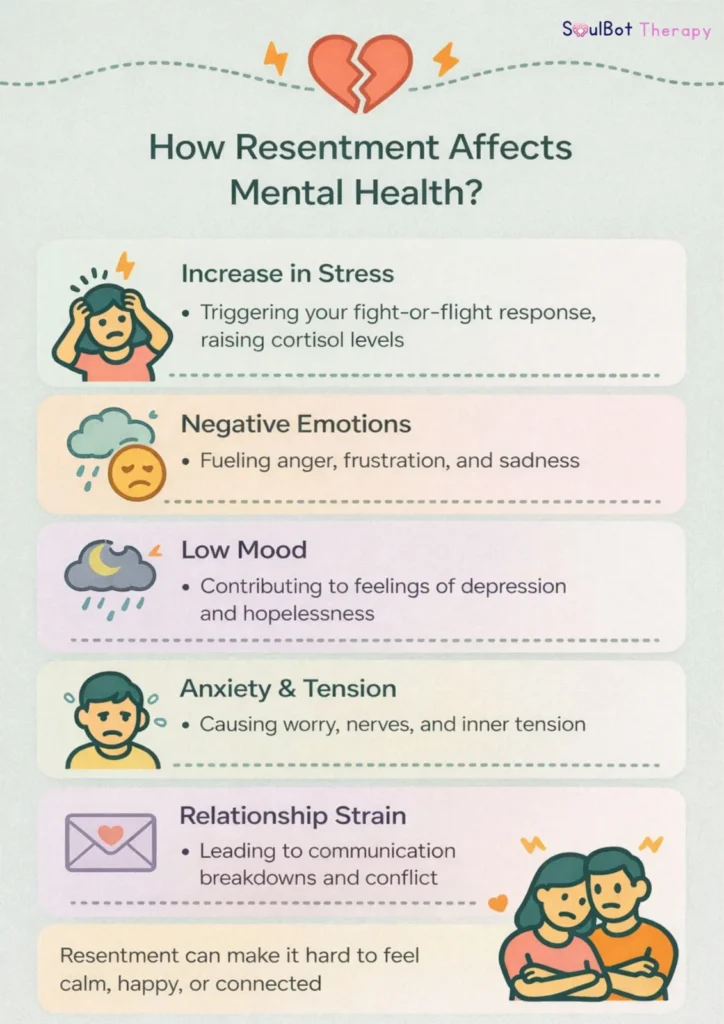
But unresolved resentment doesn’t dissolve; it settles into the body. Psychologically, suppressed resentment:
- A chronic stress
- Keeps the nervous system in fight-or-flight
- Erodes emotional safety
- Weakens intimacy
- Turns love into obligation
Healing starts when resentment is acknowledged, not ignored.
How to Overcome Resentment in Relationships (Step-by-Step)?
Overcoming resentment in relationships isn’t about blaming your partner or forcing forgiveness. It’s about restoring emotional truth. Here’s how to start.
1. Identify the Unmet Need Beneath the Resentment
Resentment always points to a need that wasn’t met.
Ask yourself:
- What did I need that I didn’t receive?
- What boundary did I ignore?
- What did I tolerate instead of express?
Clarity reduces bitterness.
2. Separate the Emotion From the Accusation
Resentment often turns into blame. Instead of:
“You never support me.”
Try:
“I feel unsupported when my needs aren’t acknowledged.” This shifts the conversation from attack to truth.
3. Regulate Yourself Before Communicating
Never address resentment when emotionally flooded.
Before talking:
- Slow your breathing
- Ground your body
- Write down what you want to say
- Get clear on why you’re hurt
Regulation creates safety for both of you.
4. Name the Resentment Clearly and Calmly
Use ownership language:
- “I’ve been feeling resentful because…”
- “I realised I’ve been holding this in…”
- “I don’t want this to turn into distance between us…”
Naming resentment gently prevents an emotional explosion later.
5. Create Repair, Not Just Release
Venting alone won’t fix resentment.
Repair requires:
- Acknowledgment
- Accountability
- Changed behavior
- Renegotiated boundaries
Resentment fades when trust is restored.
🧠SoulTip: Resentment decreases when emotional needs are named clearly, not when feelings are ignored or minimised.
How to Communicate Resentment Without Blaming?
Communication and resentment are deeply linked. To communicate without damaging the relationship:
- Avoid “always” and “never.”
- Speak from emotion, not accusation
- Focus on impact, not intent
- Listen as much as you speak
- Stay curious instead of defensive
Healthy communication doesn’t erase resentment; it transforms it.
How to Let Go of Resentment When the Other Person Doesn’t Change?
Sometimes, you communicate clearly… And nothing changes. In those cases, how to let go of resentment doesn’t mean self-abandonment.
It means:
- Accepting reality without denial
- Choosing boundaries over bitterness
- Deciding what you can and can’t tolerate
- Reclaiming emotional responsibility
Letting go of resentment sometimes means letting go of expectations or reevaluating the relationship itself.
When Resentment Signals a Deeper Relationship Issue?
Resentment may be a sign of:
- Chronic emotional neglect
- Emotional unavailability
- Power imbalance
- Misaligned values
- Repeated boundary violations
If resentment keeps returning despite honest effort, it may not be something to “fix” but something to listen to. Your emotions are data, not drama.
How SoulBot Helps You Process Relationship Resentment?
SoulBot supports you by helping you:
- Identify suppressed emotions
- Understand resentment patterns
- Clarify unmet needs
- Regulate emotional overload
- Prepare safe communication
- Explore attachment dynamics
- Reflect without judgment
🧠 Take the Emotional Availability Test to understand what may be emotionally blocked.💬 Chat with SoulBot to process resentment safely and honestly.Related Blogs
- Healthy Relationship Signs: Am I in a Healthy Relationship?
- What Questions to Ask a Guy Beyond Small Talk?
- What are types of Relationships and What They Mean?
- Why Some People Struggle to Open Up?
- Emotionally Available vs Emotionally Vulnerable: the Difference
- What are the Signs of Emotional Unavailability?