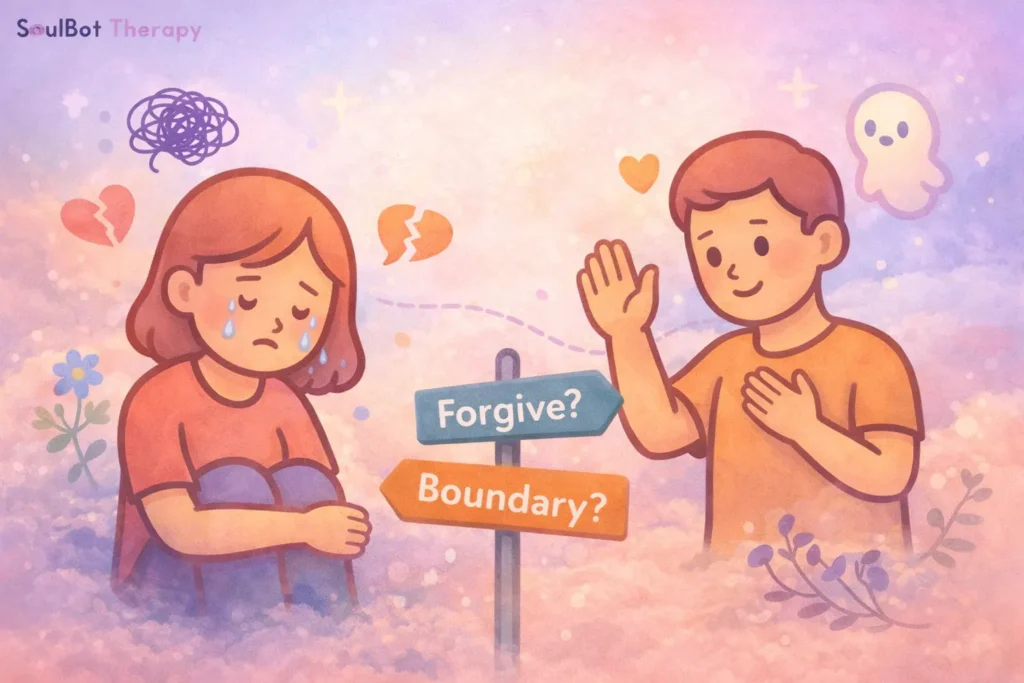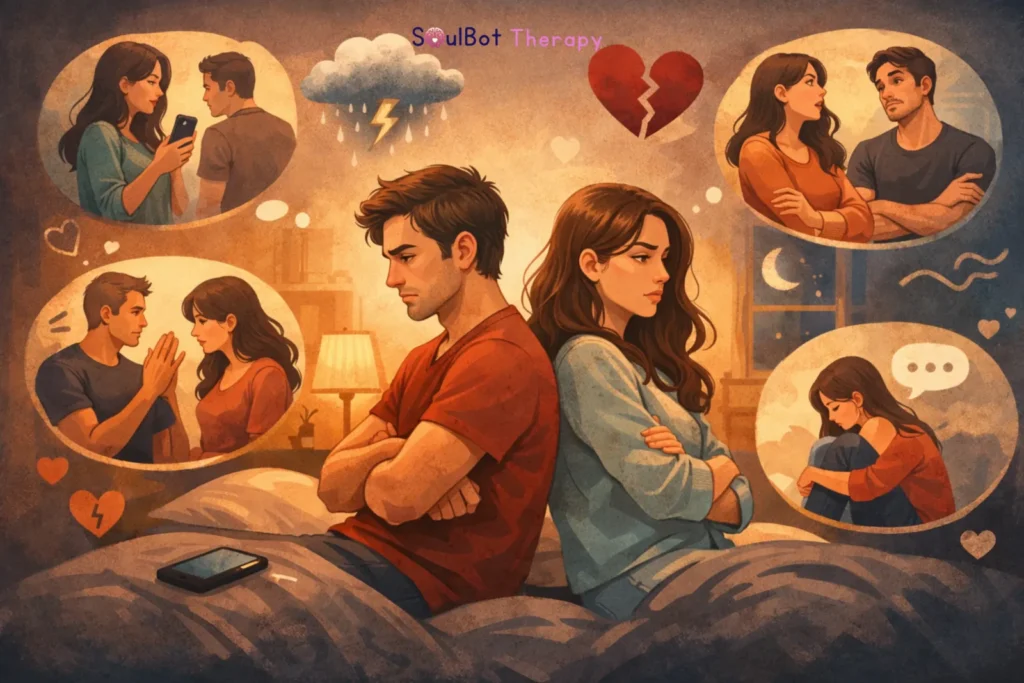
You block them. You miss them. They text. You feel relief. And suddenly, you’re back in it.
The anxious avoidant relationship isn’t just confusing, it’s chemically gripping. It feels intense, magnetic, impossible to detach from… even when it hurts.
That’s because this dynamic doesn’t just activate emotions.
It activates your nervous system.
👉 Take the Emotional Availability Test to understand your attachment responses.What Is an Anxious–Avoidant Relationship?
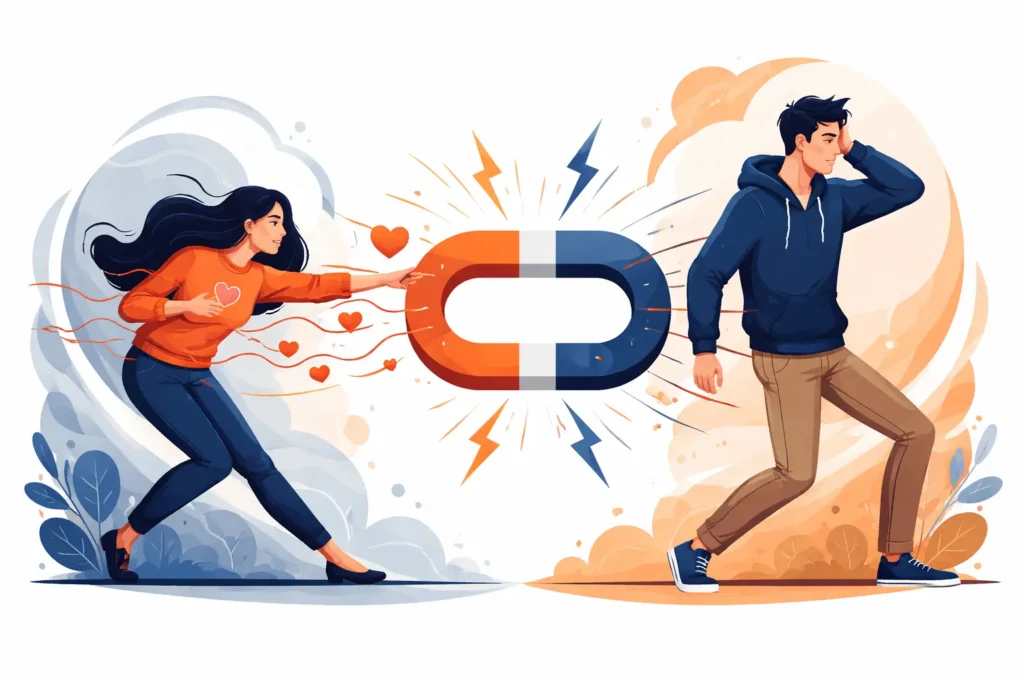
An anxious avoidant relationship happens when two attachment patterns collide:
- The anxious partner seeks closeness, reassurance, and emotional consistency.
- The avoidant partner seeks space, independence, and emotional self-protection.
The more the anxious partner moves closer, more the avoidant partner pulls back.
The more the avoidant withdraws, more the anxious partner panics and pursues.
This creates a push–pull loop that reinforces both people’s deepest fears:
- Anxious fear: “I’m going to be abandoned.”
- Avoidant fear: “I’m going to be overwhelmed.”
Neither is wrong. But together, they create instability.
Why This Dynamic Feels So Addictive (And Why It’s Trending Everywhere)?
If you’re seeing “anxious–avoidant trap” all over social media, there’s a reason. This dynamic feels addictive because of intermittent reinforcement.
Here’s what happens biologically:
- Emotional distance creates anxiety.
- Reconnection creates relief.
- Relief triggers dopamine.
- Your brain links pain → reward.
That emotional high after conflict?
It’s not proof of love. But your nervous system calms down after a threat. When the connection is unpredictable, your brain works harder for it. And what we work hardest for often feels the most valuable.
That’s how an anxious avoidant relationship becomes chemically gripping.
🧘♀️SoulFact: Intermittent reinforcement activates the same reward pathways linked to addictive behaviours.
Why Love Feels Intense But Not Safe?
In a secure relationship, the connection feels steady. But in an anxious avoidant relationship:
- Love feels urgent.
- Silence feels threatening.
- Calm feels suspicious.
- Distance feels unbearable.
Many people mistake anxiety for chemistry. Butterflies can be:
- excitement
- or hypervigilance
When emotional unpredictability is high, your body stays on alert. And intensity gets confused with intimacy.
💬 Feeling triggered after another hot–cold cycle?
Talk to Soululu for grounding tools, reflection prompts, and real-time support to calm your nervous system before reacting.
Signs You’re in the Anxious–Avoidant Trap
You may be stuck in this pattern if:
- Feel anxious when they pull away.
- You feel relief (not resolution) when they return.
- Arguments lead to temporary closeness.
- You overanalyse texts and tone.
- You feel addicted to their attention.
- Calm periods feel “boring.”
- You stay because of potential, not consistency.
An anxious avoidant relationship often feels like love with instability attached.
Why Logic Doesn’t Work Here
Friends tell you:
- “Just leave.”
- “You deserve better.”
- “This is unhealthy.”
And logically, you know that. But your body doesn’t. Attachment wounds live in the nervous system, not the intellect. Until regulation replaces panic, awareness alone won’t break the cycle.
🧘♀️SoulFact: Emotional unpredictability increases dopamine spikes more than a stable connection.
Tools That Support Emotional Regulation
(Supportive, not quick fixes)
If you’re caught in an anxious-avoidant relationship, stability begins with regulation.
Helpful tools include:
- A couple’s communication journal to slow reactive conversations.
- An emotional check-in notebook to track triggers and patterns.
Journaling helps interrupt automatic responses and identify emotional spikes before they escalate. But tools only work when used for awareness, not to control the other person.
🧘♀️SoulFact: Attachment styles formed in early life can significantly influence adult romantic dynamics, especially anxious–avoidant pairings that create instability and emotional reactivity.
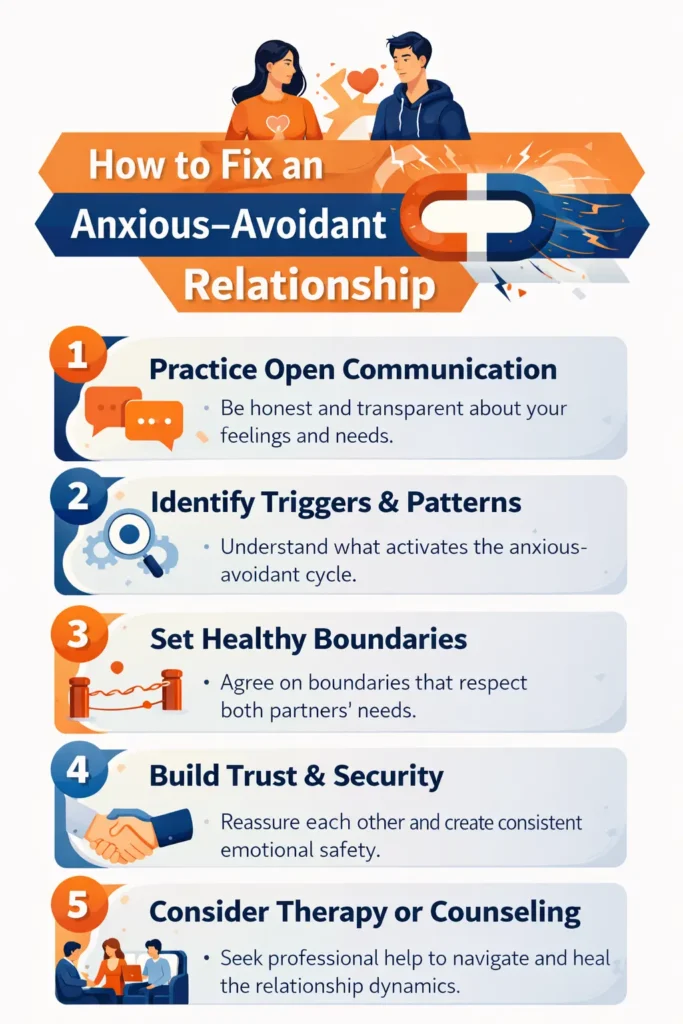
Can an Anxious–Avoidant Relationship Be Fixed?
This is the question everyone wants answered.
Yes, but only if:
- Both partners understand attachment patterns.
- Both are willing to tolerate discomfort.
- The anxious partner works on self-regulation.
- The avoidant partner works on emotional accessibility.
- Consistency replaces unpredictability.
If only one person is doing the work, the cycle usually continues. An anxious avoidant relationship shifts when safety becomes the goal, not intensity.
How to Start Breaking the Pattern?
- Learn your attachment style.
- Regulate before reaching out.
- Stop chasing relief, look for consistency.
- Notice whether calm feels unfamiliar.
- Choose emotional safety over emotional highs.
An Anxious Avoidant Relationship doesn’t mean you’re broken
It means your nervous system learned love through unpredictability and now confuses intensity with safety.
- The highs feel powerful.
- The relief feels real.
- But emotional stability shouldn’t feel rare or earned.
A healthy connection isn’t dramatic. It’s consistent.
When you understand why an anxious avoidant relationship feels addictive, you stop blaming yourself for staying and start building the regulation needed to choose differently.
🧠 Not sure why this dynamic feels so hard to leave?
Chat with Soululu to explore your attachment style and uncover the emotional patterns behind your anxious avoidant relationship.