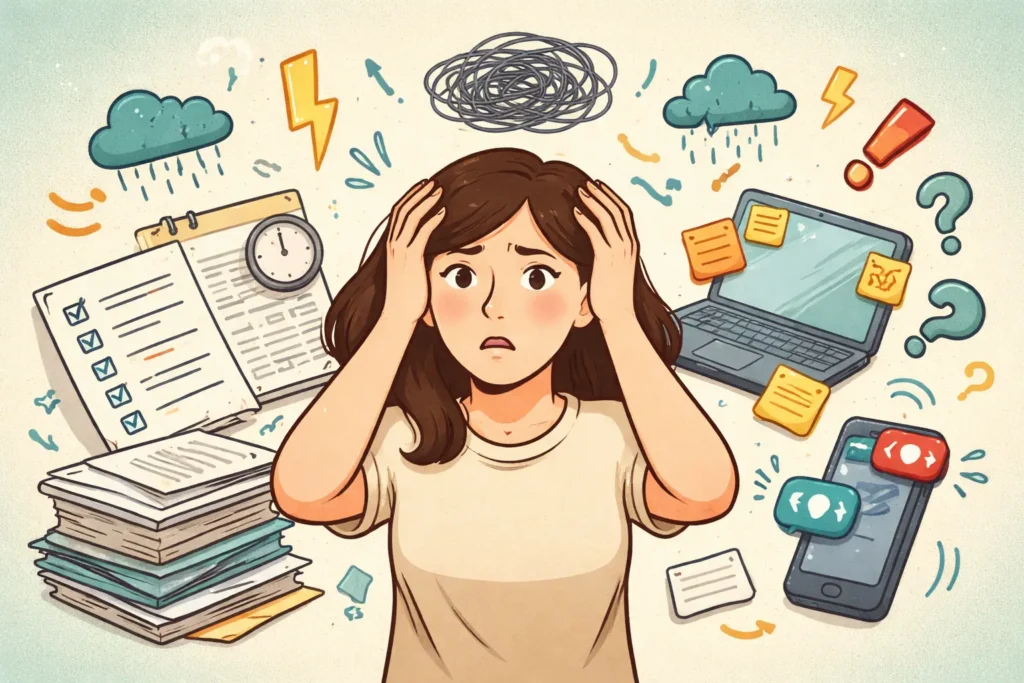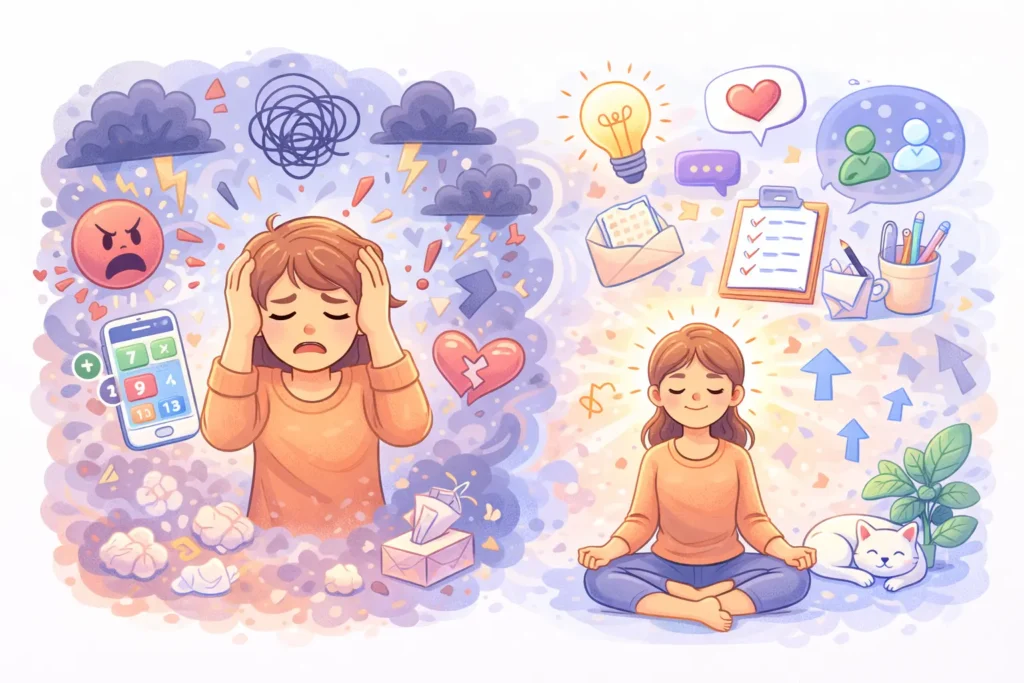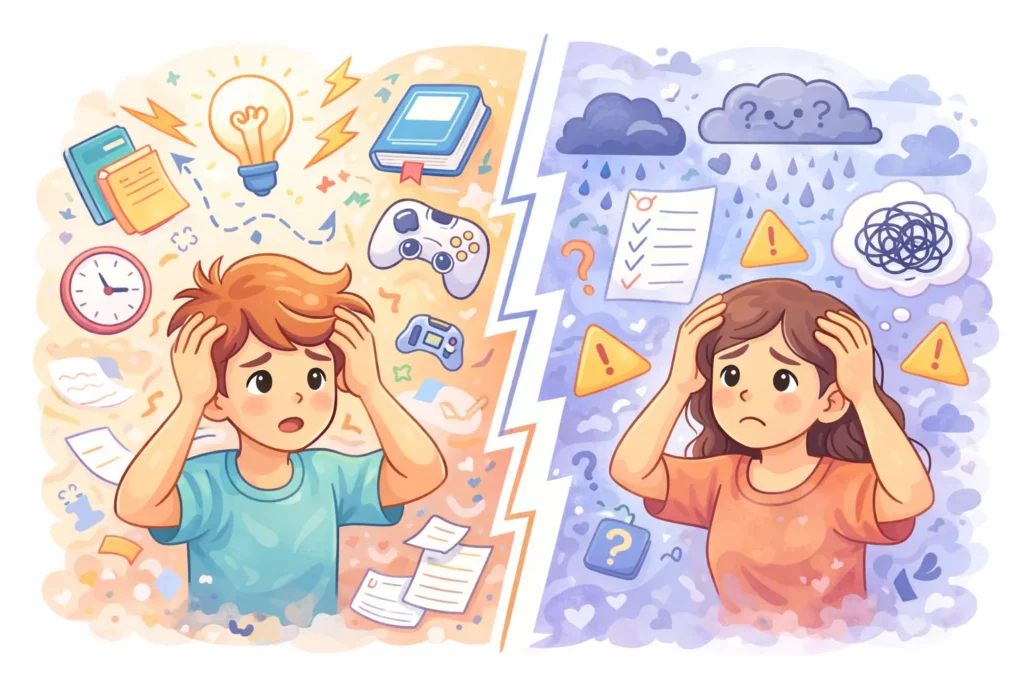

If you’ve ever felt confused, drained, or like you’re “losing yourself” in a relationship…
You might have come across the term narcissistic abuse.
And naturally, the first question that comes up is:
👉 What is narcissistic abuse, really?
This isn’t just about difficult relationships.
Narcissism is a consistent pattern of emotional manipulation that undermines your self-worth, mental health, and perception of reality.
In this guide, we’ll break down:
- What narcissistic abuse actually means
- The real signs to watch for
- Its emotional and psychological effects
- And how recovery actually begins
What Is Narcissistic Abuse?
Narcissism is a pattern where someone uses manipulation and control to destabilize another person emotionally and psychologically.
It’s often linked to individuals with strong narcissistic traits, but you don’t need a diagnosis.
Common patterns include:
- Gaslighting (making you doubt your reality)
- Emotional manipulation
- Control and dominance
- Lack of empathy
- Cycles of idealization and devaluation
At its core, narcissistic abuse slowly shifts your focus away from yourself until you begin questioning your own thoughts, feelings, and identity.
Signs of Narcissistic Abuse
Recognizing this abuse isn’t always easy especially when you’re inside it.
Here are some common signs:
1. You Constantly Doubt Yourself
You second-guess your decisions, feelings, and even memories.
2. You Feel Emotionally Drained
Interactions leave you exhausted rather than supported.
3. You’re Blamed for Everything
Even when something isn’t your fault, you’re made to feel responsible.
4. You Feel Confused After Conversations
You walk away thinking:
“What just happened?”
5. You Experience Hot-and-Cold Behavior
They switch between:
- Affection and distance
- Praise and criticism
6. Your Needs Are Ignored or Minimized
Your emotions feel “too much” or “invalid.”
💜 SoulTip: Healing starts when you stop questioning yourself. Recovery begins the moment you shift from: “Was it really that bad?” To: “It affected me, and that matters.”
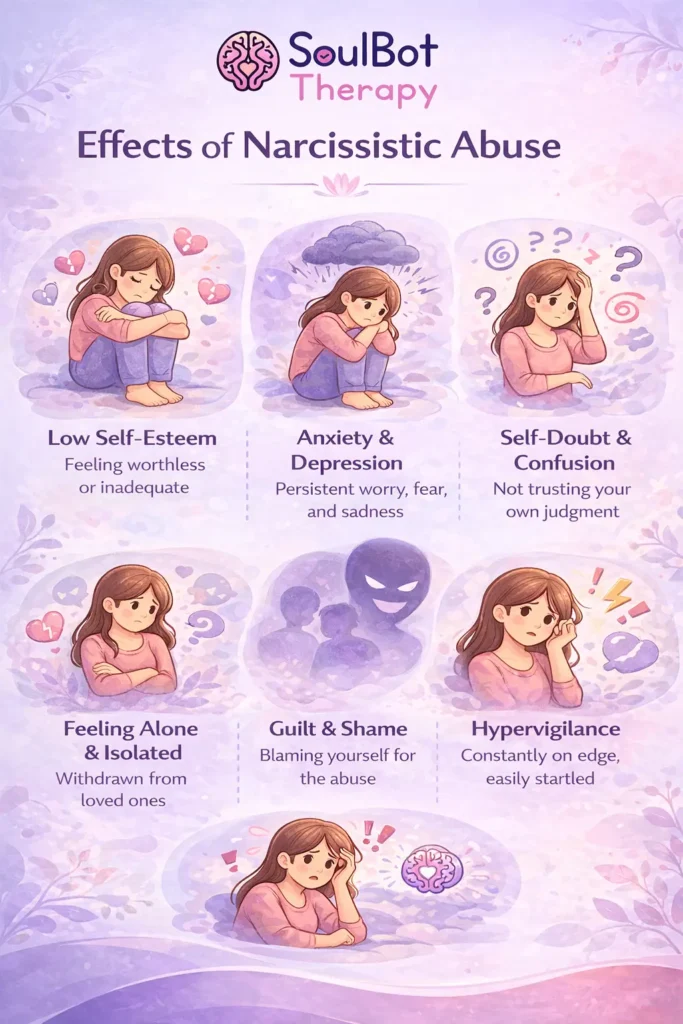
Effects of Narcissistic Abuse
Understanding how the abuse affects you helps clarify its serious impact. It doesn’t just impact your relationship it changes how you view yourself.
Emotional Effects:
- Anxiety and constant stress
- Low self-esteem
- Emotional confusion
- Feeling “not enough.”
Psychological Effects:
- Self-doubt
- Overthinking
- Difficulty trusting others
- Emotional dependency
Behavioral Effects:
- People-pleasing
- Avoiding conflict
- Losing your sense of identity
Why Narcissistic Abuse Is So Hard to Recognize?
One of the reasons people search
👉 What is narcissistic abuse
…is because it doesn’t always look obvious.
It often follows a cycle:
- Love Bombing → intense attention and validation
- Devaluation → criticism, distance, confusion
- Discard or Control → withdrawal or manipulation.
This cycle creates emotional attachment even when the relationship is unhealthy.
How to Start Recovering from Narcissistic Abuse?
Recovery from this begins with recognizing what happened and its effects.
1. Acknowledge What You Experienced
Name it. Don’t minimize it.
2. Rebuild Your Self-Trust
Start trusting your thoughts and feelings again.
3. Set Clear Boundaries
Distance, emotional or physical, is often necessary.
4. Express What You Suppressed
Journaling or talking helps release emotional buildup.
5. Focus on Emotional Safety
Choose environments and people where you feel respected.
💜 SoulTip: Confusion is not your fault, it’s part of the pattern. Narcissistic abuse often creates confusion intentionally. So if you feel lost or unsure…
👉 That doesn’t mean you’re weak
👉 It means you were trying to make sense of something inconsistent
If you’re looking for extra support, here are some tools and resources:
These resources support awareness and healing. They are not a substitute for therapy.
In a Nutshell
If you’ve been asking what narcissistic abuse is, here’s the truth: It isn’t just conflict it involves emotional manipulation and control. It gradually undermines your identity, confidence, and clarity. Most importantly, recovery is possible.
You’re not “too sensitive.”
You were responding to something that wasn’t healthy.
🔗 Take the Emotional Availability Test, It can help you understand:
- Your emotional patterns
- Relationship behaviors
- Where healing may be needed