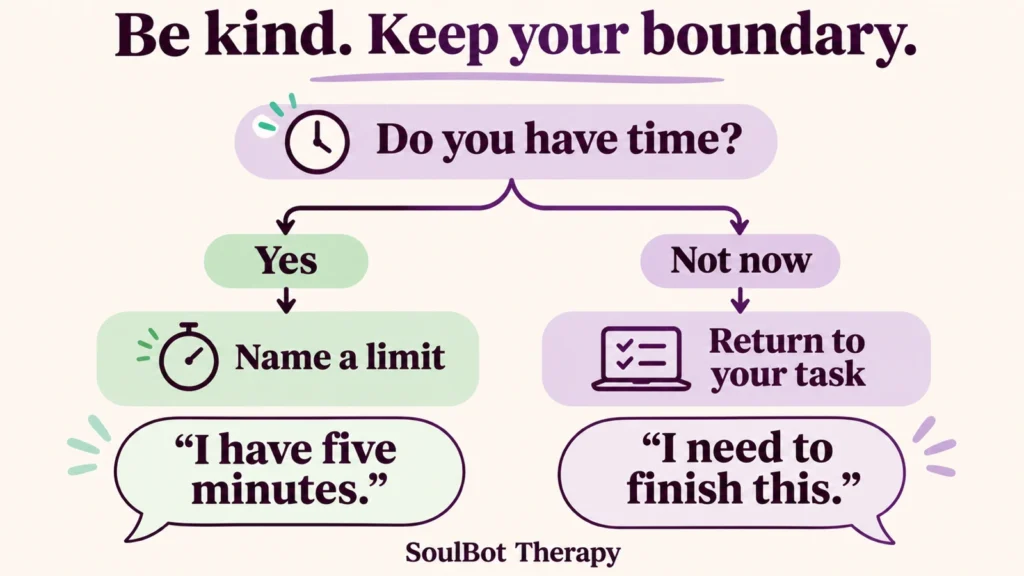
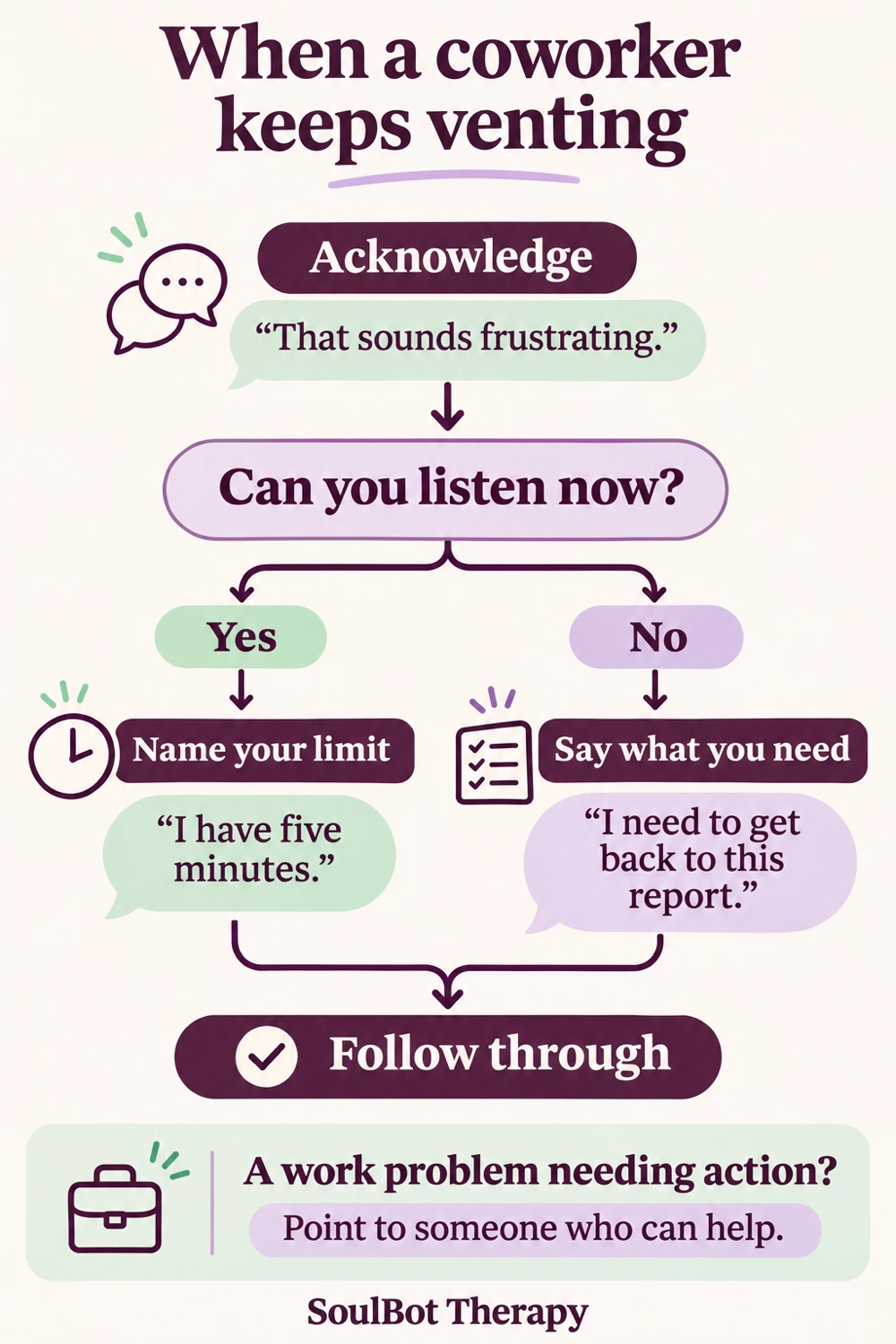
A coworker stops by to tell you about the same frustration again. You want to be kind, and you also need to get back to work. Try acknowledging one thing they said, telling them how much time you have, and following through when that time is up. If something at work needs to change, help point them to the person who can act on it.
Start with a brief answer you can follow through on
Keep the acknowledgment specific. At your desk you might say “That sounds frustrating. I’m in the middle of a report and need to get back to it.” If you genuinely have time later, offer a time you can keep. “I have five minutes when I take my break at three, if you want to talk then.”
The Mental Health Foundation’s workplace guide describes active listening as paying attention and checking you’ve understood. If you choose to listen, you can reflect back what you heard in a sentence. You can also say you need to stop when your time is up.
Use the same limit when the pattern repeats
If the conversation comes back to your desk later, restate the limit and resume your task. “I hear you. I need to finish this now. I’m going to get back to the report.” If you offered five minutes, end the conversation when the five minutes are up. A clear repeat is easier to follow than a new reason each time.
In chat you could reply “I saw your message. I’m on the queue until two and can’t talk about this now. If you need someone to change tomorrow’s assignments, the shift lead can help with that.” Use your normal reply window for routine personal messages. Keep the channels you use for real-time work available as your role requires.
Point an actionable concern to the right person
If the same issue comes up several times, ask “Do you want to talk it through for a minute, or is there something you want changed?” If they want a change, name the person or team who can make it. “If it’s about the rota, could you bring one example to the person who sets it?” You can offer to help them phrase the request if you have time.
The UK Health and Safety Executive’s Support standard encourages workplaces to make sure staff know what support is available and how to access it. If someone raises a safety or conduct concern, follow the relevant reporting route. Keep details to the people who need them.
If the interruptions keep affecting your work after you’ve been clear, speak privately with an appropriate lead about the pattern and what would help. Focus on what happens and what you need for your work. The SoulBot guide to putting everyday boundaries into words has additional examples for conversations outside this specific situation.