

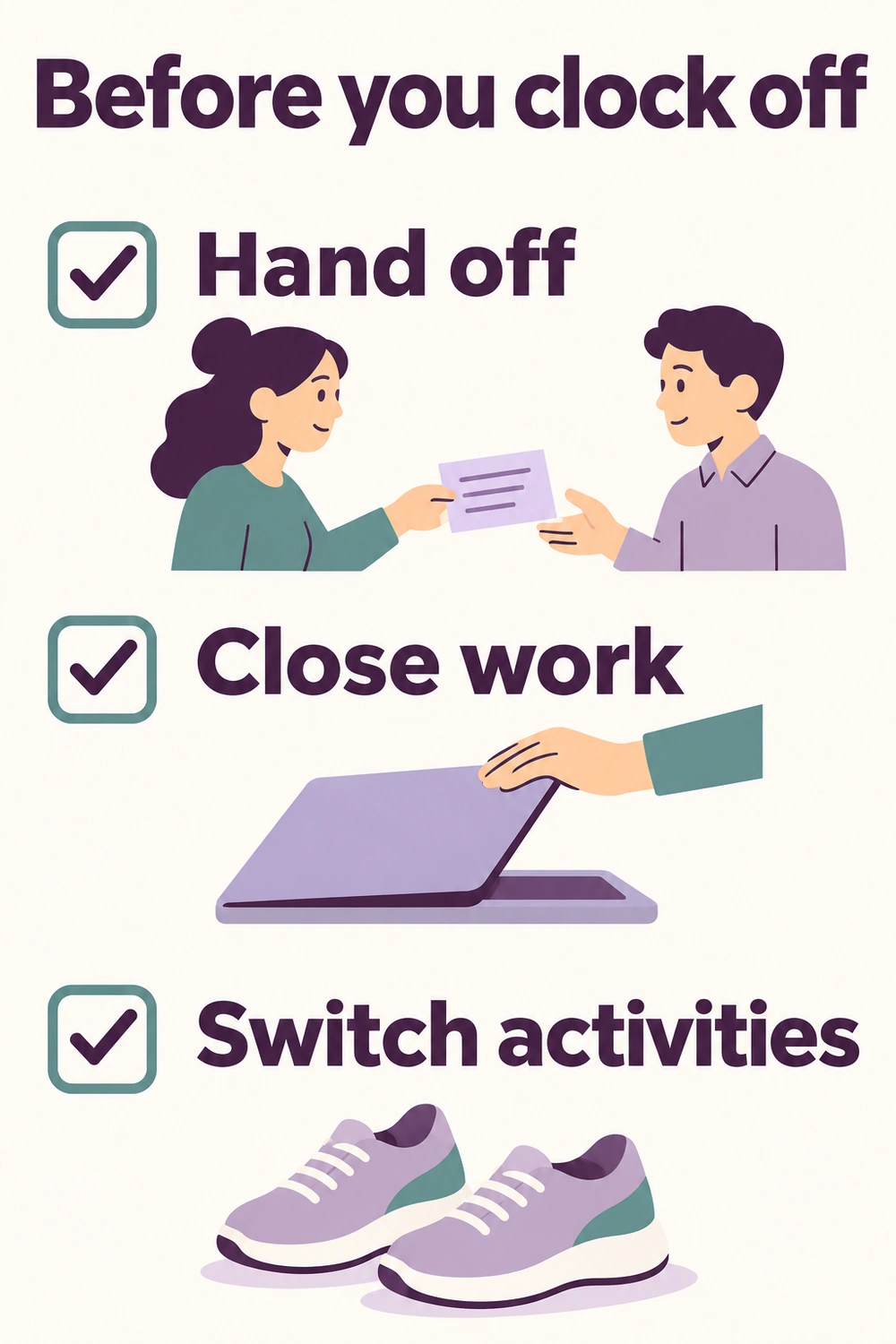
You’ve signed off, but you’re still rewriting the last message in your head. It’s easier to leave unfinished work alone when you know where it will pick up. Before you clock off, write down what remains, who owns it and when it needs attention. Then close the tools you’re done using and move into a different activity.
Give unfinished work somewhere to go
Put your note where the next person will look for it, even if that person is you tomorrow. Use the team’s normal channel for anything someone needs during the next shift. A short note can cover three things.
- What remains. Name the task, what is already done and the next action.
- Who owns it. Name who has agreed to take it, or mark it for yourself.
- When it needs attention. Give the next check-in or deadline. Flag anything that needs a response before you’re back.
If you work from home, that might look like “The draft is ready for comments. The pricing table still needs the approved figures. Ravi is sending those tomorrow, and I’ll add them when I log on at nine.” Put the note on the task, send one message to the people who need it, and close the project.
For a shift example, say you’ve counted the deliveries but one label is missing. Log which package needs a new label, tell the colleague taking over, and check they have the details. Follow the site’s handover procedure where there is one. The UK Health and Safety Executive’s shift handover guidance focuses on passing the right task information between people and checking what was received.
Close your work tools and pick a first activity
Sign out of the apps you’re finished with and put your laptop or badge where it will be ready next time. Then do something that fits the next part of your day. Change your shirt, walk around the block, put the kettle on, or listen to something on the way home. If you come home to family or care duties, the transition can be as brief as putting your bag down and changing clothes.
The NHS guidance on working from home encourages setting a boundary with work at the end of the day. The American Psychological Association’s work-stress guidance gives examples of limiting when you check email or answer calls. Adapt those boundaries to the hours and contact arrangements your team has agreed.
Agree how urgent work should reach you
If you’re on call, keep the agreed contact method available and ask which messages belong there. “I’m on call until ten. Please ring the duty number for a site issue. Routine questions can go in the task thread, and I’ll pick them up when I’m back.” If someone else is on duty, confirm what you’ve passed to them and where the team should reach them.
If ordinary requests regularly arrive after you’ve finished, collect one or two recent examples and ask how they should be handled. “The last two Thursday requests came in after my shift. Which ones need an evening response, and who should handle them when I’m off?” Agree how the team will tell an urgent request from one that can wait.
If a detail comes back to you at home, ask whether it changes the next action. Add the detail to your note if it does. For thoughts that show up after you’ve gone to bed, see the guide to a busy mind at night. If the harder issue is ongoing exhaustion across shifts, the workplace burnout guide addresses that wider pattern.