

Your manager says your handover report “needs more detail,” and you’re not sure which part missed the mark. You can respond to negative feedback by asking for a specific example, checking what a better result would look like, and agreeing on one change to try. If you need time to think, give a time you can come back to the conversation.
Ask for the example you can act on
Repeat the point in your own words and ask for one recent instance. “I heard that the team needed more detail from my handover. Can you point me to the entry that left someone without what they needed?” Once you see the entry, ask what information would have helped the next person act.
Say the feedback turns out to be about two delivery delays recorded without next actions. You could reply “I’ll add the person following up and the time they’ll check back for each open delay. Can we look at Friday’s report together and see if that’s enough?” Confirm where the report should go and when it will be reviewed.
BCIT’s receiving-feedback guidance recommends restating what you heard, asking for an example if the comment is unclear, and suggesting a follow-up if you disagree or need time.
Choose a response for how the feedback was given
- If the change is clear. Restate it and check how you’ll know it worked. “You’d like a named owner on each open item. Can we review the next two reports on Monday?”
- If the comment is vague. Ask for something you can see or compare. “Which section of the document needs more detail? Is there a recent example that gets it right?”
- If you need to think or disagree. Ask for a specific follow-up. “I’d like to check the handover record before I answer. Could we talk after lunch tomorrow?” Bring the dates, instructions or examples that matter.
- If the comment turns personal. Ask to come back to the work. “I can discuss changes to the report. Can we look at the entry you want me to revise?” If the behavior repeats, write down what was said and use a suitable support route at work.
Write a short note before you leave the conversation behind
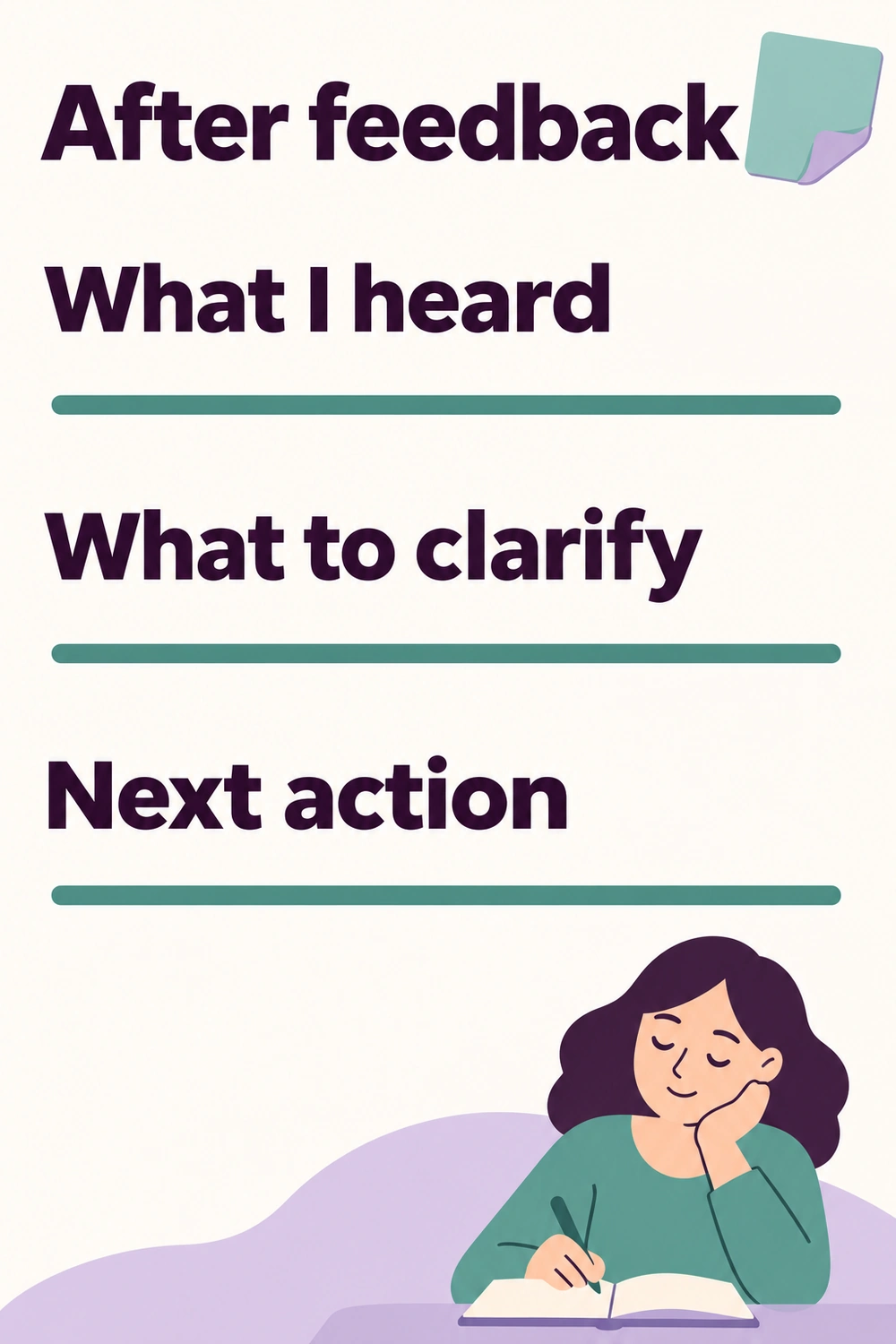
Record what you heard, what still needs clarification, and the next action. For the report example, that could be “Dennis couldn’t tell who was chasing two delays. Add an owner and next check-in on each line. Review Friday’s report on Monday.” If you agreed to look up instructions or a date, note who will get it and when.
If you’re sending a recap, keep it factual. “I’ll add a named owner and a next check-in time to open items from Friday. We’ll review one together on Monday.” A concrete record gives both people something to check next time.
If your mind keeps going back to a phrase later, read the agreed action on your note and return to what you were doing. If you want more on repeated thought loops, see the SoulBot guide to overthinking.