
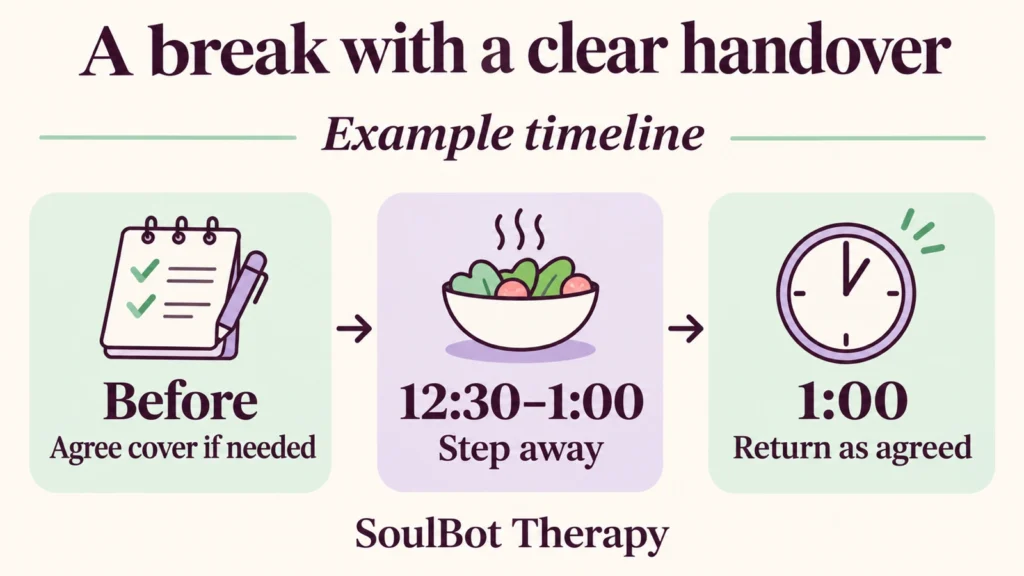
Your lunch is ready, but the team chat keeps updating and you’re waiting for a quiet moment to step away. If you feel guilty taking an agreed lunch break, decide when you’ll return, confirm who is covering anything urgent, and use the team’s usual way to show you’re away. That gives your colleagues a way to keep working while you eat.
Check what the team needs while you’re away
A break can be easy to plan if nothing needs immediate attention. Check what you’re responsible for during the window. A customer queue, reception desk or service station might need a named person to cover it. A report you’re writing can usually stay where you left it until you’re back. Follow the way your team normally coordinates meal breaks.
If coverage is needed, ask before you leave and say which item matters. “Can you cover reception from 12:30 to one? The only visitor booked is Lee at 12:45. The delivery forms are in the top tray. I’ll check the desk when I’m back.” If your colleague is busy too, ask the lead who can cover and agree when each person can step away.
Set a return time and step away from your station
- Confirm cover. Tell the covering person what matters during the break and where to find it.
- Set a return time. Use a team status, calendar entry or quick handover. Name the covering channel if your team uses one.
- Step away. Eat somewhere you can leave work notifications alone, as your role and coverage allow. Return at the time you gave and check what happened while you were away.
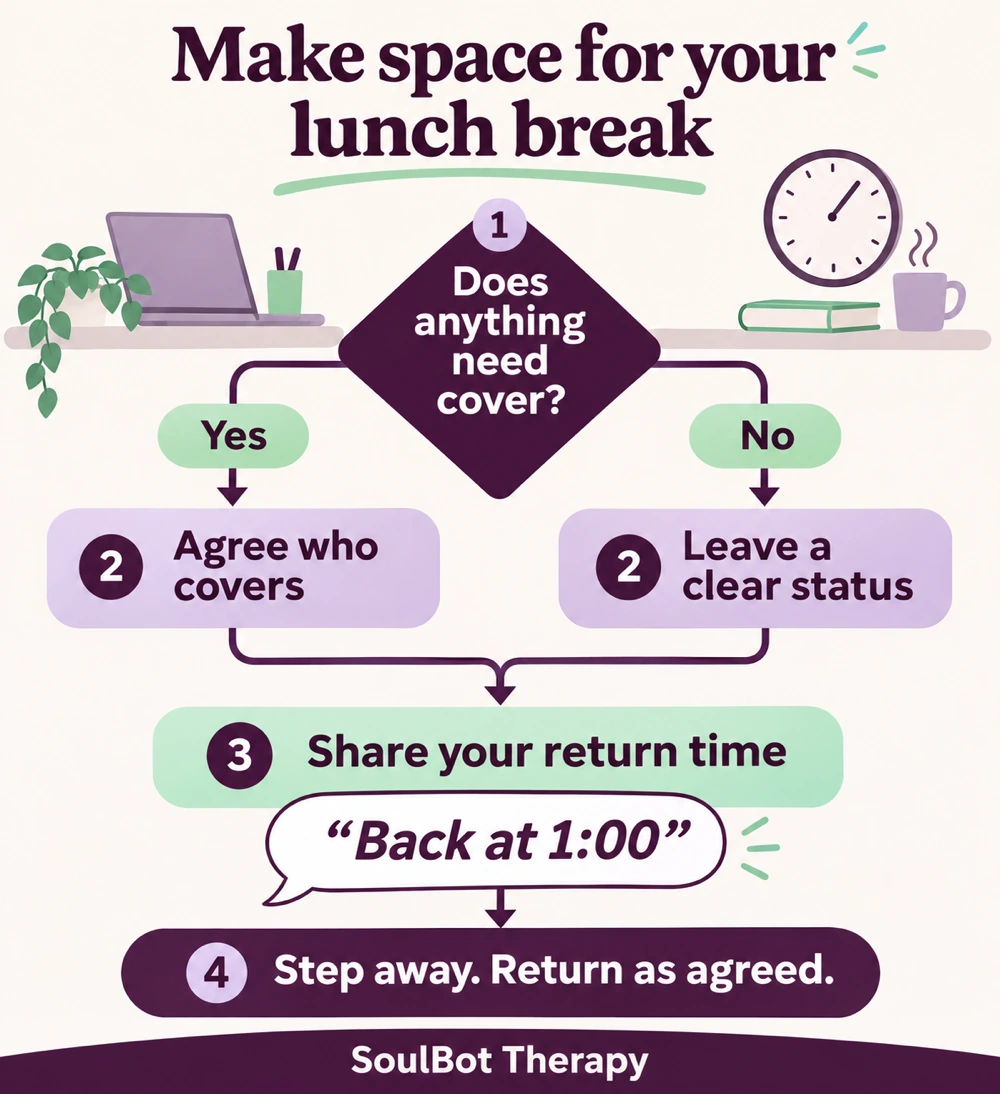
In an office, say “I’m taking lunch and will be back at one. Asha has agreed to meet the courier at reception if they arrive before then.” If you’re remote, a status like “At lunch until 1:15. Use the support queue for time-sensitive requests” can do the same job. A private message to a named cover may be more useful than a team-wide note if only one person needs the details.
The NHS working-from-home guide encourages taking lunch and regular time away from the screen. The practical choice here is where you can eat without reopening a work task. If people start asking questions as you walk out, you can say “I’ll get back to you at one” and keep going.
Find out why breaks keep falling through
If several agreed breaks have been delayed or missed, write down what was happening at the time. Ask the person who can adjust coverage or workload for one specific change. The NHS work-stress guide suggests asking a manager for help with priorities or workload when an issue recurs.
Try “I’ve been the only person on the desk between noon and one this week. Can we agree who covers from 12:30?” If the break window depends on a rush easing up, ask when to check back and who should make the call. For ideas that fit other moments of a busy day, explore SoulBot’s guide to everyday coping habits.