

You’re halfway through your evening and already thinking about the next shift. If the Sunday scaries have started, give yourself one short window to decide what would help. Put one thing you can do now on a list, name the first task you’ll do at work, and save any recurring concern for a conversation with someone who can change it.
Give preparation a clear end
Pick a stopping point before you begin. You might set aside ten minutes after dinner or finish as soon as you’ve written down your first task. Use a sheet of paper or the notes app you already have open. Choose a window that leaves room for something you wanted to do on your time off.
The NHS guide to tackling worries suggests setting a short time to write worries down and separating problems you can act on from ones you can’t do anything about at the moment. Here, use that idea to decide what belongs before the shift and what belongs at work. If writing a list leads straight into checking work messages, put the list on paper or use a separate note.
Sort the next shift into three decisions
- One thing tonight. Choose a small action that would make the start easier, such as finding your badge or checking your transport plans.
- First task next shift. Name the first work action you can take during your normal hours. Add where you’ll begin if that helps.
- What to raise at work. Record the recurring issue, when it happens, and who can help decide what should change.
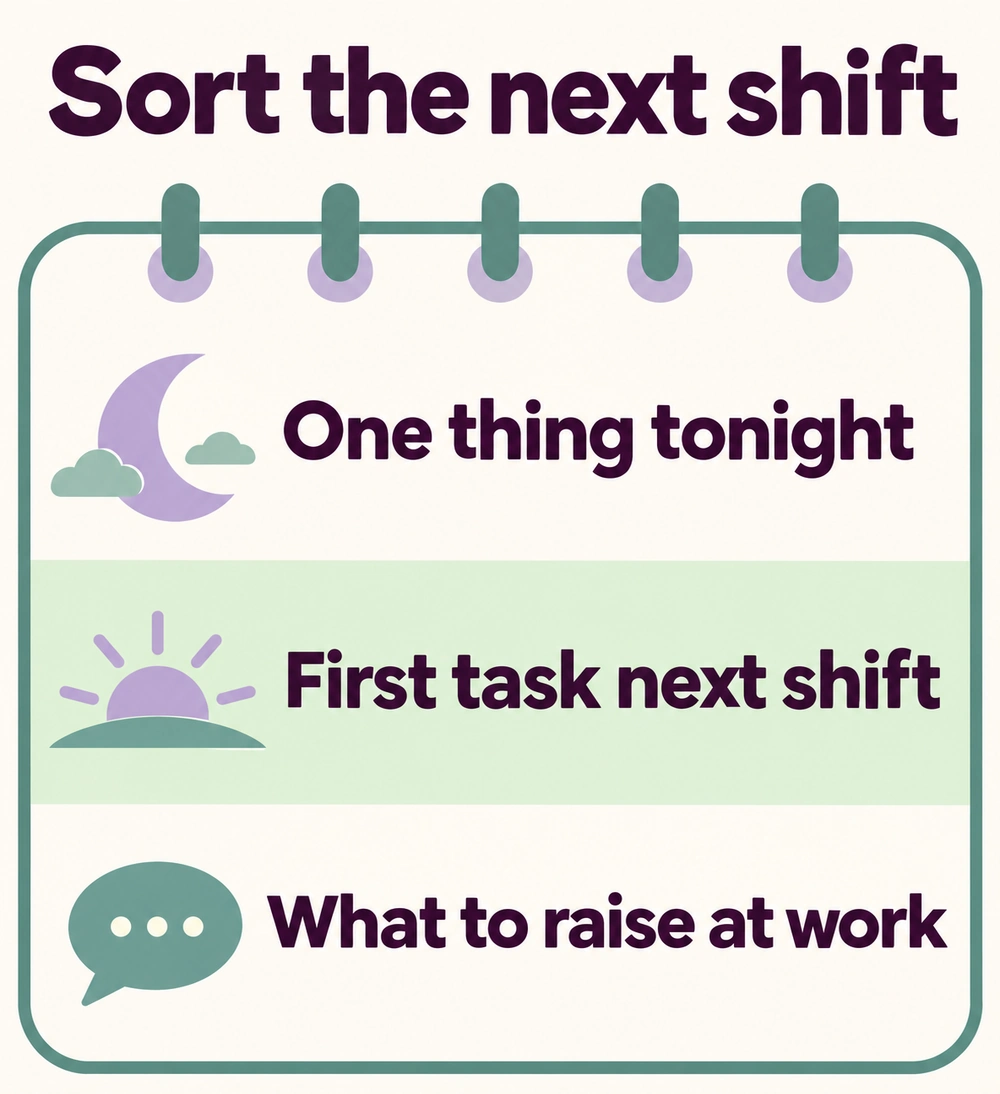
For example, your first shift is Wednesday and you’re thinking about a busy opening. Tonight, check how you’re getting in. When the shift starts, read the handover and confirm who is covering opening tasks. If two tasks were left without an owner three openings in a row, ask the lead who should take each one. Close the note when you have those three answers.
Bring recurring work problems to the person who can help
If the worry is about short staffing, unclear priorities or a repeated interaction, bring one concrete example to a manager, team lead or another suitable contact. The NHS work-related stress guide describes asking for support and discussing changes to priorities or workload.
Try “For the last two openings, deliveries and customer calls both came to me at the same time. Could we agree who takes calls while I check deliveries?” If you don’t know who can help, ask where that question should go. You can write down the conversation you need and have it when you’re at work.
Go back to something you wanted to do
At the end of your window, close the note and return to something you had planned, even if the feeling hasn’t lifted. If the same thought returns, check whether you now have information that changes an action. If the plan still stands, it can wait in the note. When the thoughts come mainly once you’re in bed, try the guide to bedtime overthinking.