You don’t grow out of ADHD; you grow with it.
For many, ADHD isn’t a childhood phase that ends with school. It’s a lifelong rhythm of distractions, hyperfocus, emotional intensity, and guilt for “not doing enough.”
But here’s the truth: adult ADHD doesn’t mean you’re lazy or undisciplined; it means your brain processes the world differently.
And if you haven’t yet, 🧠 try the ADHD Symptom Test to understand your focus profile and emotional patterns before starting new routines.Let’s unpack what ADHD really looks like in adults, how it affects emotions and relationships, and how you can manage it with practical, science-backed strategies.
What Is Adult ADHD?
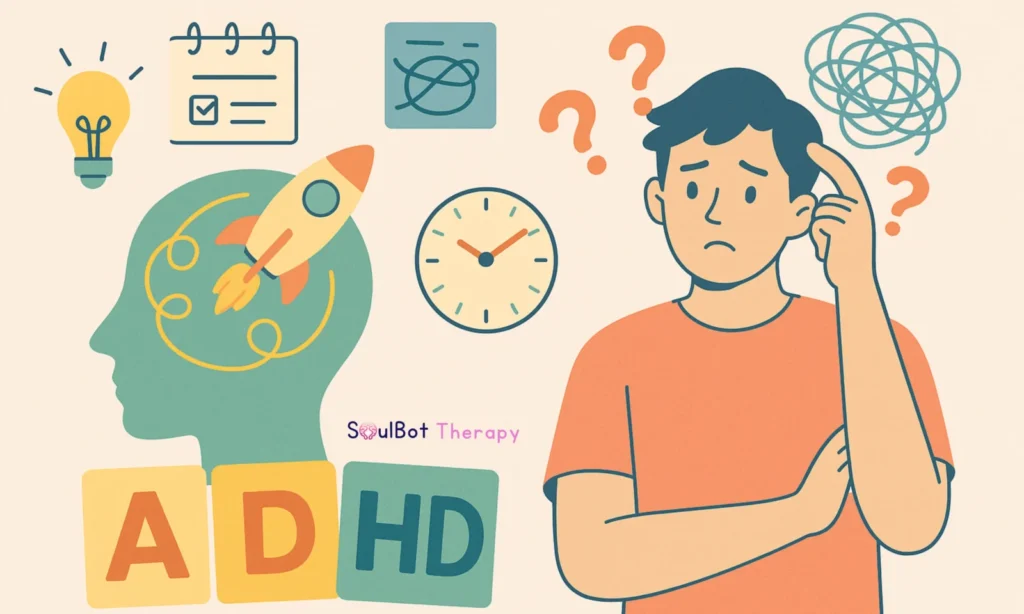
Adult ADHD (Attention Deficit Hyperactivity Disorder) is a neurodevelopmental condition that affects attention, impulse control, and emotional regulation. While it’s often diagnosed in childhood, many adults go undiagnosed until much later in life, often after years of struggling with focus, motivation, or organization.
ADHD in adults isn’t about hyperactivity alone. It’s about living in a brain that’s wired for interest, not routine. That means you can hyperfocus on one project for hours but forget to reply to an important message five minutes later.
🧠SoulFact: According to Harvard Health, around 4.4% of adults live with ADHD, but many never realize it because symptoms can look like anxiety, burnout, or depression.
What Are the Signs of Adult ADHD?
The signs of adult ADHD often look different from what most people expect. You may not be bouncing off the walls, but your mind probably is. Common patterns include:
- Constantly losing track of time (a.k.a. “time blindness”)
- Forgetting appointments or details, even things you care about
- Emotional impulsivity: reacting fast, regretting later
- Struggling to start tasks until the last possible minute
- Feeling mentally “cluttered” even when you’re doing your best
- Periods of hyperfocus, total immersion, followed by burnout
These patterns aren’t character flaws; they’re neurological traits. Recognizing them is the first step toward managing ADHD effectively.
💬 Chat with SoulBot, your AI mental wellness companion for ADHD-friendly reminders, journaling, and emotional regulation.How Does ADHD Look Different in Women?
For decades, ADHD was seen as a “boy’s problem.” That’s why countless women grow up misdiagnosed with anxiety or depression when they actually have ADHD symptoms.
Women often internalize their symptoms, appearing responsible on the outside while struggling silently inside. Perfectionism, people-pleasing, and overthinking become survival mechanisms.
Signs of ADHD in women often include:
- Chronic overwhelm or burnout from trying to “do it all”
- Emotional masking, hiding stress with smiles or overachievement
- Difficulty relaxing or turning off thoughts at night
- Feeling guilt or shame for struggling with focus
ADHD in women tends to be quieter, not because it’s less intense, but because it’s been hidden behind emotional labor for too long.

ADHD and Relationships: Why It Feels Complicated
If you have ADHD, love can feel like both home and chaos.
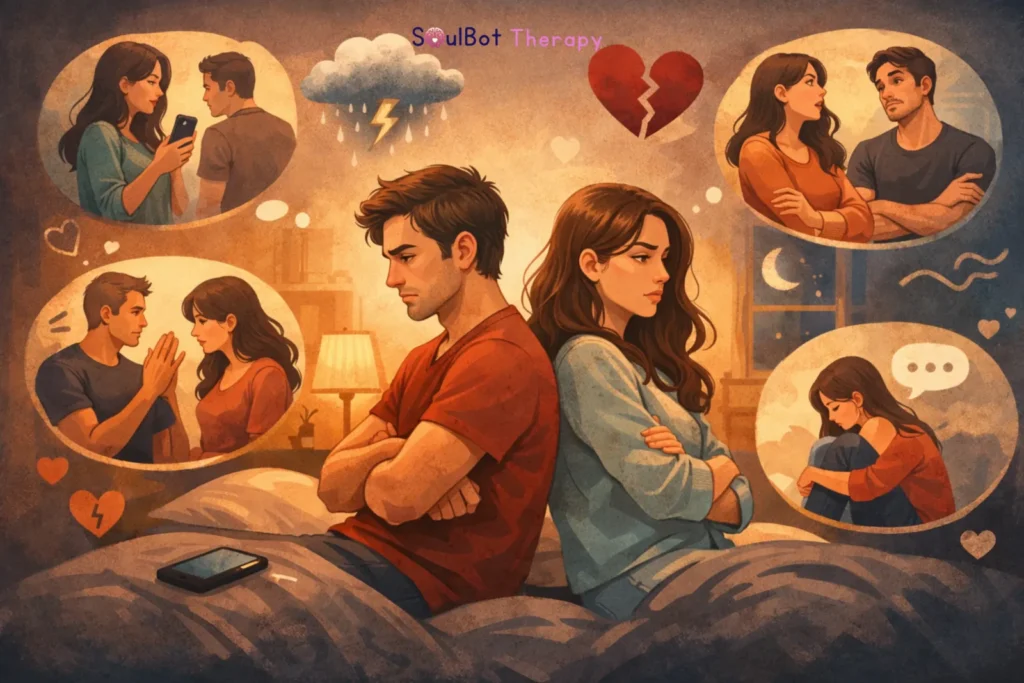
You might forget plans, interrupt during arguments, or lose track of time, and that can leave partners feeling ignored or unimportant.
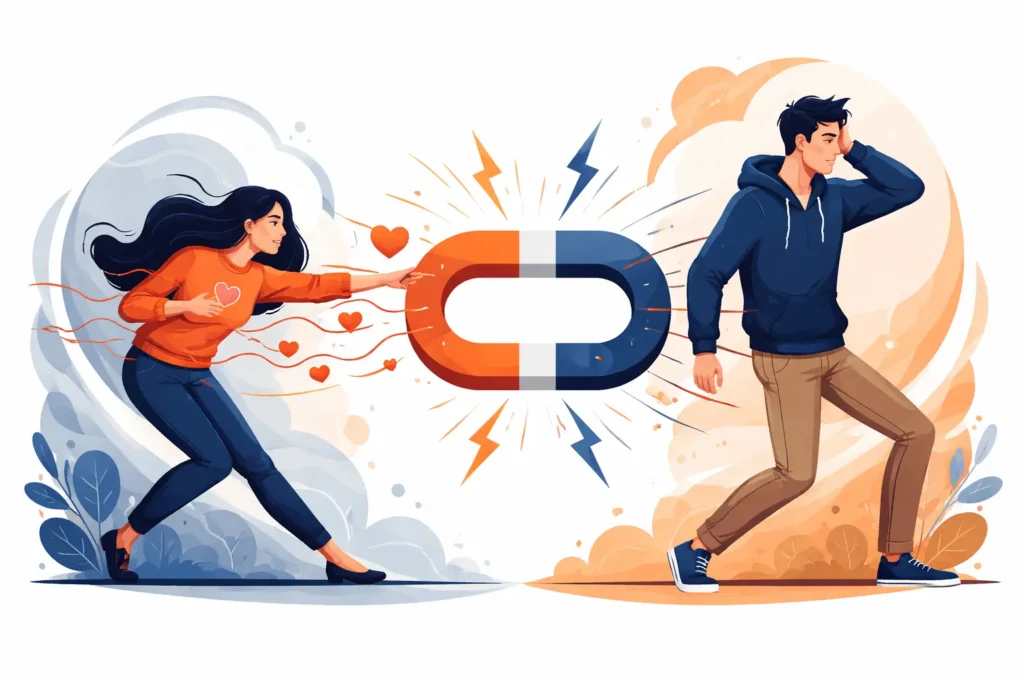
On the flip side, people with ADHD often feel misunderstood, criticized, or overly sensitive in relationships. This cycle creates frustration on both sides.
ADHD and relationships thrive when communication becomes compassionate instead of corrective. Setting reminders, using shared calendars, and expressing emotions early (not after burnout) can build a stronger connection and understanding.
How to Manage Adult ADHD Naturally?
You don’t have to rely only on medication to manage ADHD, though for some, it’s essential. If you prefer a holistic approach, here’s what research supports for how to manage adult ADHD naturally:
- Movement: Daily physical activity boosts dopamine and serotonin, improving focus and mood.
- Mindfulness: Even 5 minutes of mindful breathing or journaling helps slow impulsive reactions.
- Structure: External systems (timers, planners, visual cues) make up for internal chaos.
- Nutrition: Protein-rich meals stabilize energy and attention.
- Sleep: Consistent bedtime is ADHD’s unsung hero; it resets mental clarity.
🧠 SoulFact: Harvard Health reports that daily exercise can enhance focus by 25%, while mindfulness practices improve emotion regulation in ADHD.
These aren’t quick fixes; they’re sustainable habits that make your brain feel supported, not scolded.
Adult ADHD Treatment Options That Work
Adult ADHD treatment options often blend lifestyle changes with therapy and, for some, medication. The best approach is personalized, not one-size-fits-all.
Options include:
- Cognitive Behavioral Therapy (CBT) helps manage impulsivity and negative thinking.
- Coaching or Accountability Systems: practical tools for time and energy management.
- Medication: stimulants or non-stimulants that balance neurotransmitters (under professional guidance).
- Digital tools like SoulBot: AI-based support for daily emotional tracking, reminders, and personalized focus strategies.
Remember, treatment isn’t about “fixing” yourself, it’s about creating structure around how your mind naturally works.
How SoulBot Supports Adults Living With ADHD
SoulBot is your calm space in a noisy world.
With daily focus prompts, emotion check-ins, and mindfulness reminders, SoulBot helps you track patterns without pressure so you can build habits that actually stick.
🧠 Take SoulBot’s ADHD Symptom Test to discover your focus type and emotional triggers before building new habits.💬 Chat with SoulBot for ADHD-friendly journaling, emotional regulation tools, and gentle reminders that guide, not overwhelm.