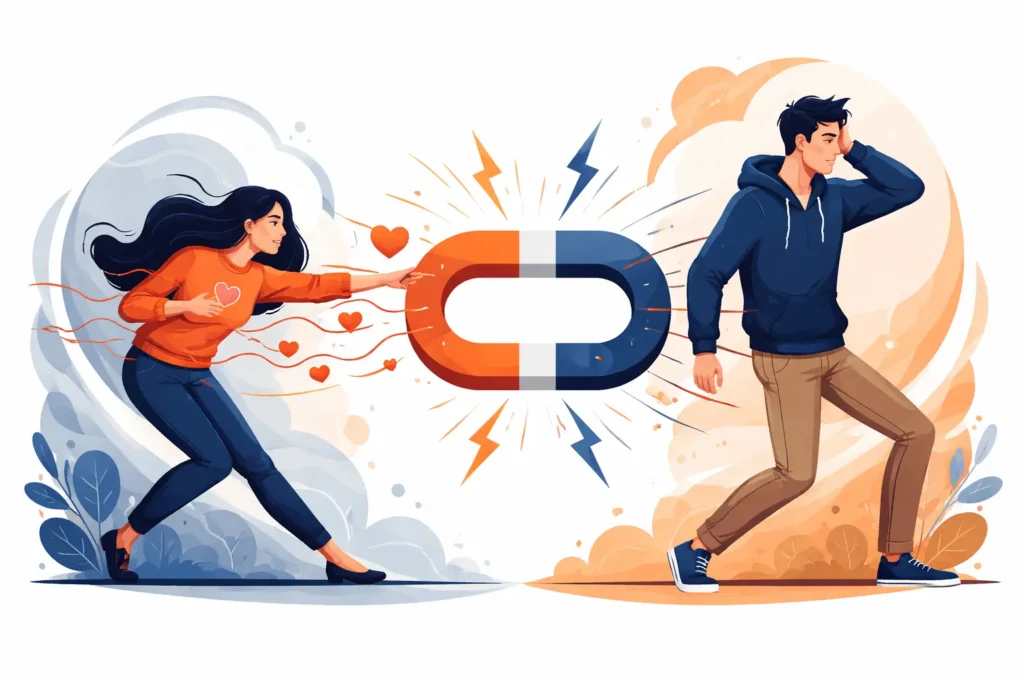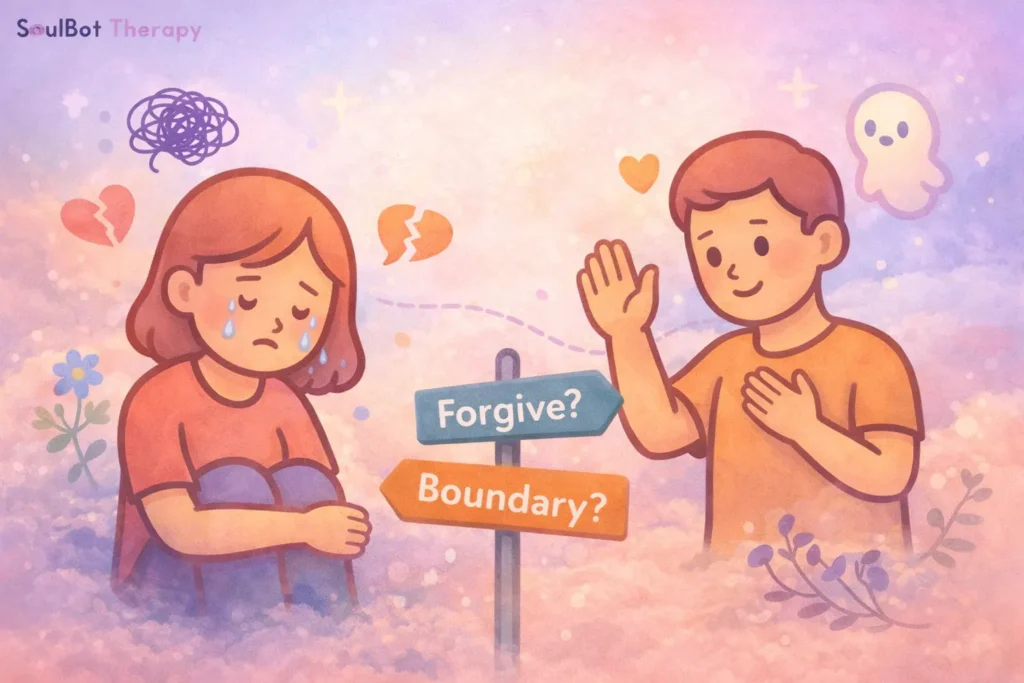

You’re not “too much.” You’ve just been around people who gave too little.
And when that happens long enough, you start questioning your standards instead of the pattern.
You wonder:
- Am I demanding?
- Am I dramatic?
- Should I just be more understanding?
🧠 Take the Love Language Test to understand how you naturally experience care and effort.But here’s the truth: asking for the bare minimum in relationships isn’t asking for perfection. It’s asking for safety.
What Does the Bare Minimum in Relationships Actually Mean?
When we talk about the bare minimum in relationships, we’re not talking about grand gestures or constant reassurance.
We’re talking about basics:
- Consistent communication
- Honest intentions
- Showing up when promised
- Respect during conflict
- Emotional presence
- Effort that matches words
That’s it. The bare minimum isn’t romance.
Its reliability. If those things feel like “too much,” something deeper is happening.
Why Asking for the Basics Feels So Uncomfortable?
If the bare minimum is basic, why does asking for it make your chest tighten? Usually because of one (or more) of these:
1. You Learned Love Was Conditional
You were subtly taught that being “low maintenance” keeps people around.
2. You Were Labelled “Too Sensitive”
So now you second-guess every feeling before expressing it.
3. Your Nervous System Fears Disappointment
If asking leads to being let down, staying quiet feels safer.
This isn’t a weakness. It’s conditioning. And conditioning can change.
💡SoulFact: Studies in attachment psychology indicate that suppressing relational needs increases resentment and emotional burnout.
Self-Respect Isn’t Entitlement
There’s a major difference between self-respect and control.
Entitlement says:
- You should never mess up.
- You should always know what I need.
- You should fix how I feel.
Self-respect says:
I know what I need. I’ll communicate it clearly. If this dynamic doesn’t meet that need, I’ll reassess. Self-respect doesn’t demand perfection. It requires consistency. The bare minimum in relationships is not about control; it’s about alignment.
You’re not “too much.” You’ve just been around people who gave too little. And when that happens long enough, you start questioning your standards instead of the pattern.
You wonder:
- Am I demanding?
- Am I dramatic?
- Should I just be more understanding?
But here’s the truth: asking for the bare minimum in relationships isn’t asking for perfection. It’s asking for safety.
What Does the Bare Minimum in Relationships Actually Mean?
When we talk about the bare minimum in relationships, we’re not talking about grand gestures or constant reassurance.
We’re talking about basics:
- Consistent communication
- Honest intentions
- Showing up when promised
- Respect during conflict
- Emotional presence
- Effort that matches words
That’s it. The bare minimum isn’t romance. Its reliability.
If those things feel like “too much,” something deeper is happening.
💡SoulFact: Research shows that emotionally consistent relationships significantly reduce cortisol (stress hormone) levels over time.
Why Asking for the Basics Feels So Uncomfortable
If the bare minimum is basic, why does asking for it make your chest tighten? Usually because of one (or more) of these:
1. You Learned Love Was Conditional
You were subtly taught that being “low maintenance” keeps people around.
2. You Were Labelled “Too Sensitive”
So now you second-guess every feeling before expressing it.
3. Your Nervous System Fears Disappointment
If asking leads to being let down, staying quiet feels safer.
This isn’t a weakness. It’s conditioning. And conditioning can change.
💜 Chat with Soululu when you feel yourself shrinking. Your needs deserve space not silence.
Self-Respect Isn’t Entitlement
There’s a major difference between self-respect and control.
Entitlement says:
- You should never mess up.
- You should always know what I need.
- You should fix how I feel.
Self-respect says:
- I know what I need.
- I’ll communicate it clearly.
- If this dynamic doesn’t meet that need, I’ll reassess.
- Self-respect doesn’t demand perfection. It requires consistency.
The bare minimum in relationships is not about control; it’s about alignment.
Signs You’re Settling (That Don’t Feel Like Settling)
Settling doesn’t feel dramatic. It feels subtle.
You might be settling if:
- You decode their behaviour more than enyou joy their presence.
- You feel low-level anxiety; you’ve normalised.
- You avoid bringing up issues because “it won’t change.”
- You measure good days by the absence of conflict.
- You feel relieved when they’re kind instead of expecting it.
- You shrink your needs to maintain peace.
That isn’t patience. That’s adaptation.
What Healthy Actually Feels Like
Healthy feels quieter.
It feels like:
- Saying what you need without rehearsing it 10 times.
- Being heard without defensiveness.
- Conflict ending in clarity, not silence.
- Feeling secure more than uncertain.
Healthy isn’t dramatic. But it also isn’t exhausting.
If you constantly feel like you’re managing someone else’s emotional temperature, that’s not connection. That’s regulation work.
Why Self-Respect Feels Risky (At First)
If you’ve survived by being easygoing, speaking up will feel threatening. Your nervous system learned:
Needs = risk.
So when you say:
“I need consistency.”
Your body hears:
“Someone might leave.”
But here’s what experience shows:
- People who value you won’t disappear because you express clarity.
- The ones who do were benefiting from your silence.
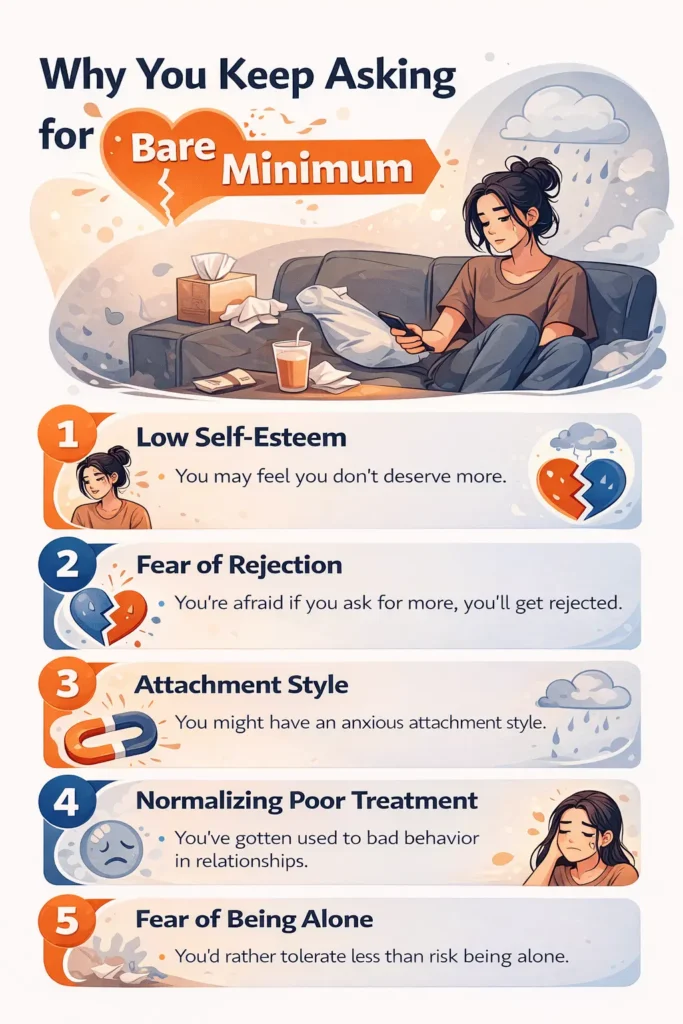
A Simple Reset: 4 Questions
If you’re unsure whether you’re asking for too much or just asking for the bare minimum in relationships, reflect on this:
- Do I feel mostly calm or mostly anxious here?
- Are their actions consistent over time?
- Am I carrying most of the emotional labour?
- Am I staying because it’s healthy or because I fear leaving?
Your nervous system usually knows before your mind does.
Conclusion
The bare minimum in relationships is not a reward you earn by being flexible enough.
It’s the starting point. Self-respect doesn’t make you demanding. It makes it clear. And healthy relationships don’t make you question your worth, they reinforce it.
💬 Talk to Soululu if you’re unsure whether your standards are healthy or fear-driven. Sometimes clarity needs reflection, not reaction.